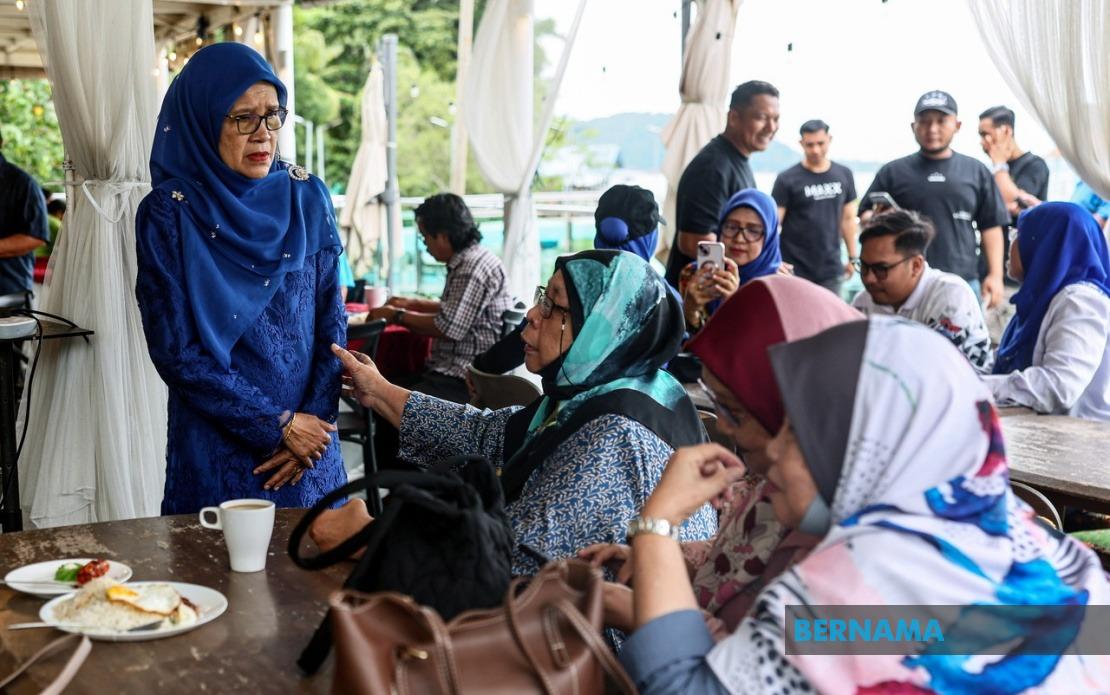
The Endau state seat in northern Johor is shaping up as a consequential electoral battleground that reflects broader ideological fault lines in Malaysia's political landscape. Incumbent Alwiyah Talib, representing Barisan Nasional, will defend her seat against three challengers: Saiful Nizam Samat of Pakatan Harapan, Hasnul Hakimi Hussien from Perikatan Nasional, and independent candidate Jati Awang from Parti Orang Asli Malaysia. The contest fundamentally pits Alwiyah's emphasis on demonstrated governance and continuity against Saiful Nizam's intellectually grounded blueprint for systemic economic transformation, capturing a generational tension visible across Malaysian politics.
Alwiyah, popularly known as Kak Awi, has built her campaign narrative around the tangible achievements of two consecutive terms representing the constituency. Her strategic focus centres on unlocking Endau's considerable potential in inland tourism, a sector she believes remains underdeveloped relative to the region's coastal island attractions. She points to early successes at kampung stay operations in Teluk Buih, Penyabong and Tanjung Resang, where accommodation facilities regularly reach full capacity during weekends, as evidence that demand exists for authentic rural hospitality experiences. Her vision extends to rebranding Mersing itself, challenging the perception that the town exists merely as a transit point for visitors heading to nearby islands. By promoting destinations including Pulau Mawar, Pantai Air Papan and Teluk Gorek as sustainable homestay destinations, she argues that tourism revenue can be distributed more widely across the local economy.
Beyond tourism, Alwiyah has prioritised educational infrastructure as a cornerstone of her development agenda. The planned construction of a secondary school in Pekan Endau responds to a genuine capacity constraint, as current students must rely on Sekolah Menengah Kebangsaan Ungku Husin as their sole option for secondary education in the locality. She emphasises that educational advancement must extend across all levels, from primary school through tertiary education, ensuring no demographic group is excluded from opportunity. This framing reflects her argument that governance success depends on sustained incremental progress, requiring political continuity to see multi-year initiatives through to completion. She characterises her tenure not as comfortable stewardship but as an ongoing battle demanding genuine commitment and transparent engagement with constituents.
Alwiyah's political trajectory itself demonstrates the fluid nature of contemporary Malaysian politics. She initially won the Endau seat in 2022 under Perikatan Nasional's banner before transitioning to Barisan Nasional, illustrating how constituencies can shift allegiances as larger political reorganisations reshape coalition mathematics. Her willingness to change parties raises questions about institutional loyalty versus constituent service, a tension she addresses by grounding her appeal in concrete outcomes rather than party affiliation.
Saiful Nizam presents a starkly different political proposition, bringing academic credentials and a modernist economic orientation to the contest. At 42 years old and currently pursuing doctoral research in Economics, he embodies the technocratic reformer archetype increasingly visible in opposition politics across Southeast Asia. His platform centres on five integrated policy areas: education, economic development, food security, infrastructure and digital connectivity. Rather than emphasising tourism as Alwiyah does, Saiful Nizam's flagship initiative targets the fisheries sector, proposing an agenda termed Fishermen's Economy 2.0 designed to generate sustainable income from existing maritime resources while simultaneously supporting the entrepreneurial ecosystem surrounding fishing communities.
The conceptual logic underlying Saiful Nizam's approach emphasises multiplier effects and systems thinking. He argues that strengthening fisheries income creates spillover benefits for dependent service providers, from ice suppliers to equipment retailers, thereby addressing rural employment challenges without requiring residents to migrate toward urban centres. His agenda incorporates digital marketing support for local small and medium enterprises, technical and vocational training programmes, and science and technology curriculum enhancement, all framed as mechanisms to retain rural youth within their communities by offering competitive income opportunities and skills development. This represents a departure from conventional rural development rhetoric toward what might be termed endogenous growth theory applied at the constituency level.
Educational policy represents another significant differentiation between the candidates. While Alwiyah emphasises physical infrastructure expansion, Saiful Nizam proposes a complementary mix of vocational training, STEM education, English language proficiency programmes, and a dedicated educational fund targeting financially vulnerable students. His approach suggests that educational competitiveness depends less on facility availability than on curriculum relevance and accessibility, a perspective informed by development economics literature addressing skills mismatch and underemployment in emerging markets. The proposed Endau Children's Education Fund specifically addresses financial barriers to educational participation, recognising that physical school construction means little if transportation costs or opportunity costs of attendance exclude poorer families.
Food security emerges as another substantive policy distinction. Saiful Nizam advocates promoting modern agricultural techniques to enhance farm productivity and strengthen national food self-sufficiency, implying that rural constituencies should pivot beyond traditional production toward higher-value, more efficient farming methods. This reflects contemporary Malaysian policy discussions around agricultural modernisation, supply chain resilience, and reducing import dependency on food commodities. Alwiyah's tourism focus, by contrast, suggests accepting agriculture's diminishing economic role in favour of service sector development.
Saiful Nizam's platform also frontally addresses governance responsiveness through pledges to escalate community concerns regarding infrastructure adequacy, fishermen's welfare and internet penetration to relevant federal and state agencies. This commitment to advocacy and institutional channelling reflects a more adversarial conception of opposition politics than Alwiyah's collaborative continuity narrative. He positions himself as a representative willing to challenge bureaucratic inertia and institutional indifference, a posture resonating with constituencies frustrated by unresponsive governance. The pledge to continuously facilitate local community programmes suggests viewing government resources as insufficiently accessible to grassroots initiatives.
The Endau contest unfolds within a specific demographic and economic context that shapes electoral dynamics. With 28,767 registered voters, the constituency represents a mid-sized rural-coastal seat where primary industries remain economically significant despite broader sectoral shifts. The fishing community constitutes a politically organised constituency with distinctive welfare concerns, potentially making Saiful Nizam's fisheries agenda particularly salient. Tourism development, conversely, appeals to business-oriented residents and those seeking diversification from extractive industries. This geographic and sectoral complexity ensures that neither candidate's platform demonstrates obvious electoral dominance.
The four-way contest structure adds unpredictable elements, particularly given Hasnul Hakimi Hussien's Perikatan Nasional candidacy and Jati Awang's independent status. Perikatan Nasional's constituency base in Johor remains significant following 2022 electoral performance, potentially fragmenting votes that might otherwise concentrate between the two major coalition blocs. Jati Awang's indigenous representation platform may resonate among Orang Asli communities, a longstanding politically marginalised demographic with specific land and livelihood concerns often overlooked in mainstream party platforms.
Electorally, the contest reflects broader patterns in Malaysian politics where established incumbents increasingly face challenges from intellectual challengers armed with comprehensive policy frameworks and modernist development visions. Alwiyah's reliance on demonstrated track record and incremental progress contrasts with Saiful Nizam's systems-based approach promising structural transformation. Johor's electoral landscape has shifted dramatically since 2018, with traditional BN hegemony eroded and coalition mathematics becoming increasingly fluid. The Endau result will provide insights into whether Malaysian voters remain convinced by governance continuity or increasingly demand comprehensive ideological alternatives.
Polling day for this 16th Johor state election is scheduled for July 11, with early voting commencing on July 7. The election involves 172 candidates contesting 56 state seats across the state, making Endau one of numerous constituencies where similar dynamics between incumbent consolidation and opposition repositioning will simultaneously play out.

