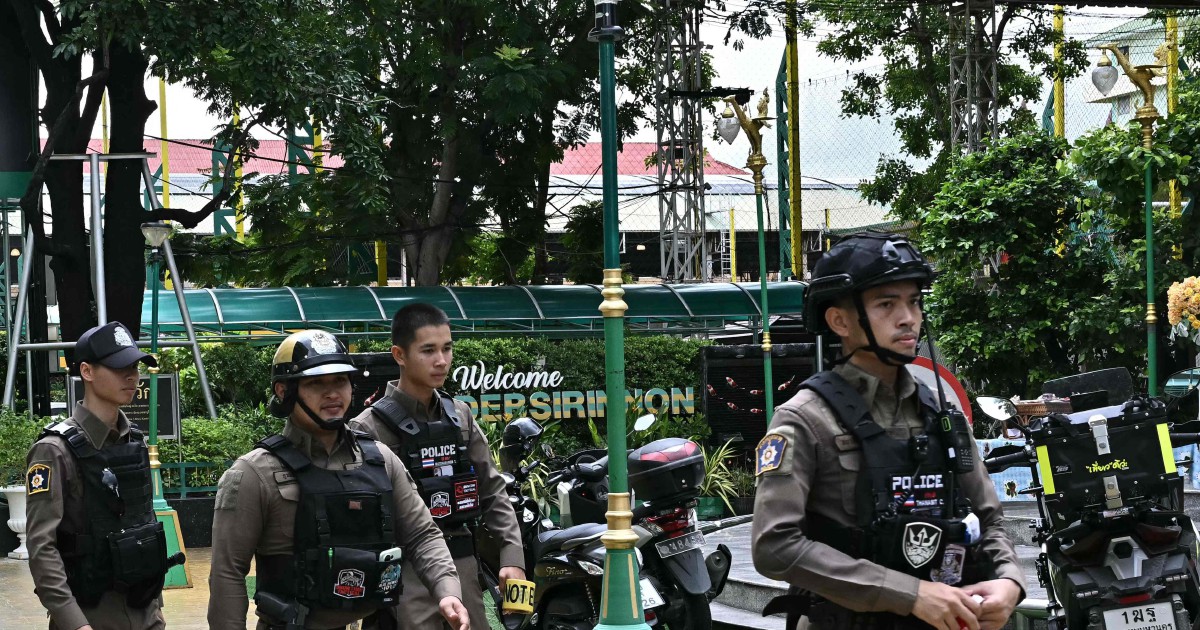
Authorities in Thailand have been holding at least eleven French citizens in custody since the beginning of the summer months following their arrest for transporting cannabis, details disclosed by a police source to AFP on Tuesday reveal. The detentions point to what appears to be a coordinated operation targeting international drug trafficking networks using Southeast Asian transit routes.
The arrests underscore an emerging concern for both French and Thai law enforcement: the exploitation of holiday travel as a cover for narcotics smuggling. Southeast Asia has become an increasingly attractive destination for European tourists, but this accessibility has also created opportunities for organised crime syndicates to recruit unsuspecting or complicit participants into trafficking operations. The scale of the cannabis quantities discovered suggests this was not merely personal consumption but rather part of a systematic distribution network.
Thailand has dramatically intensified its drug enforcement efforts in recent years, positioning itself as a regional leader in combating narcotics trafficking. The Kingdom's laws impose severe penalties for drug-related offences, with possession of significant quantities carrying potential sentences of fifteen years or more. For foreign nationals, the prospect of serving lengthy sentences in Thai detention facilities has become a serious deterrent, yet the frequency of such arrests indicates that criminal networks continue to recruit participants despite these risks.
The targeting of French citizens specifically raises questions about recruitment patterns within European networks. France itself has grappled with cannabis distribution issues domestically, and the existence of an organised pipeline from Southeast Asia to European markets suggests sophisticated criminal infrastructure. Intelligence agencies across the region have documented how vacation getaways are weaponised by traffickers, who present drug smuggling as a seemingly low-risk opportunity to offset travel costs—the so-called "free holiday" arrangement that masks the criminal nature of the enterprise.
For Malaysia, which shares maritime and land borders with Thailand and sits along major trafficking corridors, the implications are significant. Regional drug enforcement cooperation, particularly through frameworks like the ASEAN Narcotics Cooperation Centre, depends on intelligence sharing and coordinated action. The detention of these French nationals likely involved coordination between Thai and potentially Malaysian authorities, demonstrating how cross-border collaboration disrupts international trafficking operations.
The summer period represents peak travel season for European tourists across Southeast Asia, creating a vulnerable window when airports experience higher passenger volumes and screening protocols face capacity pressures. Criminal organisations have adapted to exploit these seasonal patterns, timing recruitment and transportation efforts to coincide with the highest holiday traffic. This reality has forced regional governments to enhance screening mechanisms and intelligence gathering during peak tourism months.
For prospective travellers from Malaysia and throughout Southeast Asia, the arrests serve as a cautionary reminder about the serious legal exposure associated with carrying items across borders, even under peer pressure or financial incentive. The criminal liability extends to all parties in the supply chain, and Southeast Asian jurisdictions enforce drug laws with particular severity compared to many Western nations. A Malaysian citizen recruited into similar schemes faces equally severe consequences under Thai law, with no preferential treatment based on nationality.
The French diplomatic mission in Bangkok would typically provide consular assistance to arrested citizens, but such support has clear limitations within Thai jurisdiction. French authorities have little leverage to negotiate reduced sentences or special treatment, meaning those convicted will serve their terms under Thai prison conditions. This reality has prompted the French government and other European nations to increase public awareness campaigns warning citizens about trafficking recruitment tactics.
The involvement of eleven individuals suggests this operation was not a chance discovery at a single border crossing but rather the culmination of investigative work spanning weeks or months. Thai law enforcement's ability to coordinate across multiple airports and detect patterns of suspicious travel likely involved advance intelligence and surveillance. The question of whether all eleven individuals were knowingly involved or whether some were manipulated by more culpable organisers may affect prosecution strategies, though Thai law provides little distinction in liability.
For regional security analysts, the case highlights how globalised criminal networks adapt to enforcement pressures. When Southeast Asian routes become more heavily monitored through airport scanning and intelligence cooperation, traffickers shift to new transportation methods or recruit from different source populations. The French nationality of these detainees may reflect recent targeting of European networks, suggesting that law enforcement actions elsewhere have compressed trafficking routes and forced traffickers to seek new corridors through Thailand and the broader region.
The broader implications extend to how tourism and transnational crime intersect across Southeast Asia. Thailand's tourism-dependent economy creates tensions between welcoming visitors and enforcing strict drug laws. Similar dynamics affect Malaysia, Vietnam, and Cambodia. Governments must balance their commitment to attracting international visitors with their equally serious commitment to drug enforcement—a balance that occasionally produces high-profile cases involving foreign nationals that send powerful deterrent messages throughout source countries.
Moving forward, the detention of these eleven French nationals will likely receive coverage in European media, potentially affecting recruitment patterns temporarily. However, unless criminal organisations face significantly increased enforcement pressure or find the profit margins insufficient to justify the risks, trafficking through Southeast Asia will likely persist. The real challenge for regional authorities involves dismantling the systematic infrastructure that enables recruitment, rather than simply intercepting individual courier operations at borders.

