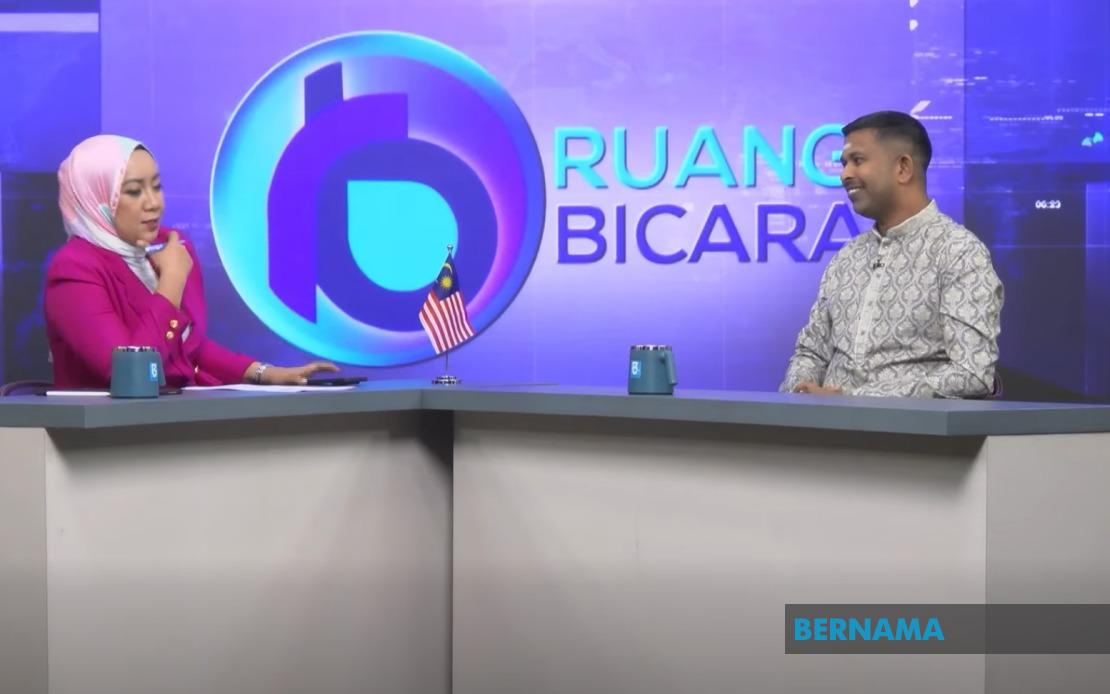
The elevation of Malay language as the national language demands a coordinated endeavour spanning government agencies, educational institutions, commercial enterprises and ordinary citizens, according to a prominent legal scholar and language policy expert. Prof Dr Ramalinggam Rajamanickam, a professor at Multimedia University's Faculty of Law and member of the Dewan Bahasa dan Pustaka Board of Governors, underscored that this responsibility flows directly from the constitutional framework underpinning Malaysia's nationhood. Speaking on a dedicated television programme examining the role of Malay in shaping national identity, he highlighted that Article 152 of the Federal Constitution formally establishes the language's preeminent position, creating both a legal obligation and a social compact for citizens to maintain its standing.
While the Malay language enjoys widespread usage throughout Malaysia, the real challenge facing its future lies not in prevalence but in the integrity of how it is employed. Prof Ramalinggam identified an emerging tension between informal linguistic practices and formal language standards. The phenomenon of "bahasa rojak"—an increasingly common blending of Malay with English and other languages—along with the prevalence of abbreviated forms on digital platforms, reflects broader shifts in how Malaysians communicate. He stressed that whilst such mixing carries little consequence in casual conversation and social media exchanges, the situation differs markedly when official government business, legal proceedings, or academic discourse is concerned. In these formal contexts, adherence to grammatical precision and structural correctness becomes imperative for maintaining the language's utility and authority.
The legal infrastructure safeguarding the Malay language extends beyond constitutional provisions. The National Language Act 1963/67 provides a statutory mandate requiring the use of Malay in official government transactions and communications. Yet Prof Ramalinggam cautioned that legislation alone cannot guarantee compliance or quality. The Ministry responsible for language matters must actively monitor how this law is implemented across government departments, ensuring that the aspiration for national language usage translates into consistent practice. Simultaneously, universities face a parallel obligation to foster environments where Malay functions authentically as a vehicle for scholarship and intellectual discourse, rather than as a secondary medium superseded by English in domains of knowledge creation.
The tension between prioritising Malay and maintaining English proficiency represents a delicate balancing act for Malaysian institutions. Prof Ramalinggam rejected the false binary of choosing between linguistic nationalism and pragmatic multilingualism. He argued that Malaysia's competitive advantage in an interconnected world depends on citizens wielding multiple languages with competence. However, this polyglot capability should not come at the expense of treating Malay as merely ornamental or symbolic. Rather, the national language must function as a genuine instrument of intellectual life and technical discourse. This philosophy acknowledges Malaysia's regional context, where English serves economic and diplomatic functions, whilst reserving Malay's irreplaceable role as the binding thread of national cohesion.
The emergence of artificial intelligence and rapid technological advancement poses novel challenges for language preservation and development. Rather than passively awaiting technological systems to accommodate Malay, Prof Ramalinggam advocated for a proactive strategy of linguistic empowerment through technological innovation. Malaysia should invest in research and development enabling Malay language processing, natural language understanding, and AI systems that operate fluently in the national language. This requires sustained collaboration among government agencies, universities conducting linguistic and computational research, technology companies, and language specialists working to expand Malay's vocabulary and technical capabilities. Such efforts would ensure the language remains current and relevant rather than marginalised as technology advances.
Historically, Malay possessed substantial continental reach as a lingua franca throughout Southeast Asia, facilitating trade, cultural exchange, and diplomatic relations across the region. That legacy, though diminished, demonstrates the language's inherent capacity to serve as a medium for sophisticated thought and complex communication. Beyond Malaysia's borders, Malay continues to attract scholarly attention in countries including China, Japan, and India, suggesting enduring international interest. Harnessing this potential requires deliberate investment in the language's evolution within domains like science, technology, economics and emerging fields. Universities must develop rigorous academic programmes treating Malay as a language of scientific investigation, not merely cultural heritage. Research institutions should prioritise producing technical literature and scholarly works in Malay, creating the vocabulary and conceptual frameworks necessary for the language to function authentically in contemporary fields.
Prof Ramalinggam's vision fundamentally rejects the premise that strengthening national language status necessarily entails diminishing other languages or creating a hierarchical linguistic structure. Instead, he proposed that Malaysians can cultivate genuine fluency across multiple languages whilst maintaining Malay's symbolic and practical primacy. This pluralistic approach aligns with Malaysia's multicultural reality, where diverse communities bring linguistic traditions enriching the national fabric. The challenge lies in constructing systems where linguistic diversity coexists with a strong shared national language that transcends communal boundaries. Educational curricula, media organisations, and civic institutions must reflect this commitment to balanced multilingualism anchored by robust Malay language competence.
Implementing such a comprehensive strategy demands sustained political will and institutional commitment extending well beyond rhetorical endorsement. Government ministries must enforce existing language requirements in official communications and service delivery, setting behavioural examples that cascade through public administration. Higher education institutions should establish language standards for academic writing and thesis submission, whilst developing specialised vocabularies enabling Malay discourse in technical and professional fields. The private sector, particularly in technology, finance, and media, must recognise that strengthening the national language serves long-term national interests alongside commercial objectives. Media organisations especially bear responsibility for modelling correct language usage and demonstrating that sophisticated communication thrives in quality Malay.
The stakes underlying language preservation extend beyond semantic or cultural considerations. Language embodies collective identity, historical memory, and philosophical frameworks through which communities understand the world. As Malaysia navigates rapid modernisation and digital transformation, the question of how the national language evolves—whether it remains vital and adaptive or becomes ceremonial and marginal—will influence how future generations experience their relationship to nation and heritage. Prof Ramalinggam's emphasis on collective responsibility acknowledges that this challenge transcends any single institution or sector. Citizens themselves, through daily communication choices, content creation, and cultural participation, continuously shape whether Malay remains a living instrument of national expression or recedes as globalisation reshapes linguistic patterns. The collective national effort he advocates represents not nostalgic preservation but rather dynamic modernisation ensuring the Malay language maintains relevance and dignity across generations.

