The dual challenge of maintaining red-carpet sophistication whilst battling soaring temperatures defined Paris Couture Week as the French capital experienced an unusually intense heatwave. Celebrities and fashion insiders who descended upon the city's most prestigious shows faced a genuine sartorial predicament: how to honour the formal demands of haute couture when mercury levels threatened both composure and carefully constructed looks. This collision between fashion's most rigid traditions and Mother Nature's unforgiving conditions produced an unexpectedly revealing snapshot of how the world's most stylish figures approach dressing when comfort genuinely matters.
The intensity of the heat was not a passing inconvenience but a defining characteristic of the entire season. Paris menswear fashion week had already taken place under similarly punishing conditions, and temperatures showed no mercy as the women's couture calendar commenced. This meteorological backdrop transformed what might otherwise have been another year of predictable luxury styling into something far more interesting: a real-time demonstration of how high fashion adapts when forced to acknowledge the basic human need to remain cool. Rather than adhering rigidly to conventional couture formality, attendees increasingly prioritised breathability whilst maintaining the polished appearance expected at such events.
The solutions that emerged revealed clear trends across the front rows. Oversized tailoring became particularly prevalent among male guests, with figures like Bad Bunny and Hudson Williams demonstrating that structured menswear could still convey authority and style even when rendered in lighter tones or worn without traditional layering underneath. This departure from immaculate, fully-buttoned formality suggested a broader shift in how even fashion's most conservative domain interprets contemporary elegance. The relaxed proportions offered freedom of movement whilst the absence of restrictive elements allowed skin to breathe—practical solutions that carried unexpected aesthetic sophistication.
For women attending the shows, exposed shoulders emerged as perhaps the season's most ubiquitous styling choice, though its prevalence spoke more to thermoregulation than any deliberate trend toward revealing skin. Tan Sri Michelle Yeoh exemplified this approach, arriving in a subtle black design that demonstrated how shoulder exposure could convey understated elegance rather than provocative daring. The look worked because it acknowledged reality: in exceptional heat, dispensing with shoulder coverage becomes not just sensible but genuinely flattering, allowing fabric to drape naturally rather than cling uncomfortably to the body. What might appear as a design choice was often simply fashion's pragmatic response to circumstances.
Sundresses and their high-fashion variations gained considerable traction throughout the week, offering a middle ground between casual resort wear and formal couture. These pieces maintained the refined silhouettes expected at such events whilst providing the airflow necessary in extreme temperatures. Priyanka Chopra's decision to wear a scalloped gown captured this mood particularly well—a design that suggested leisurely, sun-soaked elegance rather than the heavy formality traditionally associated with Paris couture. The garment's lighter construction and thoughtful detailing proved that seasonal considerations need not undermine sophistication or technical prowess in tailoring.
Material selection became another crucial consideration, with lightweight fabrics dominating choices across the front rows. Silk and similar natural fibres proved particularly popular, offering the dual advantage of luxury appeal and genuine cooling properties. These fabrics allowed attendees to maintain the sense of refined luxury that couture represents whilst actually remaining comfortable in their clothes—a balance that seemed almost radical in its practicality. Shorter hemlines accompanied these choices, providing additional ventilation and freedom of movement without compromising the tailored aesthetic that haute couture demands.
Accessories played their part in this larger adaptation narrative. Songwriter Ejae demonstrated an elegant approach by carrying a simple black folding fan, an accessory that functioned as both practical cooling tool and visual complement to her overall look. The accessory represented a clever acknowledgment of the heat without resorting to compromising one's sartorial intentions. Such choices illustrated how fashion's true sophistication lies in problem-solving and thoughtful curation rather than blind adherence to established formulas.
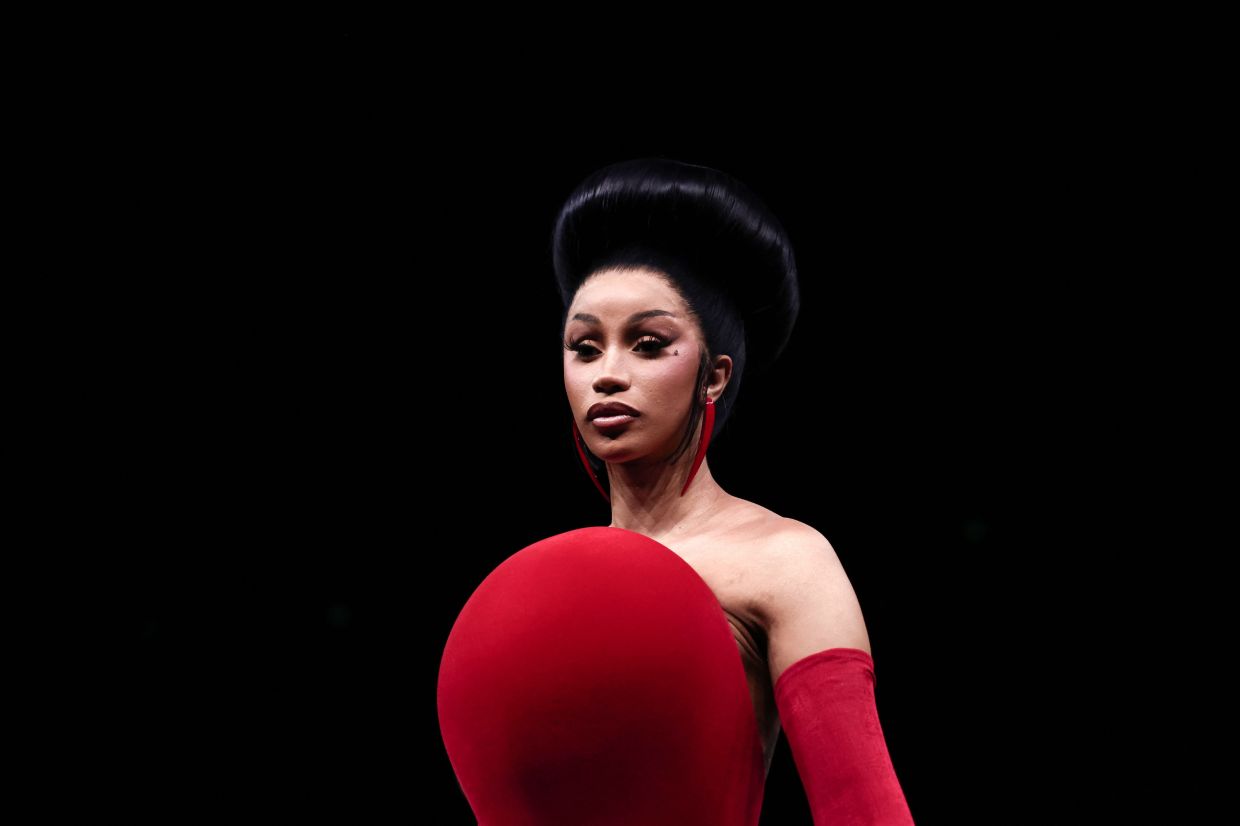
Cardi B's approach stood apart from this broader accommodation with convention. Her choice to maintain a sculptural, exceptionally fitted silhouette despite the oppressive heat represented one of the few genuinely avant-garde statements visible throughout the week. Where most attendees had modulated their usual approaches to balance elegance with practicality, the rapper remained committed to fashion spectacle and visual impact. Her willingness to prioritise aesthetic statement over comfort served as a reminder that high fashion still accommodates those willing to endure discomfort for the sake of artistic expression, even as most guests around her were making rather different calculations.
The broader significance of Paris Couture Week's heat-induced styling shifts extends beyond mere trend observation. It demonstrated that even fashion's most tradition-bound institution can adapt when environmental circumstances demand flexibility. The choices made by celebrities and industry figures suggested an emerging acceptance that elegance and comfort need not exist in opposition—a potential harbinger of how luxury fashion might approach design in an era of increasingly unpredictable weather patterns. Rather than treating heat as an obstacle to be overcome through sheer force of glamour, attendees instead proved that sophistication could accommodate practicality.
For Southeast Asian readers accustomed to perpetual tropical heat and humidity, the sight of Paris's most stylish residents struggling with temperature management carries particular resonance. These adaptation strategies—breathable fabrics, minimal layering, exposed shoulders, and oversized silhouettes—essentially represent solutions that tropical fashion has long championed. Paris Couture Week's heat-driven styling choices thus suggest a convergence between the region's long-established tropical fashion principles and Europe's most elite fashion institutions. What tropical fashion systems have treated as fundamental for decades is now becoming necessity even for the world's most prestigious fashion venues.
Moving forward, the precedent established during this unusually hot Paris season may influence how couture and high fashion approach seasonal collections more broadly. If climate volatility continues to create unexpected weather conditions, the demonstrated ability to maintain sophistication whilst accommodating comfort could reshape expectations about what formal dressing must entail. The celebrities who navigated Paris Couture Week under extreme heat effectively proved that luxury fashion's future need not involve suffering—an insight that carries implications far beyond the French capital's storied fashion district.

