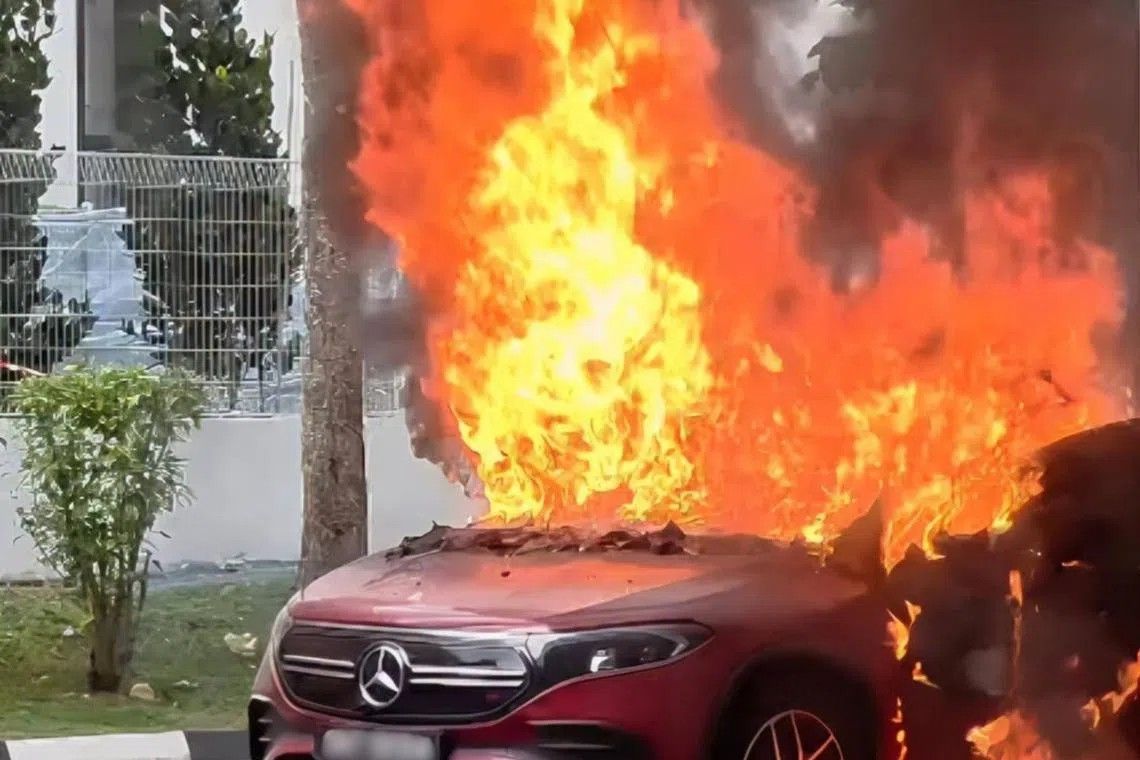
An electric vehicle erupted in flames near the entrance of a multi-storey carpark in Singapore's Woodlands residential estate on the morning of July 21, prompting an emergency response from the Singapore Civil Defence Force and raising fresh questions about battery safety in the expanding EV market across the region. The incident occurred at Block 548 Woodlands Drive 44, close to the Vista Point area, with emergency services reaching the scene at approximately 10.10am to find fire consuming the vehicle's interior compartment.
Firefighters rapidly brought the situation under control, deploying a single water jet to suppress the flames and preventing any escalation that might have endangered residents or neighbouring vehicles. The swift response ensured no individuals sustained injuries, though the vehicle itself sustained catastrophic damage. According to SCDF officials, the origin of the fire remains the subject of an active investigation, with authorities gathering evidence to determine what triggered the thermal event within the car's systems.
Accounts from the vehicle's driver provide crucial details about the sequence of events that unfolded. The operator noticed an acrid odour while exiting the carpark, which prompted her to pull the vehicle to the side. Within moments, smoke began visibly emanating from the car's interior, a warning sign that alerted her to the developing emergency. She pinpointed the fire's origin to the area situated between the driver and front passenger seating positions, directly above where the vehicle's battery pack is conventionally positioned in modern electric vehicles. This detail carries significance for safety analysts and manufacturers scrutinising EV fire risks.
The driver's immediate response was to seek assistance from security personnel stationed nearby at the carpark facility. However, these guards encountered limitations in their ability to contain the situation, attempting to deploy standard fire extinguishers that proved inadequate against the intensity of the lithium-ion battery fire. Recognising the escalating danger and the possibility that the vehicle could experience a more catastrophic failure as flames spread deeper into the chassis, the driver and guards made the prudent decision to establish distance between themselves and the burning vehicle, subsequently alerting emergency services through official channels.
Photographic documentation from the incident scene illustrates the severity of the thermal damage sustained. The vehicle's interior had been almost entirely reduced to charred remains, with metal structures beneath the upholstery and interior trim completely exposed to the intense heat. The dashboard assembly, typically composed of robust plastic and composite materials, showed severe deformation and melting, testament to temperatures that had exceeded the melting points of most automotive interior components. The metal framework supporting the passenger seating had buckled and warped under the thermal stress, presenting a stark visual record of the fire's ferocity.
The incident adds to a growing body of incidents involving electric vehicle fires that have captured attention across Asia. Battery thermal runaway—a chain reaction within lithium-ion cells that generates extreme heat—remains a recognised risk factor in EV operation, though manufacturers and regulators maintain that properly engineered vehicles with appropriate battery management systems pose minimal danger to the general public. The specific location of this fire, in a residential carpark serving apartment dwellers, underscores public concerns about EV safety in shared infrastructure where an uncontrolled fire could potentially spread to adjacent vehicles or structures.
For Malaysian readers, this incident carries particular relevance given the accelerating adoption of electric vehicles in the country and across Southeast Asia. Malaysia has been progressively incentivising EV purchases through tax breaks and charging infrastructure development, with major automotive manufacturers committing to electrified model ranges. The proliferation of EVs in residential areas, commercial carparks, and public charging stations means that incidents such as the Woodlands fire are increasingly likely to occur in the region unless comprehensive safety protocols are rigorously implemented and enforced.
The emergency response demonstrated by SCDF personnel reflects established procedures for managing vehicle fires, though specialised battery fires present distinct challenges compared to conventional petrol or diesel engine compartment fires. Water-based suppression remains effective, but some regions are developing supplementary protocols involving coolant compounds or inert gas systems specifically designed to manage lithium-ion thermal events. The adequacy of security personnel's preparedness at residential and commercial carpark facilities to respond to EV fires—or simply to evacuate areas safely—remains a question that building owners and managing agencies throughout the region would be wise to address proactively.
The investigation into the precise cause will be crucial for the broader automotive industry and regulatory bodies. Potential contributing factors could range from manufacturing defects within the battery module itself, to damage from external impacts accumulated during the vehicle's operational life, to issues with the battery management system's charging protocols. Each possibility carries different implications for consumer safety, manufacturer accountability, and the need for regulatory oversight. Preliminary findings from SCDF investigators may shed light on whether this represents an isolated anomaly or a symptom of a systematic issue requiring wider attention.
The recovery and towing of the vehicle proceeded at 12.15pm, with the damaged EV removed from the carpark to prevent further hazards to residents and to facilitate detailed forensic examination. Insurance companies and vehicle manufacturers will likely conduct parallel investigations into the incident, seeking to understand whether design, manufacturing, maintenance, or usage factors contributed to the fire. For the broader electric mobility sector in Southeast Asia, such incidents serve as reminders that while EV technology offers significant environmental and efficiency benefits, the transition to electrified transport requires sustained investment in safety infrastructure, public education, and regulatory frameworks that keep pace with technological deployment.

