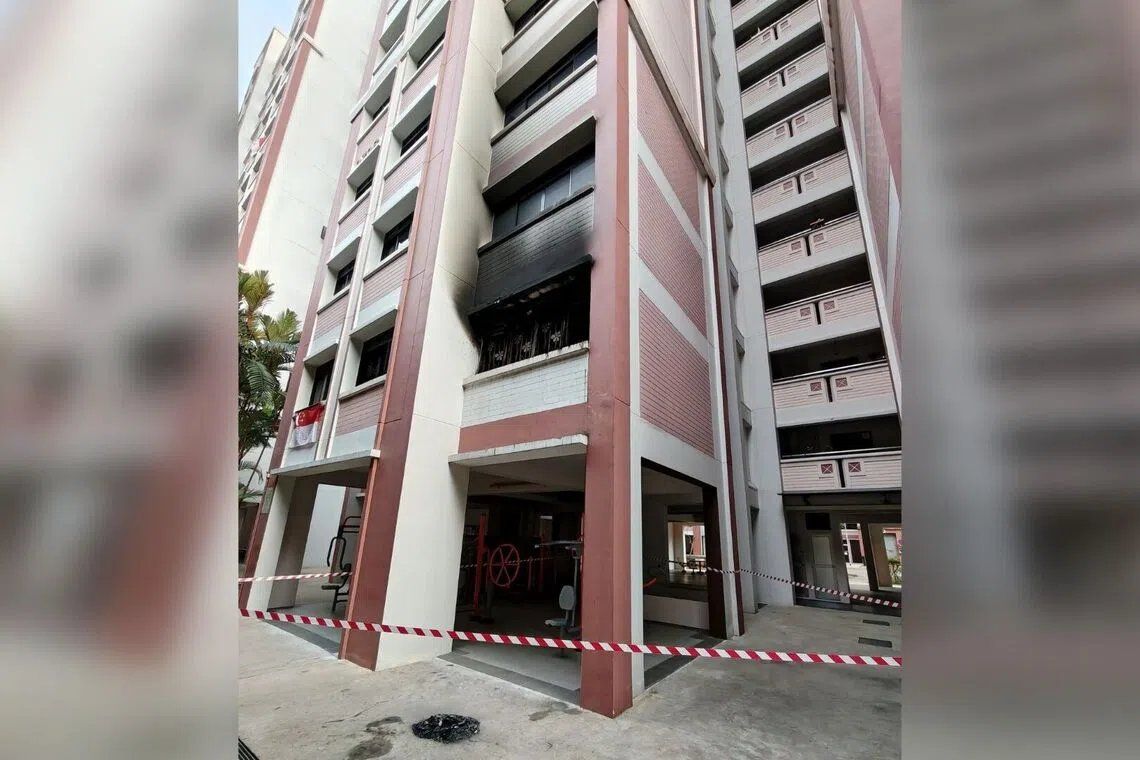
A residential fire in Singapore's Buangkok district early Thursday morning resulted in one elderly resident being hospitalised, though he was later discharged after receiving treatment for minor injuries. The incident unfolded in Block 979B Buangkok Crescent around 12.25am, when the Singapore Civil Defence Force responded to reports of flames emanating from a second-floor unit. The fire, which remained contained to the bedroom's contents, was swiftly extinguished using a water jet, preventing what could have been a more serious outcome in the densely populated Housing and Development Board estate.
The affected resident, an elderly man, was transported to Sengkang General Hospital as a precautionary measure following the incident. Medical assessment revealed he had sustained cuts on his feet during the evacuation process, injuries that proved relatively minor. By midday Thursday, he had already been cleared to leave the hospital, indicating the fortunate nature of the outcome given the circumstances. His rapid recovery and discharge allowed him to return to the community support systems activated in response to the emergency.
According to Ang Mo Kio GRC Member of Parliament Victor Lye, who posted updates about the incident on social media at approximately 1pm Thursday, the speed and effectiveness of the emergency response was significantly aided by the swift action of a neighbouring resident. An ITE (Institute of Technical Education) student living in an adjacent unit demonstrated remarkable presence of mind when the fire broke out, immediately grabbing a fire extinguisher and using it to combat the initial flames. Beyond fighting the fire itself, the student played a crucial role in life safety by physically guiding three occupants of the affected flat out of the unit and away from danger.
The actions of the ITE student exemplify the kind of community vigilance and neighbourly assistance that can make the difference between a contained incident and a tragedy in high-rise residential settings. In densely packed HDB estates where hundreds or thousands of families live in close proximity, the availability of trained emergency services is essential, but the immediate response of nearby residents often proves equally critical. The student's willingness to intervene, combined with knowledge of basic fire safety procedures, created a crucial buffer between the fire's outbreak and the arrival of professional firefighters.
Member of Parliament Lye undertook a personal visit to the affected unit to provide direct support and reassurance to the displaced family, demonstrating the engagement expected of elected representatives in constituency matters. During his visit, he assessed the situation and identified available resources to assist the residents during their immediate recovery period. The Residents' Network centre, a community facility typically available for such contingencies, was formally opened for the family's use, offering them a temporary space if needed during repairs and rehabilitation of their home.
However, the family ultimately opted to remain with their neighbouring ITE student rather than relocate to the centre, a decision that reflects both the strength of community bonds formed during the crisis and the practical advantages of staying nearby to their residence. This arrangement also speaks to the reality that informal support networks within residential communities often prove more comfortable and effective than institutional alternatives, particularly for elderly residents who may feel disoriented by sudden displacement.
The Singapore Civil Defence Force has initiated a formal investigation into the fire's origin, a standard protocol following any residential incident. Determining the cause is essential not only for insurance and liability purposes but also for drawing lessons that might improve fire safety awareness across the housing estate. Potential factors under examination could include electrical faults, cooking-related incidents, or other common residential fire triggers. Such investigations often yield insights that inform public education campaigns about fire prevention in HDB settings.
For residents across Singapore's HDB estates, incidents like this serve as periodic reminders of the importance of fire safety preparedness. The presence of working fire extinguishers in units, knowledge of evacuation procedures, and awareness of exit routes can substantially reduce both injury risk and property damage. Community engagement with civil defence initiatives and first aid training, as evidenced by the ITE student's response, creates resilient neighbourhoods capable of responding effectively when emergencies occur.
The incident also highlights the continuing relevance of community policing and neighbourhood watch approaches in Singapore's public housing landscape. When residents are alert to their surroundings and prepared to take action, they create additional layers of protection beyond what formal services alone can provide. The coordination between the immediate response of the neighbouring student, the rapid mobilisation of SCDF resources, and the follow-up support from elected representatives demonstrates how Singapore's integrated approach to emergency management and community care functions across multiple levels.
As investigations continue into the fire's cause, authorities will likely use the incident to assess whether additional safety measures or public awareness campaigns are warranted in the Buangkok area or across similar HDB precincts. The fortunate outcome in this case—quick detection, rapid community response, professional firefighting, and minimal injuries—establishes a best-case scenario that underscores both the importance of individual vigilance and the effectiveness of Singapore's existing emergency response infrastructure.

