Eight individuals have been indicted by federal authorities in connection with an alleged scheme to carry out an attack during a mixed martial arts event held at the White House on President Donald Trump's birthday, according to an announcement from the US Department of Justice released Thursday. The charges, which emerged from a grand jury investigation in Columbus, represent a significant security incident uncovered by law enforcement before any attack could materialise. Those charged face multiple serious criminal counts including conspiracy to provide material support to terrorists, conspiracy to commit murder on federal government property, and conspiracy to murder a federal government official—offences that carry potential life prison sentences upon conviction.
The sophistication of the alleged plot underscores the level of planning authorities say the conspirators undertook. According to details provided by the DOJ, the suspects had developed a multi-stage attack strategy that would have targeted attendees at the event with precision and coordination. The scheme allegedly centred on deploying explosive-laden unmanned aerial vehicles around the venue to create chaos and force an evacuation of attendees who would then become vulnerable targets. Following this initial assault, prosecutors contend the conspirators intended to position snipers at vantage points to eliminate what they described as "high-value targets" as people fled the secured area.
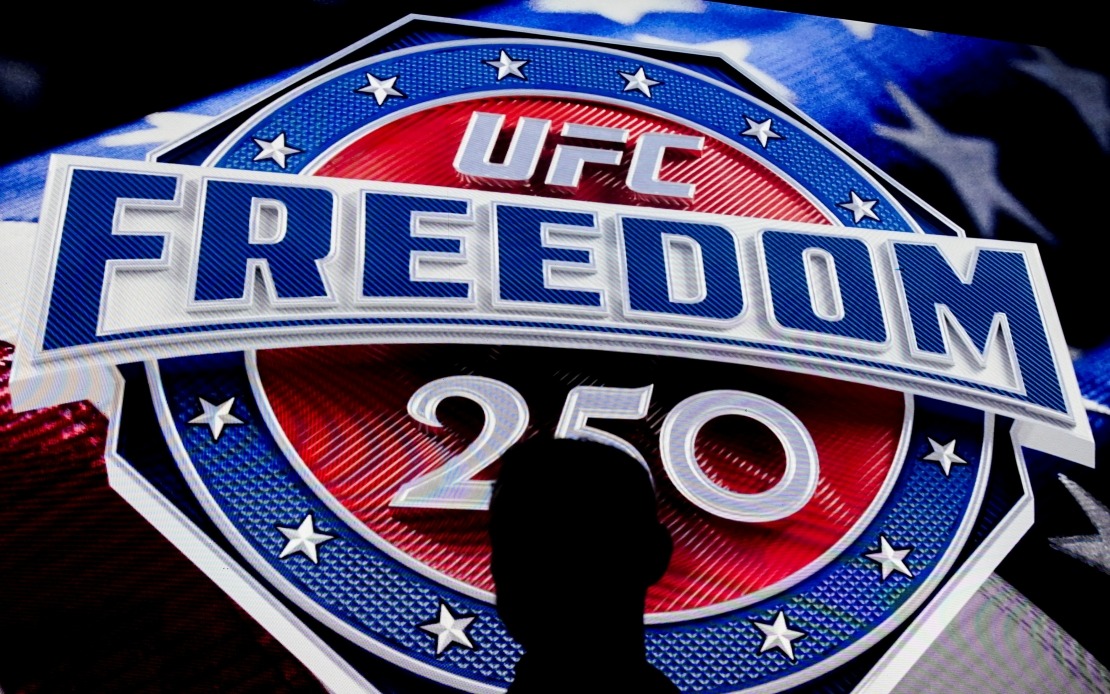
The event in question, formally designated "UFC Freedom 250" and sanctioned by the Ultimate Fighting Championship, took place on June 14 at a specially constructed arena situated outside the South Lawn of the White House. The venue hosted President Trump alongside family members and several cabinet-level officials, making it an extraordinarily high-profile gathering. While the timing coincided with Trump's eightieth birthday celebration, the official framing of the event emphasised its role in commemorating the 250th anniversary of American independence, despite the actual Independence Day holiday falling on July 4.
Law enforcement's discovery of this alleged conspiracy demonstrates the multi-layered intelligence and investigative capabilities deployed to protect such significant government functions. The Department of Justice had previously announced the apprehension of seven individuals connected to the plot. The eighth suspect, a 21-year-old male identified as intended to serve as one of the snipers in the alleged attack, was arrested this week in West Virginia, suggesting that authorities were operating on intelligence that allowed them to systematically identify and detain individuals before any operational phase could commence.
The geographical scope of the arrests—spanning multiple jurisdictions including West Virginia—indicates that investigators pursued a distributed network of individuals rather than a localised cell. This pattern suggests the conspiracy may have involved logistical coordination across state lines and potentially complex supply chains for the weapons and equipment needed to execute the alleged plan. The deliberate nature of the alleged attack, incorporating both remote explosive devices and precision-based sniper operations, implies a level of tactical knowledge and resources that distinguishes this case from spontaneous or poorly organised threats.
From a Malaysian and Southeast Asian perspective, this incident carries several implications. First, it demonstrates how even societies with advanced security infrastructure and vast resources dedicated to counterterrorism remain vulnerable to coordinated conspiracies. The White House itself represents perhaps the world's most heavily guarded civilian government building, yet authorities uncovered this plot through investigation rather than perimeter security. This reality is instructive for regional governments managing their own critical infrastructure and national leadership protection protocols.
Second, the involvement of a public sporting event as the target reflects a concerning global trend in which entertainment venues and mass gatherings become security flashpoints. Southeast Asia, home to rapidly growing sports and entertainment industries, faces similar vulnerabilities. Major sporting events across the region, particularly those involving international participation or high-profile government attendance, represent potential focal points for extremist activity. This case underscores the necessity for integrated security planning that extends beyond traditional barriers to encompassing advanced threat detection and coordinated law enforcement response.
Third, the apparently domestic character of this alleged conspiracy—involving American citizens plotting against their own government and leadership—mirrors patterns observed in various forms across the world. Extremist recruitment and radicalisation operate increasingly through digital networks that transcend national boundaries. Individuals in one jurisdiction can be recruited, trained, and coordinated with others thousands of kilometres away through encrypted communications and online platforms. This borderless dimension of contemporary security threats poses challenges for regional law enforcement agencies lacking the resources or technical capabilities of the FBI and related US agencies.
The investigation's success in identifying and arresting all eight suspects before any attack occurred reflects credit on American law enforcement's preventive capabilities, though details about how authorities initially discovered the plot remain unclear from public statements. The involvement of a Columbus grand jury suggests that the investigation may have originated from intelligence shared through inter-agency channels or perhaps from informant sources within extremist networks. Whatever the investigative genesis, the case demonstrates that systematic approach to threat assessment, surveillance, and evidence collection can yield results.
Looking forward, this incident will likely influence how the UFC and other sporting organisations coordinate security planning with government agencies when hosting major events. The decision to construct a specialised arena specifically for this event, rather than utilising existing White House facilities, may itself have been a security calculation. Event planners and security professionals throughout the entertainment and sports industries will presumably incorporate lessons from this case into their risk assessment and mitigation procedures.
The timing of the public announcement—released after arrests had been completed—reflects standard prosecutorial strategy of avoiding compromising ongoing operations. As the legal process advances through the federal court system, additional details about the alleged conspiracy, the extent of planning documented in evidence, and the apparent motivations or ideological drivers behind it will likely emerge through court filings and testimony. These disclosures will provide further insight into contemporary threat landscapes facing not only the United States but democratic governments globally.

