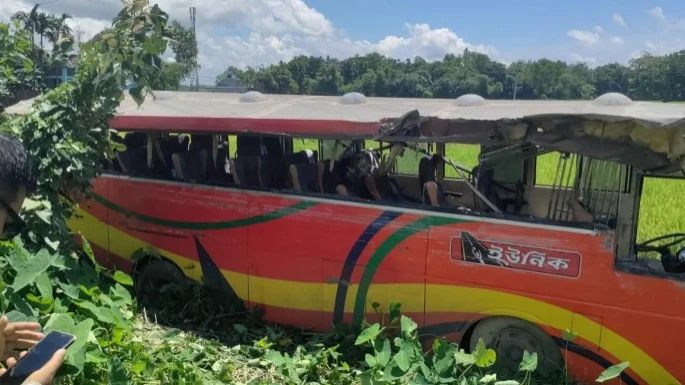
A devastating head-on crash between two intercity buses in Bangladesh's northeastern Sylhet region has claimed eight lives, with another 25 people suffering injuries from the impact. The accident unfolded on Friday morning at approximately 7:30 a.m. local time on a highway located roughly 240 kilometres from the nation's capital, Dhaka. Osmani Nagar police station officer-in-charge Golam Mostafa confirmed the casualty figures to journalists at the scene, underscoring the scale of the tragedy that has once again thrust the issue of Bangladesh's deteriorating road safety into sharp focus.
The precise circumstances that led to the head-on collision remain under active investigation by local authorities, who are gathering evidence and witness statements to determine responsibility. Preliminary indications suggest the crash occurred in broad daylight during morning rush hour, when traffic volumes on major routes between regional centres typically peak. The fact that both vehicles collided directly rather than in a glancing blow suggests that at least one driver lost control of their vehicle or was travelling at excessive speed, though investigators have not yet released formal conclusions regarding causation or contributory factors.
Sylhet, a major commercial hub in the northeastern corner of Bangladesh, sits at a critical juncture along routes connecting the country's main population centres with India's bordering states. The region experiences substantial passenger and freight traffic daily, placing considerable stress on aging road infrastructure that struggles to accommodate modern vehicle volumes. The northeast corridor represents one of the nation's busiest commercial arteries, making it a vital economic channel but also exposing it to elevated accident risks when safety standards deteriorate.
This latest catastrophe adds to an alarming pattern of fatal road incidents that has afflicted Bangladesh for decades. The nation's traffic fatality statistics rank among the worst in South Asia, reflecting systemic deficiencies that extend far beyond individual driver error or mechanical failure. Poor road design and maintenance plague many critical highways, with inadequate lane markings, absent safety barriers, and deteriorating asphalt surfaces creating hazardous conditions that increase collision risks significantly.
Vehicle maintenance standards across Bangladesh's commercial transport sector remain inconsistent and frequently inadequate. Many buses and trucks operating on intercity routes have passed their optimal service lives, with braking systems, steering mechanisms, and tyres often functioning below acceptable safety thresholds. The economic pressures facing bus operators frequently mean that preventive maintenance takes a backseat to revenue generation, leaving vehicles in increasingly compromised mechanical condition.
Driver competence and discipline issues compound these structural problems substantially. Training standards for commercial vehicle operators remain lax in many instances, while enforcement of traffic regulations suffers from inconsistent application and insufficient monitoring infrastructure. Speeding, reckless overtaking, and fatigue-related driver error represent major contributing factors in many accidents, yet comprehensive enforcement mechanisms remain underdeveloped across most of the country's highway network.
The traffic management authorities struggle to maintain effective oversight of the commercial transport sector due to resource constraints and limited surveillance technology on critical routes. Without adequate monitoring systems, checkpoints, and enforcement personnel positioned strategically along major highways, drivers face minimal consequences for violations, creating a permissive environment where dangerous practices persist unchecked.
For Malaysia and other Southeast Asian nations monitoring regional developments, Bangladesh's continuing road safety crisis serves as a cautionary example of how rapid economic growth and increased vehicular traffic can overwhelm aging infrastructure without corresponding investment in safety systems. The pattern reflects broader challenges across South and Southeast Asia, where expanding middle-class mobility has created transportation demands that exceed institutional capacity for safe management in several countries.
The psychological and economic toll extends beyond immediate casualties, affecting entire families and communities dependent on crash victims. In Bangladesh's context, where social safety nets remain limited and families often depend on individual earners, fatal accidents create cascading hardships for surviving dependents. The broader economic impact of reduced workforce productivity, medical expenses, and lost commercial activity from congestion compounds the human tragedy.
Addressing Bangladesh's road safety crisis demands comprehensive, coordinated action spanning multiple sectors. Infrastructure modernisation, mandatory vehicle safety inspections, stricter driver licensing requirements, and enhanced law enforcement represent essential components of any meaningful intervention strategy. International organisations and donor institutions have urged the government to establish independent road safety authorities with adequate funding and enforcement power.
Without urgent intervention, Bangladesh's road fatality trends appear likely to intensify as vehicle ownership and traffic volumes continue expanding. The development community has emphasised that sustainable improvements require sustained political commitment, substantial financial investment, and institutional reform—not merely reactive responses following individual disasters. The collision in Sylhet underscores how preventable tragedies continue claiming lives due to systemic shortcomings that demand comprehensive rather than piecemeal solutions.

