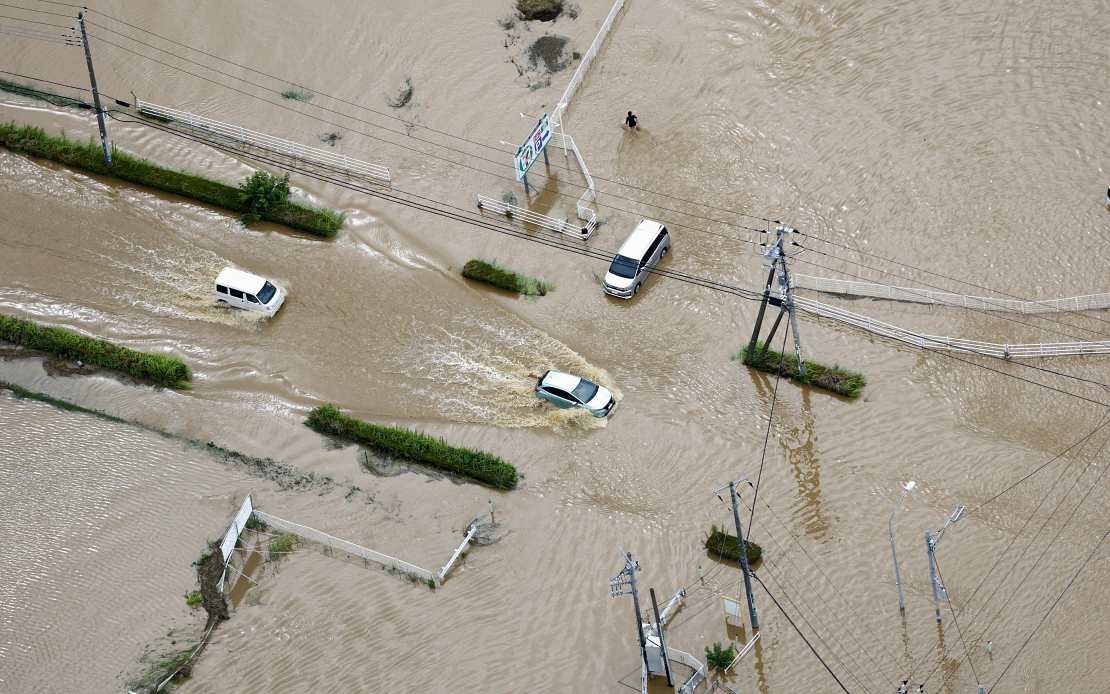
Japan's Chiba Prefecture was ravaged by torrential rainfall this week, leaving eight people dead and thousands displaced across multiple municipalities. The deaths were confirmed in the cities of Chiba, Kashiwa, Ichikawa, Sakura and Yachiyo, while an additional four residents suffered minor injuries, according to the Chiba Prefectural Government. The deluge marks one of the most severe weather events to strike the densely populated region east of Tokyo in recent memory.
The meteorological severity of the storm cannot be overstated. In just twelve hours through 1.40 am on Friday morning, Chiba City recorded 348 millimetres of precipitation—a new record for the city. To contextualise this extraordinary figure, the Japan Meteorological Agency noted that this single half-day downpour delivered roughly three times the amount of rain that typically falls across the entire month of August. Such concentrated intensity overwhelms drainage infrastructure and renders terrain susceptible to catastrophic failure.
In response to the escalating danger, Japan's meteorological authorities activated their most severe warning protocol. The Japan Meteorological Agency issued a Level 5 emergency alert—its highest designation—covering portions of Chiba Prefecture and warning specifically of heavy rain and mudslide hazards. This maximum-level warning signals immediate and severe danger requiring urgent protective action from residents. The warnings were subsequently downgraded to Level 4 or lower on Friday morning as rainfall subsided, though meteorologists cautioned that additional heavy precipitation could develop.
The human impact was immediate and widespread. The Fire and Disaster Management Agency reported that approximately 102,600 people remained under active evacuation orders as of 11 am on Friday. These mandatory relocations reflect authorities' determination to prevent further casualties, as residents in vulnerable low-lying and slope-adjacent areas faced genuine threats from flooding and landslides. The scale of displacement underscores the storm's reach across the prefecture's urban and semi-urban zones.
Transportation networks buckled under the weather assault. Narita Airport, serving the Tokyo metropolitan region and located within Chiba Prefecture, became a focal point of chaos when roughly 7,000 passengers found themselves marooned overnight. Train and bus services throughout the affected areas ceased operations, effectively isolating the airport from ground transport links. The airport operator confirmed that the precipitation-driven service interruptions created an unprecedented bottleneck, trapping travellers and disrupting regional connectivity.
For Malaysian and Southeast Asian observers, this disaster illuminates the escalating frequency and intensity of extreme weather events across East Asia. Japan, despite its world-leading disaster preparedness infrastructure and early warning systems, still suffered significant casualties and disruption. The incident underscores how even highly developed nations with sophisticated meteorological monitoring and emergency response protocols face mounting challenges from increasingly volatile precipitation patterns. Southeast Asian countries, which experience their own monsoon-driven flood seasons, can draw sobering lessons from Chiba's experience.
The environmental and climatic backdrop to this event warrants consideration. Japan's summer weather patterns have grown more erratic and intense in recent years, with record-breaking rainfall episodes occurring with troubling regularity. Climate scientists attribute such extremes partly to warming ocean temperatures that enhance atmospheric moisture-holding capacity, creating conditions favourable to explosive downpours. Chiba Prefecture's location on the Pacific coast and its position as eastern Japan's gateway makes it particularly vulnerable to weather systems approaching from maritime sources.
The prefecture's vulnerability reflects broader challenges facing developed East Asian regions. Chiba hosts critical infrastructure including major transportation hubs, dense residential areas, and significant industrial zones—all dependent on stable weather patterns. The convergence of concentrated population, vital economic functions, and increasingly unstable climate conditions creates a precarious equilibrium. When severe weather strikes, the consequences reverberate across Japan's broader economic and social systems, with international implications for trade and tourism.
Government response mechanisms, while activated swiftly, highlight the genuine limits of even excellent preparedness systems. The Japan Meteorological Agency's early warning classifications and evacuation orders likely prevented far higher casualty figures, yet eight deaths and thousands displaced demonstrate that bureaucratic and infrastructural responses cannot eliminate all risk. For developing nations in Southeast Asia facing comparable threats during monsoon seasons, Japan's response provides a cautionary template—comprehensive systems remain necessary but insufficient against extreme natural forces.
The immediate aftermath will involve detailed investigation into the circumstances surrounding each fatality, assessment of infrastructure damage, and evaluation of whether warning protocols and evacuation timelines operated optimally. Longer-term questions will centre on whether Chiba Prefecture's drainage systems, levees, and slope-stabilisation measures require upgrades to accommodate intensifying precipitation events. Climate adaptation planning across East Asia will inevitably reference this episode when justifying investments in resilience infrastructure.
Beyond Japan's borders, the Chiba disaster resonates with regional weather vulnerability. Southeast Asian nations already grappling with typhoon seasons and monsoon flooding now confront the sobering prospect of intensifying rainfall extremes. Malaysia, Thailand, Indonesia and the Philippines all face elevated risk from record precipitation events similar to those striking Chiba. The Japanese precedent demonstrates that affluent, technically advanced societies with robust emergency systems still suffer substantial human and economic losses when weather reaches extreme thresholds.

