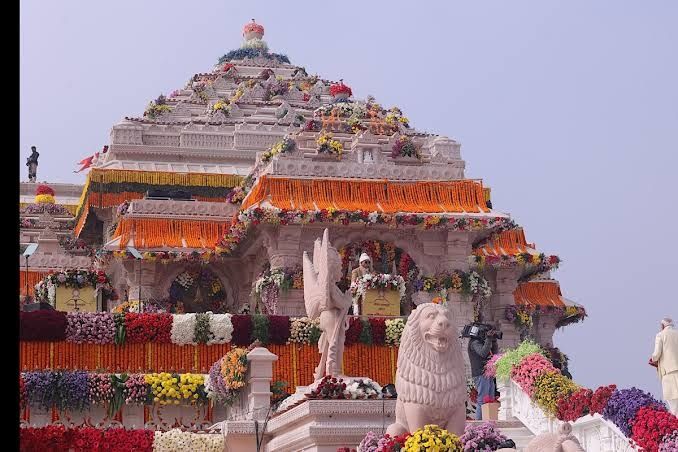
Indian police have arrested eight people connected to a major theft and misappropriation scandal at the Ram Mandir temple in Uttar Pradesh, marking a significant embarrassment for one of India's most politically prominent religious sites. The arrests, made on Thursday June 25, followed a criminal investigation into irregularities in how donations and valuables were handled at the shrine, which was ceremonially inaugurated by Prime Minister Narendra Modi in 2024 with national media coverage.
The Ram Mandir occupies ground zero in India's contemporary religious and political landscape. The temple complex was constructed on a site in Ayodhya where the Babri mosque stood for approximately four centuries before its demolition in 1992 by Hindu nationalist activists. This event became a galvanising moment for Modi's Bharatiya Janata Party, transforming the organisation from a marginal political force into the dominant power that eventually ended the Indian National Congress's near-monopoly on national governance since independence. The mosque's removal was justified by advocates who claimed the structure had been built over the birthplace of the deity Ram, a belief held by observant Hindus for centuries.
The eight individuals now facing charges include temple employees who directly managed financial operations, according to official statements and media accounts. Most worked in roles involving the counting, verification and storage of cash, gold, silver and other valuables donated by the millions of pilgrims who visit annually. These positions placed them in direct control over significant sums of money intended to support temple operations and charitable activities, creating circumstances under which large-scale embezzlement became possible. The specific mechanics of the alleged theft remain partially unclear, though the systematic nature of the arrests suggests coordinated rather than isolated criminal activity.
While authorities have declined to specify the total value of missing donations, opposition parties and independent media investigations have suggested the scale reaches beyond $20 million, an enormous sum that would represent a substantial fraction of the temple's annual revenue from pilgrimage offerings. Construction of the Ram Mandir itself cost approximately $240 million, funded entirely through public donations collected across India over decades, making the trust and confidence of devotees central to the temple's legitimacy. The apparent breach of this trust has triggered deep concern among the Hindu faithful who contributed financially to both the temple's construction and its ongoing operations.
The emotional and spiritual dimensions of this scandal extend far beyond simple criminal theft. Viti Saxena, a 44-year-old devotee who contributed to the temple, expressed the anguish felt by many believers, articulating how the allegations have transformed the Ram Mandir from a symbol of Hindu aspiration into a symbol of betrayal. Saxena's questioning whether her donations actually reached the temple coffers reflects a broader crisis of confidence affecting the institution's standing within Hindu communities across India and among the diaspora worldwide. The scandal threatens to damage the spiritual authority that the temple has accumulated since its completion and inauguration, rendering it vulnerable to criticism and suspicion in ways that affect its religious significance independent of the legal proceedings.
The eight arrested face serious criminal charges including breach of trust, theft, criminal conspiracy and corruption, offences that carry substantial prison sentences under Indian law. Uttar Pradesh Chief Minister Yogi Adityanath, whose administration established the Special Investigation Team that uncovered the irregularities, has publicly committed to ensuring that no guilty party escapes accountability regardless of their position or connections. This public assurance, while necessary for maintaining public confidence, also places significant pressure on the state apparatus to deliver visible justice and transparent prosecution.
The timing and nature of the scandal carry implications that extend beyond the temple itself into broader questions about institutional accountability in India. The Ram Mandir holds exceptional prominence in Modi's Hindu nationalist political project, making its operational integrity a matter of national political consequence rather than merely religious concern. The discovery of systematic theft undermines claims that religiously motivated governance automatically generates superior institutional standards or moral discipline among those managing sacred spaces. For Malaysian observers and Southeast Asian analysts, the case illustrates how religious institutions, however deeply rooted in communal identity and belief, remain vulnerable to the same pressures toward financial impropriety that affect secular organisations.
The investigation also raises practical questions about oversight mechanisms and transparency standards at major Indian temples. Most traditional Hindu temples function under trust management structures that often blend religious authority with financial control, creating environments where internal oversight may be limited or compromised. The Ram Mandir, despite its unprecedented scale and contemporary construction, appears to have operated under systems insufficiently robust to prevent large-scale systematic embezzlement over what authorities suggest was an extended period. This pattern suggests that modernising financial accountability at India's largest pilgrimage sites requires not merely catching individual wrongdoers but fundamentally restructuring how such institutions manage, audit and report the vast sums they accumulate.
The scandal's emergence also reflects India's strengthening investigative capacity and willingness to pursue criminal cases involving religious institutions regardless of their political sensitivity. A decade ago, similar allegations at temples might have been suppressed or minimised to protect the religious and political interests of ruling parties. The fact that authorities proceeded with arrests and public acknowledgment suggests evolving standards of institutional accountability that transcend religious and political boundaries, though observers remain divided on whether such action reflects genuine commitment to justice or calculated political maneuvering to contain reputational damage through visible enforcement.
For Hindu communities across Southeast Asia, particularly in Malaysia where Tamil Hindus constitute a significant minority population, the Ram Mandir scandal carries implications for temple governance and financial transparency in their own jurisdictions. Malaysian Hindu temples often operate on similar trust-based management models and receive substantial donations from believers, creating parallels to the conditions that enabled the Ram Mandir thefts. The Indian case provides cautionary evidence for the importance of robust financial controls, transparent reporting and independent auditing at all major religious institutions regardless of their scale or community significance. As the investigation proceeds and charges are prosecuted, it will likely prompt examination of governance standards at major temples throughout South Asia and the diaspora communities it serves.

