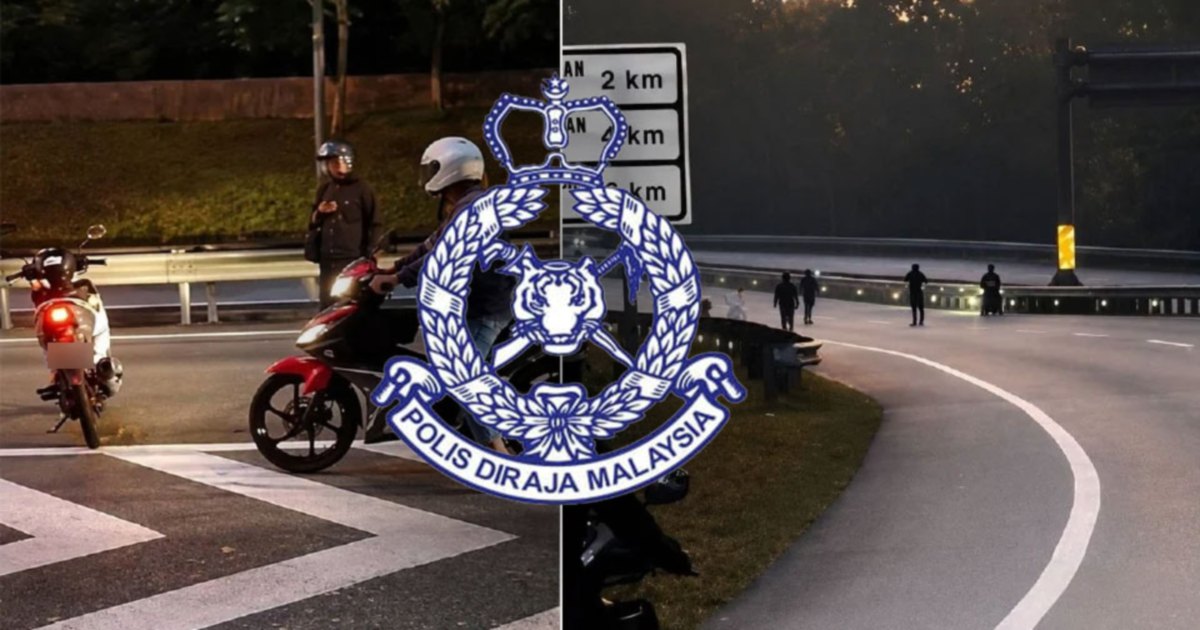
Police in Kulai have taken eight individuals into custody after video footage emerged online depicting an unauthorised motorcycle race that brought traffic to a standstill on a critical section of the Malaysia-Singapore Second Link, commonly known as Linkedua. The incident, which drew widespread attention through social media, revealed a concerning breach of public safety protocols on one of Malaysia's most important transport corridors connecting the country to Singapore.
The viral recording showed participants deliberately blockading a stretch of the highway to facilitate their illicit racing event. Such actions not only endanger the lives of the racers themselves but also pose severe risks to innocent motorists using the route. The temporary closure of a major arterial road linking Malaysia's busiest port city to Singapore could have had cascading effects on logistics, trade, and daily commute patterns for thousands of users dependent on this vital transport link. The Malaysia-Singapore Second Link, which opened in 1998, is among the nation's most congested highways during peak periods, making any unscheduled interruption particularly disruptive.
The detention of the eight suspects marks a firm law enforcement response to an escalating problem of illegal street racing across Malaysia's urban and semi-urban areas. Such activities have become increasingly common in recent years, with organised groups using social media platforms to coordinate events and broadcast their activities to wider audiences. The phenomenon reflects a troubling trend where individuals, often young and seeking thrills, disregard traffic laws and public safety in pursuit of adrenaline-fuelled entertainment. The fact that the Linkedua incident was recorded and shared online suggests the perpetrators either lacked awareness of potential legal consequences or deliberately courted public attention.
Illegal motorcycle racing carries serious implications beyond the immediate traffic disruption. Participants in such events face considerable personal risk, with accidents at high speeds on highways proving frequently fatal. Emergency responders in Malaysia have documented numerous deaths and serious injuries stemming from both illegal racing incidents and accidents involving untrained riders attempting dangerous stunts. The removal of such activities from controlled environments onto public thoroughfares multiplies these dangers exponentially, potentially involving innocent bystanders and creating secondary collision risks for uninvolved motorists.
Legal frameworks in Malaysia provide substantial penalties for individuals engaged in street racing and related offences. The Road Transport Act and related legislation impose fines, imprisonment, vehicle confiscation, and driving disqualifications for those convicted of organising or participating in illegal racing activities. The public nature of this incident, amplified through viral video distribution, likely influenced the speed and scale of the police response. Authorities have grown increasingly attuned to such content circulating online, recognising that swift action both addresses the immediate safety concern and sends deterrent messages to potential imitators.
The Linkedua incident also underscores the challenges facing Malaysian law enforcement in addressing motorway safety comprehensively. Highway patrols operate under significant resource constraints while managing vast stretches of road with substantial daily traffic volumes. The spontaneous nature of illegal racing events, particularly when coordinated through encrypted messaging applications or private social media groups, makes prevention difficult. However, the digital footprint left behind through viral videos provides investigative leads, as demonstrated by the rapid arrests in this case.
From a regional perspective, this incident reflects broader concerns about road safety culture in Southeast Asia. The visibility of Malaysian highways as conduits for rapid, exciting motorcycle use makes them attractive venues for such activities, particularly among younger demographics increasingly familiar with social media-based event coordination. Neighbouring countries including Singapore and Thailand have implemented stricter enforcement and public awareness campaigns addressing similar phenomena, with varying degrees of effectiveness. Malaysia's response to the Linkedua case will likely set precedents for how authorities address comparable incidents moving forward.
The involvement of eight individuals raises questions about the organised nature of the event. Illegal racing operations typically require coordination extending beyond simple participation—someone must scout locations, coordinate timing, manage lookouts, and arrange documentation. The scale of this operation, evidenced by the group size and their audacity in targeting a major international highway, suggests a level of planning and collective confidence that points toward an established informal network rather than a spontaneous gathering. Understanding the hierarchical structure within such groups helps authorities identify and disrupt the organisational backbone rather than merely apprehending individual participants.
Motorway safety represents a critical public policy concern for Malaysia as road accident statistics remain troubling compared to developed nations. Every illegal racing incident represents not only a direct safety violation but also a symptom of broader attitudes toward traffic regulations and shared road space. The viral nature of the Linkedua video demonstrates how social media amplification can normalise or glamorise dangerous behaviour among impressionable audiences, potentially inspiring copycat incidents unless addressed through sustained enforcement and education efforts.
The investigation into the Linkedua incident will likely expand beyond identifying the eight detained individuals to examine the broader support network, equipment sources, and coordination mechanisms involved. Forensic analysis of the viral video itself may yield additional investigative leads through background details, registration plates, or recognisable individuals visible in the footage. Authorities may also work backwards through social media platforms and mobile communication records to identify organisers and understand how participants learned of the event.
Moving forward, the police response must balance swift enforcement with community engagement aimed at shifting attitudes toward illegal racing. Public education campaigns highlighting the genuine dangers involved, combined with visible enforcement activity on highways, create multiple deterrent layers. The arrests in the Linkedua case represent the enforcement component; the challenge for authorities lies in sustaining momentum while cultivating cultural shifts that discourage participation in such activities among younger demographics susceptible to social media influence and peer pressure.

