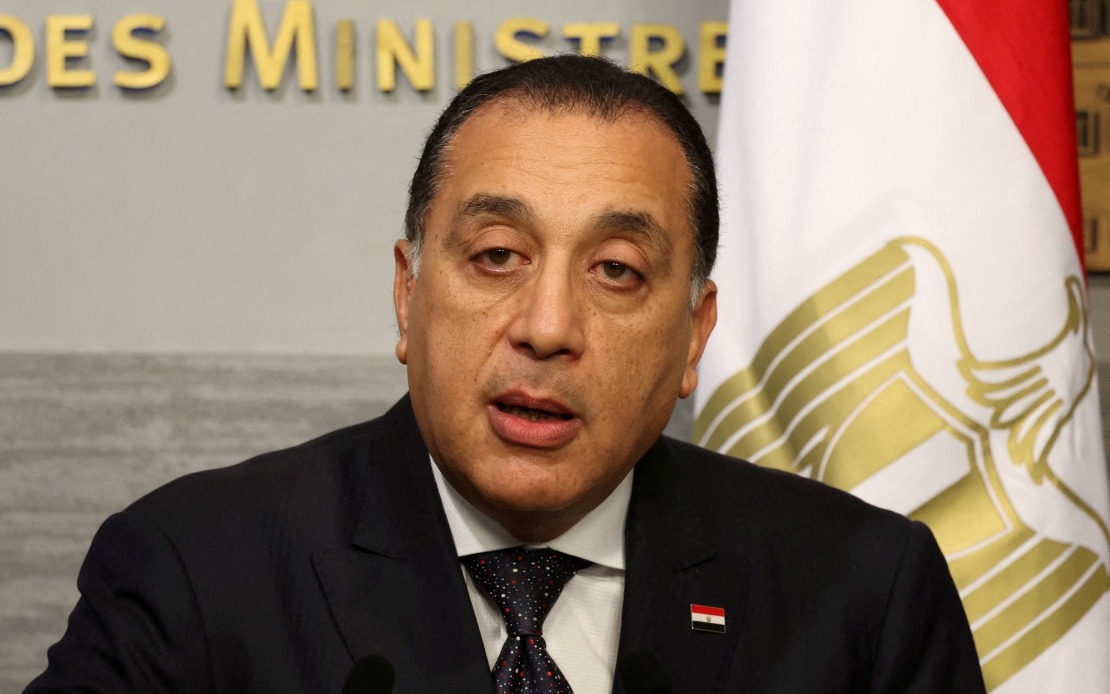
Egypt is moving steadily forward with its first nuclear power station, with Prime Minister Mostafa Madbouly confirming that the El Dabaa Nuclear Power Plant remains on track to deliver electricity to the national grid starting in 2028. The announcement came during discussions with Alexey Likhachev, director general of Russia's state nuclear corporation Rosatom, as Egypt celebrated a significant construction milestone with the installation of the reactor pressure vessel for the facility's second unit. The project represents a watershed moment for the country's energy infrastructure and its long-term power generation strategy.
The El Dabaa plant, situated roughly 300 kilometres northwest of Cairo in the Mediterranean coastal region of Matrouh Province, constitutes a flagship collaborative venture between Cairo and Moscow that gained formal legal standing in December 2017. Madbouly framed the undertaking as a transformative initiative made possible only through sustained bilateral cooperation, emphasising the government's unwavering dedication to adhering to the agreed implementation schedule. The prime minister's remarks underscored official confidence in the project's trajectory despite the considerable technical and logistical complexities inherent in establishing nuclear infrastructure.
The facility will ultimately comprise four reactor units, each capable of generating 1,200 megawatts of electricity. According to Russia's nuclear authority, the first unit should achieve grid connection in 2028, with the remaining three reactors expected to commence operations sequentially, reaching full operational capacity by 2030. This phased approach allows Egypt to integrate nuclear-generated power into its electricity system incrementally while managing grid integration challenges and demonstrating operational competence with successive units.
For Egypt, a nation confronting rapidly escalating electricity demand driven by population growth and economic expansion, nuclear generation addresses a critical supply challenge while simultaneously advancing environmental objectives. The country's existing power generation mix relies substantially on hydroelectric capacity from the Aswan High Dam and natural gas facilities, alongside a growing renewable energy portfolio. The introduction of nuclear baseload power would fundamentally alter this composition and provide consistent, weather-independent generation capacity.
The significance of this project extends well beyond Egypt's borders. As the Arab world's most populous nation and a linchpin of Middle Eastern geopolitics, Egypt's embrace of nuclear energy signals a broader regional recalibration toward diverse, sophisticated energy infrastructure. The project also reinforces Russia's expanding influence in Middle Eastern energy sectors, positioning Moscow as a reliable technology partner for regional powers seeking to modernise their power systems. For Southeast Asian nations monitoring energy trends in the broader developing world, Egypt's nuclear trajectory offers instructive lessons about managing large-scale international energy partnerships.
Likhachev's engagement with Egyptian officials and his public validation of the project's progress reflects Rosatom's institutional investment in ensuring successful execution. The Russian corporation carries responsibility not merely for construction quality but for transferring technical knowledge, training Egyptian personnel, and establishing operational frameworks that will enable long-term plant management without perpetual external dependence. This capacity-building dimension often receives insufficient attention in discussions of nuclear projects but ultimately determines whether such facilities deliver promised benefits sustainably.
The El Dabaa initiative arrives within a context of Egypt's broader energy strategy articulated by government officials as emphasising source diversification and clean energy expansion. Electricity generation accounts for substantial portions of national carbon emissions, and shifting toward nuclear power aligns Cairo's infrastructure planning with climate mitigation objectives increasingly important to international development institutions and trading partners. The plant's contribution of 4,800 megawatts at full capacity would constitute approximately twelve to fifteen percent of Egypt's total generation capacity, depending on overall system growth by the time all units operate.
Navigating the completion of such a complex project requires sustained political commitment, adequate financial resourcing, and freedom from major disruptions. Egypt has historically demonstrated capability in executing large infrastructure initiatives, most notably the New Suez Canal expansion completed in 2016. However, nuclear projects demand different technical disciplines and regulatory frameworks than civil engineering ventures. The government's coordination with Rosatom and its domestic nuclear authority will prove crucial in maintaining momentum through the engineering, construction, and commissioning phases ahead.
The 2028 target for initial grid connection represents an ambitious but achievable goal provided no significant setbacks occur. Previous nuclear projects in developing nations have sometimes experienced schedule slippages resulting from financing constraints, design modifications, or unforeseen technical challenges. Egypt's explicit public reaffirmation of the timeline suggests official confidence, yet also signals government resolve to maintain international credibility by delivering against announced benchmarks. For Malaysia and other Southeast Asian countries contemplating nuclear energy options, Egypt's experience will provide valuable case study material regarding the feasibility of implementing such projects within emerging market contexts.
Beyond generation capacity, the El Dabaa project carries implications for regional technological development and expertise cultivation. As Egyptian engineers gain hands-on experience with advanced nuclear systems, they contribute to building domestic nuclear competencies that extend beyond this single facility. Knowledge accumulated through this project could eventually enable Egypt to undertake additional nuclear initiatives or provide technical assistance to other developing nations pursuing similar pathways. The ripple effects of successful technology transfer through Russian partnership extend across multiple policy domains beyond immediate electricity production.

