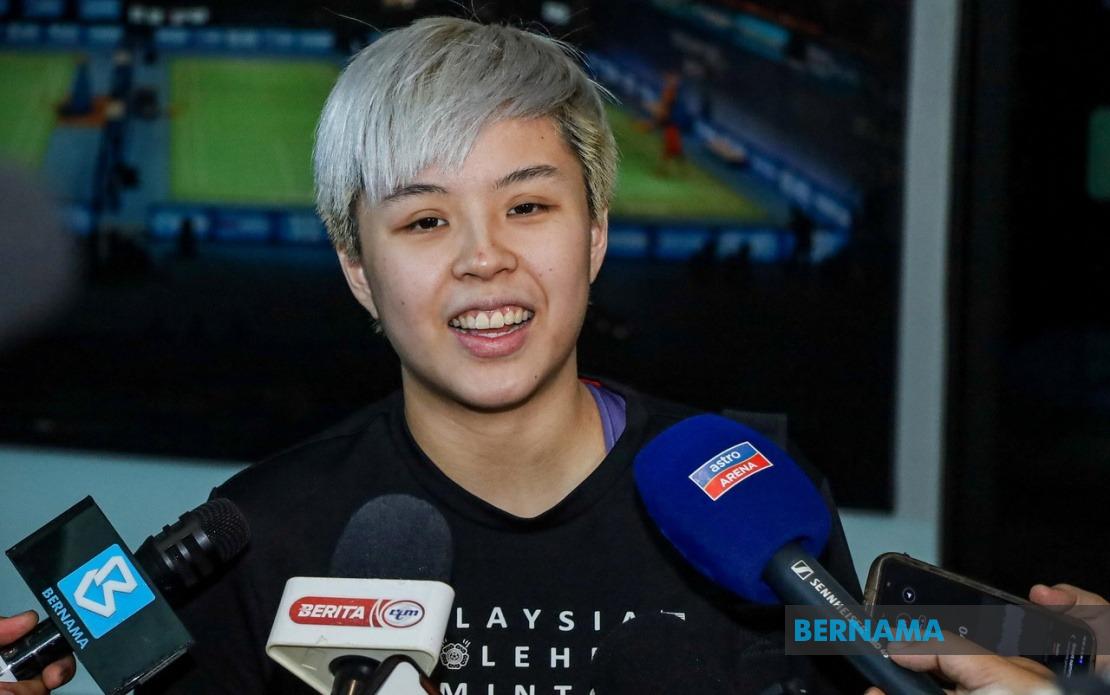
National mixed doubles player Toh Ee Wei has successfully completed anterior cruciate ligament surgery on her left knee at a Melbourne, Australia clinic, marking the first major step in her recovery from an injury sustained during competitive play last month. The Badminton Association Malaysia (BAM) confirmed on July 1 that the surgical procedure was carried out as planned, with Ee Wei now transitioning into a structured rehabilitation programme designed to restore her to peak competitive condition.
The injury that necessitated surgery occurred during the quarter-finals of the Singapore Open 2026, when the ACL—a critical stabilising ligament in the knee—was damaged during play. Such injuries represent one of the most serious setbacks in badminton, a sport demanding explosive lateral movements, rapid directional changes, and sustained court coverage that place enormous strain on the knee joint. The decision to pursue surgical reconstruction rather than conservative management underscores the severity of Ee Wei's injury and BAM's commitment to facilitating a comprehensive recovery strategy.
BAM's statement reflects the national federation's institutional approach to athlete welfare, positioning medical intervention as one component of a broader support framework. Beyond the surgical procedure itself, the organisation has committed to furnishing Ee Wei with ongoing physiotherapy, conditioning work, and medical oversight throughout what will likely be several months of rehabilitation. This structured approach acknowledges that successful return to elite competition following ACL reconstruction demands not merely healing of the ligament but restoration of proprioception, strength asymmetries correction, and gradual reintegration into sport-specific movement patterns.
Ee Wei's personal statement conveyed both relief at the surgical outcome and disciplined focus on the months ahead. Her emphasis on full commitment to recovery reflects the psychological dimension of injury rehabilitation, particularly for athletes accustomed to regular competition. The acknowledgment of widespread public support demonstrates the emotional resonance that national athletes' injuries carry within Malaysian sporting communities, where badminton occupies a culturally significant position and national representatives function as symbols of competitive achievement.
The timeline for Ee Wei's return to competitive play remains uncertain, as ACL reconstruction rehabilitation typically spans six to nine months minimum before athletes resume full-contact sport, with many requiring additional months for confidence restoration and performance optimisation. Mixed doubles badminton places particular demands on knee stability given the shorter court coverage required compared to singles, yet the explosive starting movements and sudden deceleration demands remain substantial. Her partnership dynamics will also require time for re-establishment once competition resumes, as the chemistry and tactical understanding between mixed doubles pairs often deteriorates during extended separations.
From a competitive perspective, Ee Wei's absence creates a gap in Malaysia's mixed doubles representation during a period when regional and international tournaments continue. The badminton calendar does not pause for individual recoveries, meaning other Malaysian pairs will shoulder increased expectations in tournaments where Ee Wei might have traditionally competed. This creates both opportunity for depth squad development and temporary vulnerability in ranking points accumulation during the recovery window.
The choice to pursue surgery in Melbourne rather than domestically reflects either the presence of specialist ACL reconstruction expertise in that centre or potentially coordination with existing medical professionals supporting Malaysian badminton players. Australia hosts world-class orthopedic services and has historically served Southeast Asian athletes seeking specialised care, though it also lengthens the logistical chain for rehabilitation monitoring and creates geographic complications for BAM's hands-on support provision.
Badminton injuries of this magnitude frequently prompt broader discussions within national sports bodies about injury prevention protocols, training load management, and court surface specifications that might reduce ACL injury risk. The Singapore Open incident—one of several significant injuries affecting Malaysian players in recent years—may catalyse internal reviews of conditioning philosophies, movement screening practices, and warm-up protocols that could yield systemic improvements benefiting the entire national squad.
Ee Wei's recovery narrative will likely attract sustained media attention in Malaysia given badminton's prominence in the national sports consciousness. Her progress through rehabilitation phases will provide regular touchpoints for coverage, and her eventual return to competition will constitute a significant sporting story. This public dimension, while potentially motivating, also creates pressure dynamics that rehabilitation specialists must manage carefully to ensure psychological well-being remains prioritised alongside physical recovery targets.
The injury underscores the vulnerability inherent in elite sport participation, where years of training investment can be compromised by single moments of misfortune. Yet it also exemplifies the resilience narratives that characterise professional athletics, where serious setbacks frequently precede notable comebacks. For Malaysian badminton fans, Ee Wei's recovery journey represents both a frustration at her unavailability and an investment in her eventual return to the court as a potentially strengthened competitor.

