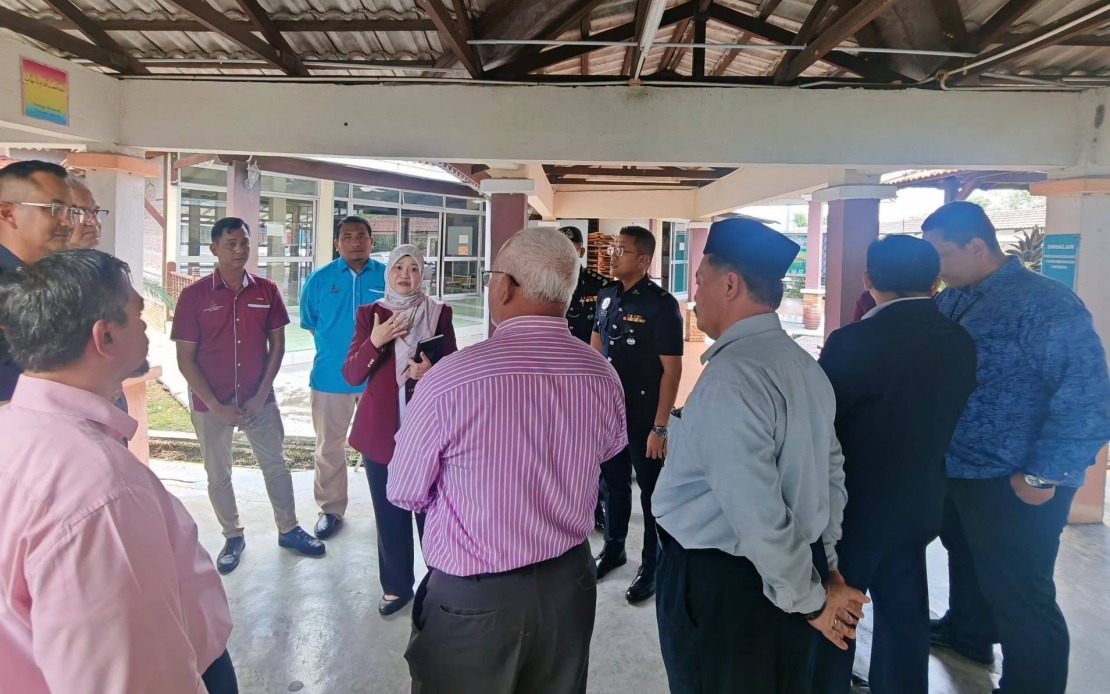
Education Minister Fadhlina Sidek made an unscheduled visit to a secondary school in Banting, Kuala Langat, on July 6 following a violent incident that shattered the morning routine at the institution. A Form Three student sustained stab wounds allegedly inflicted by another female pupil in what police confirmed occurred at approximately 9.50 am. The ministerial visit, arriving at 1.20 pm, underscored the gravity with which the government is treating the incident and the broader concerns it raises about student safety in Malaysian schools.
The victim, who was treated for stab wounds, has been receiving medical care at Banting Hospital where she remains in stable condition. Authorities swiftly responded to the emergency call, and law enforcement moved quickly to secure the school premises and apprehend the alleged assailant for questioning. The speed of the police response and the immediate containment of the situation prevented the incident from escalating further, though the psychological impact on the school community is substantial. Kuala Langat district police chief Supt Mohd Akmalrizal Radzi confirmed the initial emergency alert and the subsequent investigation into the circumstances that led to the confrontation between the two students.
During her visit, Fadhlina held consultations with school management to understand the sequence of events and assess the immediate needs of the affected school community. Her discussions focused on identifying the support systems already in place and determining what additional resources might be required. The minister's primary concern centred on two critical areas: ensuring the stabbed student receives comprehensive medical treatment and establishing robust psychological support mechanisms for both the victim and the broader student and staff population who witnessed or learned of the traumatic occurrence. This dual-pronged approach reflects recognition that physical recovery represents only part of the healing process required after such incidents.
In a statement released through social media, Fadhlina appealed for calm and urged the public to exercise restraint in discussing the matter. She specifically cautioned against spreading unverified accounts or speculative narratives that could compound distress among the school community or hamper the police investigation. The minister expressed empathy for the principal, teaching staff, and student body, acknowledging that such traumatic events test the emotional resilience of everyone connected to the institution. She pledged that the ministry would disseminate further information only after receiving clearance from law enforcement authorities, maintaining the necessary coordination between educational and security agencies.
Local assemblyman V. Paparaidu, who chairs the Selangor Human Resources and Poverty Eradication Committee, added his voice to the calls for enhanced school security measures. Paparaidu commended the Selangor State Education Department for its rapid deployment of psychosocial support and counselling services to the victim, her family, and affected students. However, he also used the incident as a catalyst to highlight systemic vulnerabilities in school security protocols. The assemblyman's intervention reflects growing concern among elected representatives about the capacity of existing security arrangements to prevent unauthorised access and respond to internal threats within educational institutions.
Paraidu's remarks identified specific security gaps that require urgent attention. He emphasised that school gatekeeping procedures must be strengthened to prevent individuals without legitimate business from entering campus areas. He advocated for heightened vigilance during peak arrival and departure times, when student concentration at entry and exit points creates both vulnerability and opportunity for intervention. The assemblyman stressed that security personnel must be adequately trained, resourced, and motivated to maintain constant alertness rather than operating in a reactive or perfunctory manner. His statement reflected the broader view among stakeholders that schools cannot function as entirely open communities without compromising the safety essential for learning to occur effectively.
The incident and the official response it triggered illuminate the complex challenge facing Malaysian schools in balancing accessibility with security. Educational institutions traditionally function as open environments that serve not only students but also parents, community members, and various service providers. Installing fortress-like security measures risks creating an atmosphere of fear and institutional lockdown that undermines the educational mission. Conversely, inadequate security measures leave students vulnerable to internal and external threats. The Banting incident demonstrates that sometimes the greatest danger emerges from within the student body itself, suggesting that effective school safety requires not only physical security measures but also early identification of students experiencing psychological distress or harbouring violent impulses.
The involvement of another student as the alleged perpetrator adds complexity to the security response. Unlike external threats that can be managed through gate controls and perimeter monitoring, peer-on-peer violence requires schools to implement comprehensive youth mental health screening, conflict resolution training, and accessible counselling services. Teachers and administrative staff need training to recognise warning signs of escalating tensions between students and protocols for de-escalation and appropriate intervention. The incident raises questions about whether warning signs preceded the stabbing and whether the school possessed mechanisms for identifying and addressing them. These questions will likely form part of the police investigation and subsequent review of security and pastoral care procedures.
The wider implications for Malaysian schools extend beyond Banting. This incident represents another data point in a troubling pattern of school-based violence that has prompted periodic public concern and policy discussions. Parents naturally worry about whether Malaysian schools provide sufficiently safe environments for their children. Teachers face growing expectations to manage not only academic instruction but also complex behavioural and emotional issues among their charges. School administrators must navigate the tension between maintaining welcoming educational spaces and implementing security measures that can feel restrictive or anxiety-inducing. The incident at Banting will likely prompt other school leaders to review their own security protocols and crisis response procedures.
The response from the Education Ministry and Selangor state authorities reflects Malaysia's commitment to supporting affected students and staff while allowing law enforcement to conduct its investigation unimpeded. However, the incident will inevitably generate broader policy discussions about school safety standards, mental health resources in educational settings, and whether current security frameworks adequately protect students while preserving the educational mission. The coming weeks will reveal whether this incident catalyses systemic reforms or receives treatment as an isolated tragedy. Meanwhile, the school in Banting faces the immediate challenge of rebuilding confidence among parents and students while supporting those most directly traumatised by the stabbing.

