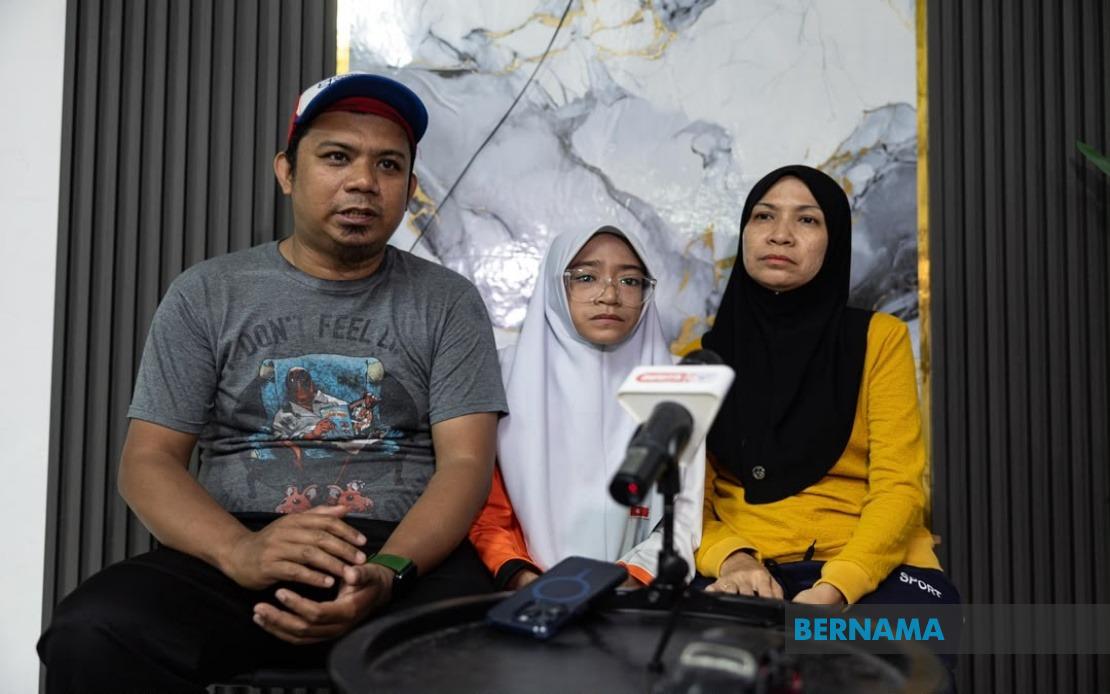
Education Minister Fadhlina Sidek has partnered with the Tun Hussein Onn Teachers' Foundation (YGTHO) to provide RM10,000 in financial assistance for the surgical treatment of 13-year-old Arissa El Zahra Reduan, whose procedure is scheduled for early September at Raja Permaisuri Bainun Hospital in Ipoh. The contribution represents a meaningful intervention in a case that highlights the ongoing financial barriers many Malaysian families face when accessing critical medical procedures for their children.
Fadhlina announced the contribution through a video message to Arissa and her mother, assuring them that the funds would be immediately disbursed to cover the full cost of the operation. In her statement, the minister emphasized her team's commitment to ensuring the teenager receives comprehensive care throughout the treatment process, with arrangements already underway to facilitate a smooth surgical experience. The announcement carries particular significance coming from the Ministry of Education, signalling government-level attention to student welfare beyond the classroom.
Arissa's father, Reduan Saad, had publicly appealed for financial support to cover the surgery costs, describing the substantial burden that scoliosis treatment places on families. Scoliosis, a condition characterised by an abnormal lateral curvature of the spine, often requires surgical intervention in adolescent patients to prevent progressive deformity and associated health complications. For families in Malaysia's middle and lower-income brackets, such procedures—which typically involve specialist care, hospital stays, and rehabilitation—represent a significant financial strain that can force difficult choices about accessing necessary treatment.
The minister's intervention underscores an emerging pattern of public figures and government agencies stepping in to bridge gaps in healthcare financing for vulnerable populations. While Malaysia's public healthcare system provides subsidized treatment, many families still struggle with indirect costs such as transport, accommodation, and post-operative care. The YGTHO's involvement adds institutional weight to the initiative, as the foundation has historically focused on supporting educators and their families, but in this case extended assistance to benefit a student in genuine medical need.
Fadhlina's emotional appeal in her messaging—acknowledging Arissa's determination to return to school and continue her education—reflects broader government recognition that health barriers directly impact educational outcomes. When students are sidelined by medical conditions, their academic progress, social development, and long-term prospects suffer. By facilitating Arissa's surgery, the ministry is effectively removing an obstacle to her continued participation in school, framing the intervention as investment in human capital rather than mere charity.
The timing of the procedure in early September aligns with the academic calendar, allowing for a potentially smoother recovery period aligned with school holidays. This logistical consideration suggests that the minister's team has thoughtfully coordinated the medical intervention with practical educational planning. Such attention to detail demonstrates how government agencies can better serve citizens when they move beyond reactive responses to proactive, comprehensive support.
The case also highlights persistent disparities in healthcare access within Malaysia. While urban centres like Ipoh have facilities capable of addressing complex spinal conditions, families navigating these systems often lack crucial information about financial assistance programmes, charitable resources, or government support mechanisms. Arissa's case gained visibility through media attention, which essentially served as the catalyst for government assistance—a pattern that raises questions about how many other children facing similar surgical needs remain unaware of available resources or lack the media platform to amplify their appeals.
From a policy perspective, this intervention illustrates both the strengths and limitations of ad-hoc government benevolence. While immediate assistance provides crucial relief to individual families, sustainable solutions require systemic approaches to healthcare financing for non-communicable diseases affecting young people. Malaysia's healthcare policy community increasingly recognizes that conditions like scoliosis demand integrated strategies encompassing early screening, affordable treatment access, and post-operative rehabilitation support.
The collaboration between the Education Ministry and YGTHO also signals potential for expanded inter-agency coordination in addressing student welfare. Teachers' foundations and educational institutions occupy unique positions to identify students experiencing health crises that threaten their academic participation. By formalizing pathways for government support through these networks, policymakers could create more efficient mechanisms for targeting assistance to students in genuine need.
For Malaysian families navigating the healthcare system, this case provides both hope and a sobering reminder. Arissa's successful securing of funds reflects the positive possibility that public appeals can yield results, yet it also underscores that access to necessary medical care should not depend on individual luck or media visibility. The broader educational and healthcare community will be watching how this case informs future policy discussions about ensuring equitable access to surgical treatment for adolescents with serious spinal conditions.

