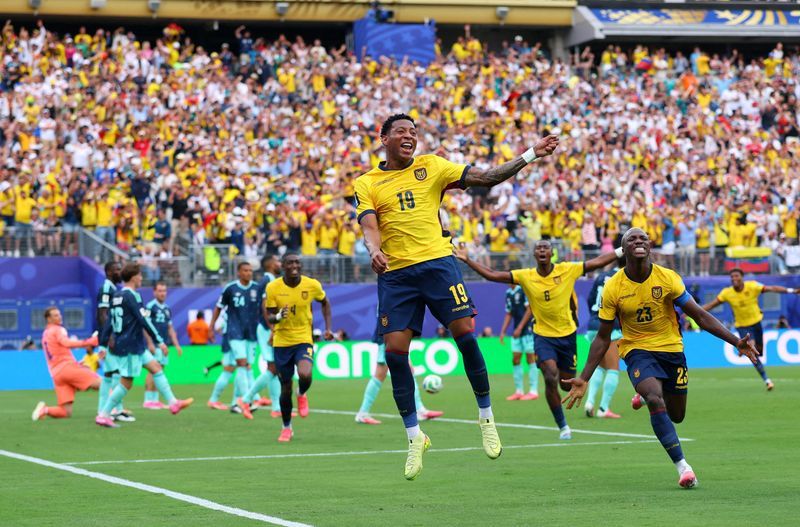
Ecuador produced one of the tournament's most dramatic reversals at the sold-out East Rutherford stadium in New Jersey on Thursday, fighting back from an early deficit to upset Germany 2-1 and clinch a spot in the World Cup's last 32. The South American side's resurgence proved decisive in a group that had appeared to be slipping beyond their grasp, delivering a morale-shattering blow to the Germans despite their mathematical qualification as group winners.
Entering the match facing near-certain elimination after successive disappointing results, Ecuador knew only victory would sustain their World Cup ambitions. Their plight seemed to worsen catastrophically within the opening moments when Leroy Sane capitalised on German assertiveness, converting a finish in the second minute to give the Europeans an immediate advantage. The goal arrived after Florian Wirtz orchestrated a swift move from a quick throw-in, positioning his teammate for a left-footed strike from the area's interior. Ecuador's protests regarding a potential high boot infraction by Aleksandar Pavlovic on Pedro Vite during the buildup proved unsuccessful, with referee Tori Penso ruling the goal legitimate.
The narrative shifted dramatically when Ecuador demonstrated unexpected attacking potency. Nilson Angulo equalised just seven minutes later with a curling effort from the box's perimeter, exposing goalkeeper Manuel Neuer's sluggish positioning. This breakthrough marked a watershed moment for Ecuador's tournament, ending a frustrating sequence of 39 unsuccessful attempts without a goal—a statistic that had weighed heavily on the squad's confidence throughout their opening matches. The equaliser triggered an emotional outburst among Ecuador's travelling supporters, sensing a possible lifeline had materialised.
Germany, having already secured progression with maximum points from their first two encounters, appeared vulnerable in defence despite their offensive pedigree. The Germans had consistently surrendered goals across all three group matches, undermining what should have been a commanding position atop the standings. Their pursuit of a third consecutive victory and a 12th straight win faced a genuine examination against opposition playing with the desperation of a team facing elimination.
Controversial officiating continued to shape proceedings after half-time when referee Penso initially awarded Germany a penalty following Felix Nmecha's pass to Kai Havertz, who seemed to be brought down by Joel Ordonez. However, a VAR review prompted the official to reverse his decision, identifying a German infraction in the preceding sequence and denying what would have been a crucial opportunity to extend their advantage. This intervention highlighted the fine margins determining outcomes in competitive international football and potentially altered the match's trajectory.
The turning point arrived in the 78th minute when Gonzalo Plata restored Ecuador's fortunes with clinical finishing. After substitute Kevin Rodriguez flicked a corner kick toward the near post, Plata demonstrated superior positioning and awareness to finish beyond Neuer, sending the stadium into tumultuous celebration. This decisive intervention sealed Ecuador's comeback and condemned Germany to a disappointing result despite their group-stage superiority.
Ecuador's qualification as one of the eight highest-ranked third-placed teams represents a remarkable achievement considering their precarious position entering the final fixture. The victory demonstrates how decisive final group matches can reshape tournament narratives, allowing teams to overturn apparent certainties through concentrated effort and tactical adjustment. Germany's professional passage as group winners, achieved with six points and a superior goal difference over Ivory Coast—who defeated Curacao 2-0 to consolidate second place—masks underlying defensive concerns that may prove problematic during knockout competition.
For Malaysian and Southeast Asian observers, Ecuador's performance illustrated the unpredictability inherent in international football tournaments. Teams representing smaller footballing nations can briefly transcend conventional expectations through coordinated effort and opponent vulnerability, suggesting that progression in World Cups depends not merely on squad quality but also on timing, momentum, and psychological state. The match exemplified how pressure situations can either paralyse or energise players, with Ecuador demonstrating the resilience required to survive elimination scenarios.
The implications for Germany's knockout prospects warrant scrutiny, given their defensive frailties across three matches. Managers typically address such vulnerabilities during tournament breaks, yet persistent defensive weaknesses indicate systematic issues rather than momentary lapses. Conversely, Ecuador's sudden offensive awakening provides confidence heading into confrontation with more formidable opponents, though their limited preparation time for knockout football presents tactical challenges. The group stage outcome reshuffled expectations and demonstrated that World Cup credentials remain incompletely determined until knockout fixtures commence.

