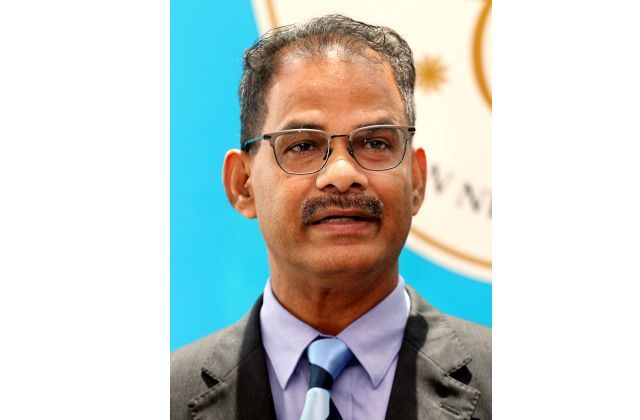
The multibillion-ringgit East Coast Rail Link (ECRL) is positioned to become a significant employment generator for Selangor's transportation equipment manufacturing sector, with projections indicating approximately 2,000 job openings across locomotive-related industries. During parliamentary proceedings at Bangunan Dewan Negeri Selangor in Shah Alam on Tuesday, V. Papparaidu, the state's human resources and poverty eradication committee chairman, outlined how the RM50.27 billion infrastructure megaproject could reshape employment opportunities across the region's blue-collar and technical workforce landscape.
A particularly encouraging aspect of the ECRL's anticipated labour impact is that roughly four-fifths of the positions created will prioritise hiring from Malaysia's domestic workforce rather than relying on foreign labour. This preference for local recruitment aligns with broader policy objectives to reduce structural unemployment and underemployment among Malaysian citizens, particularly in manufacturing-dependent regions. Papparaidu framed the opportunity as a gateway for Selangor's younger demographic to establish careers in sophisticated industrial sectors, contingent on their acquisition of suitable vocational qualifications and technical competencies demanded by modern rail manufacturing environments.
The state government has moved beyond passive acknowledgment of skills gaps to implement proactive initiatives designed to funnel trained workers toward available positions. The Kerjaya Selangor initiative, executed in partnership with the Social Security Organisation (PERKESO) through the MyFuture Jobs digital platform, represents a data-driven approach to labour market matching. The system evaluates prospective candidates across multiple dimensions—their formal credentials, acquired skills, and alignment with specific sectoral requirements—before facilitating introductions to employers. This technological intermediary reduces information asymmetries that traditionally impede effective job placement in technical fields.
Complementing digital job-matching infrastructure, the state has organised JobCare Selangor events that function as accelerated recruitment fairs, providing TVET graduates direct interview access to hiring representatives. Between January and July of this year, Selangor's vocational and technical education pipeline produced 10,111 graduates according to PERKESO statistics, suggesting a growing reserve of potential candidates for ECRL-related positions. However, the sheer numerical availability of trained workers does not automatically guarantee successful labour market integration; qualitative alignment between graduate specialisations and employer requirements remains crucial.
The broader employment landscape in Selangor reflects robust demand for qualified technical personnel across multiple high-value sectors. During the seven-month period cited by Papparaidu, approximately 78,030 job vacancies requiring diploma-level qualifications or higher emerged across the state. Within this aggregate figure, 3,965 positions were concentrated in sophisticated manufacturing domains including automotive engineering, semiconductor fabrication, and advanced manufacturing operations. These openings encompassed roles such as automotive engineers, data scientists, and software developers—all requiring the analytical and technical competencies cultivable through comprehensive TVET programming.
The ECRL project specifically demands locomotive manufacturing expertise that extends far beyond basic assembly skills. Modern rail manufacturing combines mechanical engineering principles with electrical systems knowledge, quality assurance methodologies, and increasingly, digital manufacturing technologies. TVET institutions aligned with locomotive production standards can incorporate these evolving technical requirements into curricula, ensuring graduates possess immediately deployable capabilities rather than merely theoretical knowledge. Papparaidu underscored this alignment imperative, emphasising that vocational training must consistently reflect industry feedback regarding competency standards and emerging technological demands.
Selangor's geographic and economic complexity complicates straightforward labour market strategies. The state encompasses distinct industrial clusters with divergent specialisations and labour demands. Shah Alam functions as a major automotive manufacturing hub, while Pelabuhan Klang (Port Klang) operates as a logistics and maritime services epicentre with different skill requirements. Other districts maintain varying concentrations in electronics, textiles, and petrochemicals. A uniform, state-wide approach to graduate skill development risks either oversupplying workers in saturated sectors while leaving emerging clusters understaffed, or underinvesting in districts with latent growth potential. Papparaidu acknowledged this complexity when discussing whether district-level workforce mapping exercises might optimise allocation of training resources and graduate placement outcomes.
Executing sophisticated labour market mapping requires institutional coordination extending beyond vocational institutes alone. Universities, polytechnics, private training providers, and community colleges collectively produce the skilled workforce, yet fragmented data systems frequently prevent comprehensive visibility into graduate stocks, specialisations, and geographical distribution. Papparaidu suggested the state government would need to consolidate educational institution records to establish baseline knowledge of how many graduates annually emerge from specific fields—whether in rail engineering, semiconductor design, or industrial maintenance. Without such foundational data, workforce planning remains reactive rather than strategically anticipatory.
The ECRL presents a time-limited catalyst for employment expansion; the project's construction and subsequent operational phases will follow defined timelines. Optimising the labour market opportunity requires that the state government, educational institutions, and prospective employers synchronise actions over coming months. Training programmes initiated today must graduate cohorts precisely when locomotive manufacturing facilities scale production upward. Wage levels in ECRL-related positions, working conditions, and career progression pathways will ultimately determine whether available jobs attract and retain quality workers or experience chronic recruitment difficulties.
Looking forward, Selangor's success in leveraging the ECRL for inclusive economic opportunity depends on translating policy commitments into operational execution. The RM50.27 billion infrastructure investment represents not merely concrete, steel, and electrical systems, but also a substantial human capital mobilisation opportunity. Whether approximately 2,000 Selangor residents ultimately secure quality, sustainable employment through this channel will serve as a barometer of whether Malaysia's vocational education system and labour market institutions have evolved sufficiently to match ambitious infrastructure development with inclusive prosperity.

