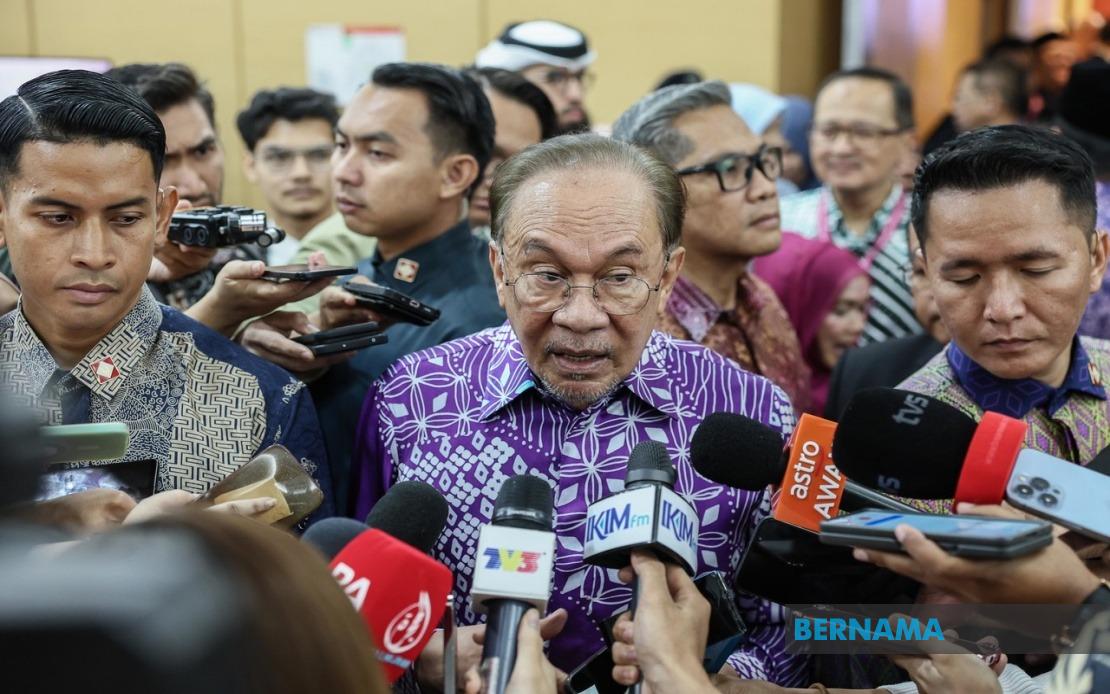
Prime Minister Datuk Seri Anwar Ibrahim has issued a clarion call for Malaysian policymakers to fundamentally reframe how the nation approaches economic development, insisting that prosperity and technological innovation must ultimately serve humanity rather than become objectives pursued for their own sake. Speaking at the Humane Economy Global Discourse in Kuala Lumpur on July 23, Anwar articulated a vision in which Malaysia's quest for competitive advantage and investment attraction remains anchored to deeper moral and ethical foundations that place human welfare at the centre of all policy decisions.
The Prime Minister's intervention comes as Southeast Asia's third-largest economy navigates a period of unprecedented technological disruption. Anwar acknowledged that Malaysia stands at the threshold of transformative change driven by artificial intelligence, renewable energy systems, advanced manufacturing capabilities and biotechnology innovations. Each of these technological frontiers promises significant economic opportunities and potential productivity gains, yet each also carries profound implications for employment, social cohesion and the distribution of wealth across Malaysian society. His remarks suggest recognition that rapid technological adoption, without careful ethical consideration, risks creating winners and losers in ways that could undermine social stability and shared prosperity.
The philosophical framework Anwar presented represents a departure from purely technocratic approaches to development. Rather than treating economic indicators—GDP growth, foreign direct investment inflows, or export volumes—as ultimate measures of national success, the Prime Minister contended that these metrics should function as instruments through which broader human purposes are served. This distinction carries particular resonance for Malaysia, a middle-income nation where rising inequality, regional disparities and concerns about affordable housing and healthcare remain persistent challenges even as the economy registers solid overall growth. By centering human dignity and well-being in the development equation, Anwar suggested that Malaysia could pursue competitiveness in ways that more evenly distribute the benefits of economic progress.
The institutional scaffolding supporting this agenda became visible through the presence of key figures at the discourse. Minister in the Prime Minister's Department (Religious Affairs) Dr Zulkifli Hasan's attendance underscored the government's intention to integrate ethical and spiritual dimensions into economic policymaking. Similarly, the participation of Prof Datuk Dr Saadiah Mohamad, chairman of Forum Ekonomi Manusiawi and director of the HEGD 2026 event, indicated that academic and civil society partners would be mobilised to translate philosophical commitments into concrete policy recommendations and institutional reforms.
Anwar's framing of the economy as a means rather than an end carries implications that extend beyond rhetorical flourish. If genuinely operationalised across government ministries and statutory bodies, this principle would require systematic reassessment of how projects are evaluated for approval, how regulatory frameworks are designed, and how success is measured. Current infrastructure projects, tax policies, labour regulations and social programmes would come under scrutiny through a lens that asks not only whether they generate economic growth but whether they enhance human flourishing, protect worker dignity, ensure equitable access to opportunity and strengthen community bonds.
The emphasis on reconnecting economic life to moral purpose also reflects global intellectual currents that have gained momentum since the 2008 financial crisis. Economists, philosophers and policymakers across advanced and developing nations have increasingly questioned whether growth-maximisation frameworks adequately account for environmental sustainability, social inequality and non-material dimensions of well-being such as health, education and civic participation. Malaysia's articulation of this concern suggests the nation is positioning itself within international conversations about alternative development models that might be more resilient and inclusive than growth-focused paradigms.
For Southeast Asia more broadly, Malaysia's positioning carries weight. As the region's economies compete for investment and talent in the AI era, differentiation through emphasis on humanistic values and ethical governance could become a competitive advantage. Multinational corporations increasingly face pressure from investors, consumers and regulators to demonstrate commitment to sustainable and socially responsible practices. A Malaysian brand emphasising authentic integration of moral purpose into economic life, backed by consistent policy implementation, could attract capital and talent seeking alternatives to purely extractive or exploitative models.
The challenge ahead lies in translation and implementation. Rhetorical commitments to human-centred development are common among political leaders globally, yet translating such commitments into binding policy constraints and institutional structures remains extraordinarily difficult. Government agencies must be incentivised and equipped to prioritise dignity and well-being alongside fiscal discipline and efficiency. Private sector participation becomes essential, as corporations control vast resources and make decisions affecting millions of livelihoods. Labour unions, civil society organisations and academic institutions will need to monitor implementation and provide critical feedback when policies diverge from stated principles.
Anwar's intervention also invites scrutiny of existing Malaysian policies through this new lens. Labour market policies, skills development programmes, industrial policies and regional development strategies would benefit from explicit evaluation of their contributions to human dignity. Wage levels, workplace safety, training opportunities, income security and capacity for workers to exercise voice in decisions affecting their livelihoods become central concerns rather than secondary considerations. Similarly, environmental policies and urban planning decisions acquire moral weight beyond their economic efficiency, as they directly determine the quality of life that citizens experience.
The timing of this emphasis on humanity in economic policy matters. As Malaysia confronts inflationary pressures, labour market changes driven by automation, climate-related economic disruptions and shifting global trade patterns, the temptation will be strong to prioritise rapid growth and cost-cutting over slower progress toward more equitable and dignified development. Anwar's public commitment to a humanistic framework can serve as counterweight to such pressures, providing moral authority for policymakers who push back against narrow economism within government and business circles.
The discourse also occurs within Malaysia's broader political and social context, where questions of social justice, racial equity and religious pluralism remain deeply contested. By framing economic policy through the language of universal human dignity and moral purpose rather than narrow ethnic or sectarian interests, Anwar potentially offers bridge-building language that could unite Malaysians across communal lines around shared commitments to well-being and equitable development. Whether this potential is realised depends on consistent follow-through in governance.
Moving forward, Malaysia will face decisions about how to operationalise these principles. Institutional mechanisms for incorporating humanistic considerations into policy evaluation, budget allocation and performance measurement will require design and implementation. International partnerships with countries and organisations pursuing similar agendas could accelerate learning and provide accountability benchmarks. Regular public reporting on progress toward human-centred development outcomes, beyond standard economic indicators, would help cement the commitment and maintain political pressure for implementation. The philosophical vision Anwar articulated provides essential orientation; translating it into practice remains the urgent task ahead.

