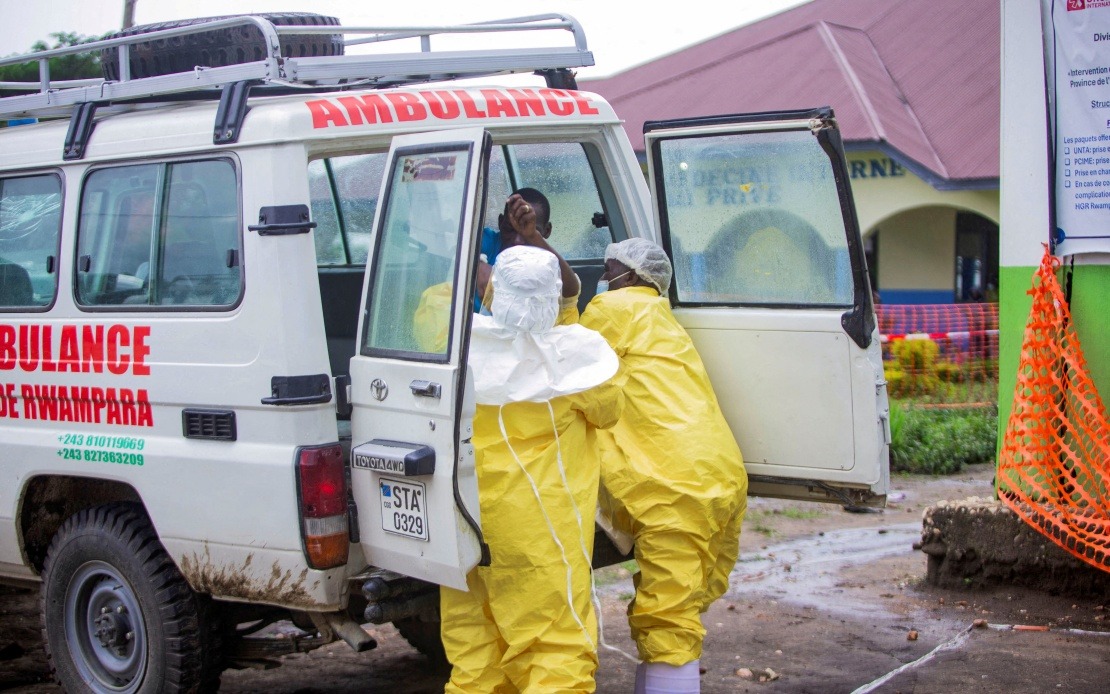
The Democratic Republic of the Congo is confronting a rapidly evolving Ebola health emergency as health authorities confirmed the virus has now penetrated five provincial territories, with cumulative cases climbing to 1,873 confirmed infections and 672 fatalities. The latest situation report, compiled through Friday and released over the weekend, underscores the widening geographical footprint of a crisis that continues to strain the nation's already fragile healthcare infrastructure and emergency response capabilities.
The five affected provinces—Ituri, North Kivu, South Kivu, Haut-Uele and Tshopo—represent a significant territorial expansion for the outbreak. The inclusion of Haut-Uele and Tshopo in the official national situation report marks the first formal acknowledgement of Ebola cases in these regions, signalling that the epidemic has now breached new geographical boundaries beyond its initial epicentre and the areas where transmission was first documented.
Epidemiological investigations reveal a clear epidemiological chain linking the newly affected provinces back to Ituri province, where the outbreak originated. Health authorities have traced the spread of the virus through identified contact networks and the natural movement of populations between regions. This pattern of transmission demonstrates how human mobility, essential for trade and family connections across provincial borders, has become a vector for viral dissemination in a region where border controls and health screening remain challenging to implement comprehensively.
The situation in treatment facilities presents an increasingly dire picture of healthcare system capacity constraints. Currently, 763 patients occupy isolation wards or hospital beds dedicated to Ebola care, while the overall occupancy rate at treatment centres has reached 95.1 percent. This near-maximum utilisation reflects the intense pressure facing medical personnel and infrastructure as the caseload continues its upward trajectory, leaving minimal surge capacity for additional admissions during disease peaks.
Among the total case count, 306 individuals have recovered and returned to their communities, offering some grounds for cautious optimism regarding treatment outcomes and the potential for survivors to rebuild their lives. However, the recovery figure represents only about 16 percent of confirmed cases, indicating that the majority of those infected either remain under active treatment or have succumbed to the disease. The persistent spread and relatively low recovery proportion highlight the severity of this particular Ebola variant and the challenges confronting healthcare teams working under extreme duress.
The surveillance system continues to identify suspected cases requiring investigation and confirmation. A total of 299 suspected cases have been recorded, including 91 associated deaths, representing potential new confirmed cases in the coming days as laboratory testing progresses. This substantial pool of suspected cases indicates that active transmission chains remain active across multiple communities, and the true scope of the outbreak may continue to expand as diagnostic capacity catches up with the epidemiological reality on the ground.
The outbreak, caused by the Bundibugyo ebolavirus, was formally declared on May 15, marking the beginning of nearly two months of continuous epidemic management efforts. The Bundibugyo strain is notably distinct from the Zaire ebolavirus that caused the catastrophic West African epidemic of 2014-2016, yet it remains highly lethal and has proven capable of sustaining human-to-human transmission chains across provincial boundaries in the Democratic Republic of Congo's challenging operating environment.
For Southeast Asian nations monitoring disease outbreaks globally, the DR Congo situation underscores several critical lessons regarding epidemic response in regions with limited infrastructure. The rapid geographical expansion within a single country demonstrates how viral threats can overwhelm response capacity when resources are stretched thin and population movements cannot be easily restricted without imposing severe socioeconomic consequences. Regional health security frameworks across Southeast Asia, such as those coordinated through ASEAN mechanisms, may draw insights from the DRC experience regarding early warning systems, rapid deployment of medical supplies, and cross-border health coordination protocols.
The international health community's response to the DRC Ebola outbreak, including support from multilateral organisations and technical assistance from experienced partner nations, remains crucial as the epidemic enters a potentially more dangerous phase with its geographical expansion. The challenge now extends beyond containment in initial outbreak zones to preventing further spread across provincial and potentially international borders in a region where travel restrictions are economically and socially costly to implement.
Moving forward, sustaining community engagement and maintaining the fragile trust in health interventions will prove essential for controlling transmission. As the outbreak enters its third month, the psychological toll on affected populations and healthcare workers, combined with the mounting pressure on medical facilities, will test the resilience of the response and potentially influence compliance with containment measures. The coming weeks will likely determine whether the outbreak can be arrested or whether the provincial expansion pattern observed thus far will accelerate further.

