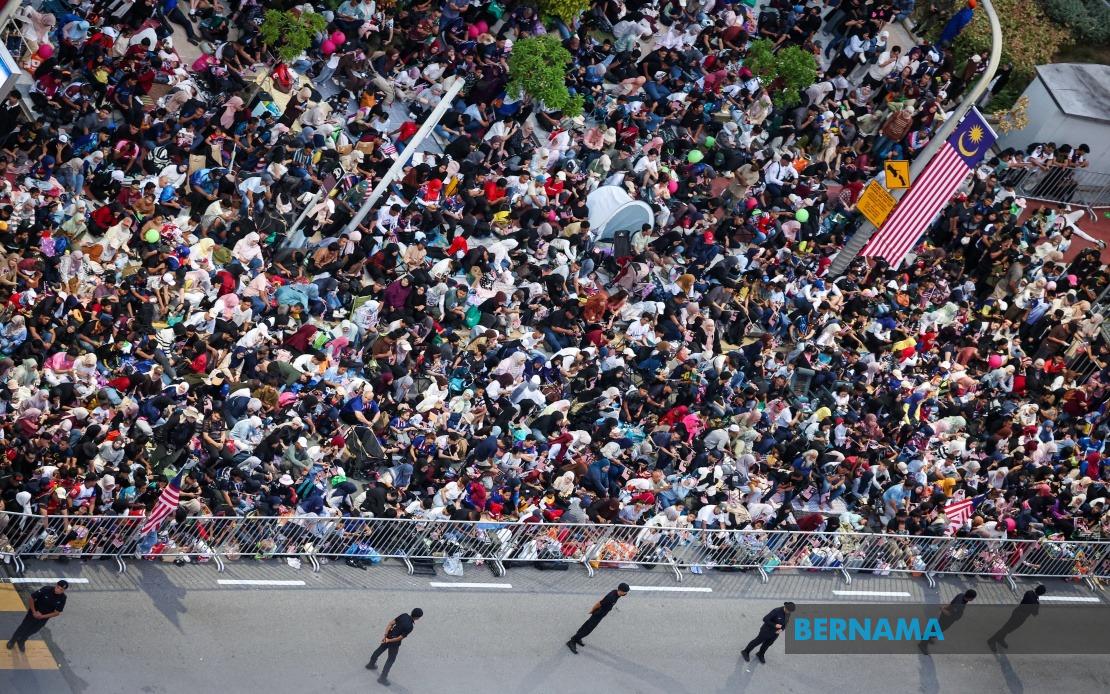
The anticipation surrounding Malaysia's 69th National Day celebration brought a surge of eager spectators to Dataran Putrajaya, with many arriving well before the official start time to claim advantageous positions along the parade route. The gathering reflected the enduring appeal of the August 31 commemoration, which this year carried the theme "Malaysia MADANI: Kesejahteraan Dinikmati", emphasizing shared prosperity and well-being across the nation. Starting from the previous evening, families, friends, and individual enthusiasts transformed the sprawling plaza into an impromptu encampment, with some settling in as early as 5 pm and others arriving closer to midnight to ensure they wouldn't miss key moments of the spectacle scheduled to commence at 8 am.
Among the early arrivals was Mock Wei Qi, a 23-year-old freelance photographer who arrived at 11 pm with a group of friends united by their passion for visual storytelling. For this cohort of young creatives, the National Day event represented far more than a civic occasion—it was an opportunity to exercise their cinematographic and photographic skills on a grand stage. Their explicit goal of capturing Malaysia's distinctive character and presenting it to a global audience reflected how younger Malaysians are leveraging national celebrations as platforms for personal creative expression while simultaneously celebrating their heritage. The group's deliberate timing and strategic positioning underscored the competitive nature of securing premium vantage points at high-profile public events.
The couple identified as As and Adib brought their children to the venue at 5 pm, driven by a desire to rectify what they perceived as last year's suboptimal experience. Having arrived too late during the previous National Day celebration, they had found themselves positioned far from the main focal points of the festivities, resulting in compromised viewing angles and diminished enjoyment. This year's early arrival represented an intentional course correction, with the family determined to position themselves closer to the action and afford their children a more immersive and memorable encounter with one of Malaysia's most significant annual ceremonies. Their experience highlights how attendance at national events has become a recurring family tradition, with participants adjusting their strategies based on prior visits.
Ahmad Azri Onn, aged 55, approached the overnight wait with a distinctly different mindset, transforming the extended hours at Dataran Putrajaya into what he characterized as an enjoyable camping expedition rather than a tedious endurance test. Having arrived around 5:30 pm with his wife and three children aged between 10 and 15, Ahmad Azri viewed the family's nocturnal presence at the venue as an enriching experience perfectly timed with the school holiday calendar. Rather than merely tolerating the overnight conditions, his family embraced them, with the children finding entertainment and novelty in the unconventional setup. The drizzle that fell during the evening proved beneficial rather than detrimental, providing relief from the heat that typically characterizes Malaysia's late August weather.
The physical conditions surrounding the overnight vigil presented a natural test of spectators' commitment to witnessing the celebration firsthand. Rain, humidity, and the discomforts associated with outdoor camping might ordinarily deter participants, yet the testimonies from attendees suggest that weather-related challenges were either minimized or reframed as integral components of the experience rather than obstacles to it. Ahmad Azri's observation that the drizzle actually enhanced comfort levels by moderating temperatures demonstrated how participants actively contextualized environmental factors within their broader experience. The willingness of families with young children to endure such conditions underscored the deep cultural significance that National Day holds for Malaysian society across generations.
The phenomenon of early arrival and overnight camping at Dataran Putrajaya reflects broader patterns in how Malaysians engage with national commemorations and civic gatherings. Unlike ticketed entertainment events where seat assignments eliminate the need for strategic positioning, the open-plaza format of the National Day celebration creates a natural incentive structure that rewards early arrival and persistence. This dynamic has become sufficiently established that families now factor overnight accommodation into their planning processes, treating it as a standard rather than exceptional requirement. The scale of this year's early gathering suggested that interest in direct, in-person participation in national celebrations remains robust despite alternative viewing options through televised broadcasts and online streaming.
The diverse demographic composition of the overnight campers—ranging from young creative professionals to established middle-aged families to schoolchildren—demonstrated that the National Day celebration retains cross-generational appeal and cultural resonance. Mock Wei Qi's generation's approach emphasized documentation and content creation, reflecting how younger Malaysians are increasingly intertwining personal creative ambitions with national observance. Conversely, the approach taken by families like Ahmad Azri's emphasized experiential sharing and memory-building across familial units. These differing motivations, while distinct in their primary drivers, converged on a shared desire to participate in the celebration with maximum authenticity and proximity.
For Malaysian families in particular, the National Day gathering at Dataran Putrajaya has evolved into a significant ritual within the annual calendar. The decision to invest time and resources into securing premium viewing positions reflects more than mere logistical optimization; it represents an expression of patriotic participation and a commitment to transmitting national pride to younger family members. Children who experience National Day celebrations firsthand, whether through memorable overnight camping adventures or through witnessing the spectacle from favorable vantage points, develop formative associations with national identity and civic engagement. These accumulated experiences across multiple generations help sustain the cultural vitality of the commemoration.
The 69th National Day celebration, with its "Malaysia MADANI" theme centered on inclusive prosperity, took place against this backdrop of enthusiastic public participation. The crowds assembling at Dataran Putrajaya from the evening hours onward embodied, in their own comportment and choices, the very values of shared participation and collective well-being that the celebration's theme articulated. The spectators' willingness to sacrifice comfort and sleep for the opportunity to witness the ceremony reflected a form of civic engagement that transcended mere entertainment consumption. Their presence affirmed, through concrete action, their investment in national narratives and their commitment to transmitting these narratives to subsequent generations.
As morning approached and Dataran Putrajaya continued filling with additional arrivals, the plaza transformed into a vibrant assemblage of Malaysians from diverse backgrounds and motivations, united temporarily in common purpose. The range of vantage points, camera equipment, camping arrangements, and family configurations visible across the plaza testified to the varied ways in which different segments of Malaysian society interpret and participate in national commemoration. The enduring appeal of this celebration, demonstrated through the early and dedicated arrivals documented over the previous evening and morning hours, suggested that despite societal transformations and the proliferation of alternative media platforms, the impulse to gather physically and collectively witness significant national moments remains powerful and consequential for Malaysian civic culture.

