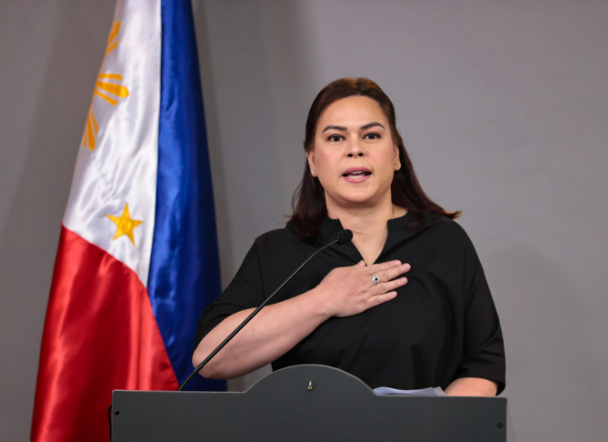
Vice President Sara Duterte has weaponised a large gathering by members of the Iglesia ni Cristo along Manila's Epifanio de los Santos Avenue to level fresh accusations against the Marcos administration, characterising the turnout as a barometer of deepening public discontent. Speaking on Tuesday, June 30, Duterte framed the demonstration as evidence of an emerging political sentiment that she claims to have articulated consistently since 2024, marking an intensification of her public break with the sitting president.
The vice president's intervention amplifies the visibility of institutional grievances raised by the influential Christian sect, which mobilised thousands to protest what it characterises as selective application of the law and abuse of judicial processes. The INC specifically objected to the filing of a plunder complaint against Senator Rodante Marcoleta, interpreting the move as evidence of weaponised prosecution targeting those outside the administration's favoured circle. By aligning herself with the church's concerns, Duterte positioned herself as a champion of those aggrieved by what she portrayed as arbitrary governance.
Duterte's rhetorical assault focused on the administration's alleged disconnection from the material struggles confronting ordinary Filipinos. She highlighted the failure to address accelerating inflation, precarious employment conditions, and the mounting expenses associated with basic necessities. This framing resonates across Southeast Asia, where multiple governments face similar criticism over their response to cost-of-living pressures following regional and global economic shocks. The Philippine situation illustrates how grievances over economic management can rapidly translate into political instability, particularly when public health crises and commodity price fluctuations compound underlying structural weaknesses.
Central to Duterte's broadside was an assertion that the administration responds to legitimate criticism not with policy adjustments or substantive engagement, but through coercive measures designed to suppress public expression. She argued that questioning alleged misconduct within the presidential compound, scrutinising administrative performance, or raising allegations against the president himself now invites official retaliation. This accusation strikes at the heart of democratic functioning, suggesting that the space for political opposition has narrowed substantially under Marcos.
The vice president further contended that such tactics represent an assault on foundational democratic values, specifically free expression and the accountability mechanisms that differentiate democratic systems from authoritarian ones. She depicted a government that weaponises claims of accountability to eliminate political rivals while simultaneously evading scrutiny itself, a paradox that has become increasingly visible in Philippine political discourse. The observation carries implications for how democratic institutions perform under stress, particularly when competitive political elites possess independent power bases and willingness to challenge executive authority.
Duterte reframed the underlying conflict beyond partisan politics, insisting that the controversy concerns the integrity of the state apparatus and the welfare of a population experiencing genuine hardship. By elevating the dispute to constitutional and national significance, she sought to neutralise accusations that her statements reflect personal grievance or opportunistic positioning. This rhetorical move attempts to position her opposition not as self-interested but as patriotic concern for institutional health and popular welfare.
The timing and context of her remarks deserve scrutiny. Duterte herself faces an ongoing impeachment trial beginning July 6 in the Senate Impeachment Court, with charges spanning alleged threats against the president and his wife, unexplained accumulation of assets, and misappropriation of confidential government funds. Her public statements therefore occur within a charged environment where both principals deploy institutional mechanisms and media platforms to advance their respective interests. The impeachment proceeding represents the most serious constitutional challenge to either figure since Marcos assumed office.
For Malaysian observers, the Philippine political turmoil offers instructive lessons about institutional fragility and the risks posed by deep personal conflicts between powerful actors who command independent support networks. The absence of collegial dispute resolution mechanisms, combined with the personalised nature of Philippine politics where loyalty often transcends party affiliation, creates conditions for escalating confrontation. The reliance on dramatic public statements and institutional weaponry rather than negotiated settlement suggests limited capacity for managed resolution.
The Iglesia ni Cristo's mobilisation deserves particular attention given the denomination's historical significance as an independent political actor. Its decision to take public stance on justice issues signals that even organised religious communities feel compelled to challenge what they perceive as arbitrary governance. This suggests discontent extends beyond opposition elites to encompass broader constituencies concerned with institutional probity and fair treatment. The church's involvement lends the controversy an ethical and moral dimension beyond narrow partisan competition.
The incident illuminates how economic distress, institutional contestation, and personal animosity between leaders can converge to generate political instability. Duterte's invocation of widespread suffering resonates because inflation, unemployment, and cost-of-living pressures affect genuine constituencies across the Philippines. When populations endure material hardship while witnessing high-profile conflicts between elites, they often interpret the paralysis and distraction as evidence of administrative incompetence or indifference to their needs.
Moving forward, the sustainability of Marcos's political position may depend less on addressing Duterte's accusations than on demonstrating tangible improvements in economic conditions and public services. Conversely, Duterte's effectiveness as an opposition voice requires building a coalition extending beyond her personal supporters and disaffected former allies. The Edsa gathering suggests such coalition-building is underway, though whether it can translate protest momentum into institutional or electoral advantage remains uncertain. The July 6 impeachment trial will test whether constitutional mechanisms can contain the dispute or whether it will further polarise political space.

