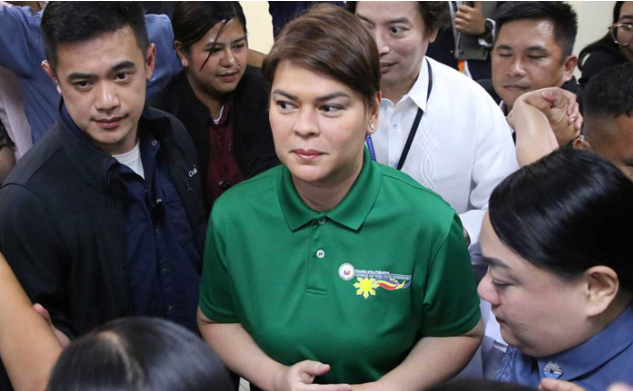
Vice President Sara Duterte has reinforced her position that the impeachment complaint lodged against her is fundamentally undermined by a shortage of credible evidence, making her statement as proceedings continued into their fourth day on Tuesday, July 14. The complaint centres on an alleged assassination plot targeting President Ferdinand R. Marcos Jr, First Lady Liza Marcos, and former Speaker Martin Romualdez—claims that Duterte herself initially brought to public attention. Her remarks came ahead of testimony from her chief of staff, Zuleika Lopez, who the House prosecution panel planned to call as its third witness in the ongoing Senate impeachment court proceedings.
Duterte's defence team has seized upon what they characterise as significant procedural and documentary flaws in the prosecution's case. During cross-examination by her lawyer Mark Vinluan, inconsistencies emerged regarding the dates recorded in affidavits and the docket numbers contained within National Bureau of Investigation (NBI) files. These discrepancies surfaced as Vinluan questioned Jeremy Lotoc, the NBI-Bangsamero Autonomous Region in Muslim Mindanao (BARMM) Regional Director who served as the prosecution's second witness. Such technical irregularities, according to Duterte's team, cast doubt on the reliability of the evidence being presented against her.
The vice president's statement articulated a broader critique of how the prosecution has constructed its case. In her view, the complaint relies on a pattern of unsupported assertions rather than concrete documentation. She specifically accused the prosecution of repeatedly claiming threats existed without substantiation, introducing an alleged assassin who, she contends, never materialised, and manufacturing evidence to lend credibility to their narrative. For Duterte, these actions represent not merely a weakness in legal argumentation but a fundamental corruption of the impeachment process itself.
Duterte emphasised that the integrity of institutional proceedings depends on the relationship between allegations and factual foundation. Her statement stressed that impeachment trials must be grounded exclusively in verifiable evidence, eschewing speculation, constructed narratives, and unsubstantiated allegations. This distinction between legal proceedings rooted in fact and those relying on supposition underscores a central tension in the trial: whether the threshold for initiating impeachment has been met by sufficient evidence, or whether the House prosecution has proceeded based on preliminary claims that lack the robustness required by constitutional standards.
The current phase of the trial is focused on Article IV of the impeachment complaints, which addresses the alleged plot against the President, First Lady, and former Speaker. The prosecution has presented only two witnesses to date and has covered barely half of the eleven days allocated to them for presenting evidence on this particular article. This pace suggests the proceedings remain in their early stages, with substantial testimony still to be introduced. The prosecution's deployment of witnesses, including Duterte's own chief of staff, indicates an attempt to build a circumstantial case through testimony from those positioned within Duterte's immediate circle.
The timeline for the entire trial presents a formidable challenge to all parties involved. With 92 days allocated for the complete proceedings, the impeachment case is projected to extend well into early 2027. Such a protracted timeline means the political and institutional focus on the impeachment will persist for months, potentially overshadowing other legislative priorities and governance issues. For Malaysia and the broader Southeast Asian region, this extended trial demonstrates the complexities that can arise when executive and legislative branches engage in impeachment proceedings within presidential systems.
Notably, Duterte has maintained her absence from the trial proceedings themselves. While her legal team actively participates in cross-examination and presents arguments on her behalf, the vice president has not personally attended the Senate impeachment court. This approach allows her to avoid direct confrontation with witnesses while maintaining a presence through her legal representatives. Whether her absence signals confidence in her team's defence strategy or reflects a deliberate distancing from proceedings remains open to interpretation.
The prosecution's challenge extends beyond the immediate evidentiary questions raised by Duterte's defence. Building a convincing case for impeachment requires not only presenting witnesses and documents but establishing a coherent narrative that connects individual pieces of evidence into a compelling whole. The inconsistencies identified thus far—whether in dating of affidavits or in docket numbering—suggest potential vulnerabilities in how the prosecution has compiled and presented its materials. Such procedural weaknesses, even if they do not undermine substantive allegations, can erode the credibility of the prosecution's case in the eyes of senators who must ultimately judge the evidence.
For Malaysian observers and readers across Southeast Asia, the Duterte impeachment trial illustrates the institutional mechanisms available in presidential democracies for addressing grievances between branches of government. The Philippines' constitution provides for impeachment as a formal process through which the legislature can remove the executive. Unlike systems where executive accountability might be enforced through votes of no confidence or parliamentary dissolution, the impeachment route demands sustained investigation and proof presented over an extended period. This procedural rigour reflects an intention to prevent impeachment from becoming a tool of political convenience while ensuring that genuine institutional failures receive appropriate scrutiny.
The substantive question of whether threats were genuinely made against the President remains contested. Duterte's assertion that no credible evidence supports such claims directly contradicts the prosecution's apparent conviction that testimony and documents substantiate the allegations. Resolving this factual dispute falls to the Senate impeachment court, whose judges must weigh the evidence presented and determine whether it meets the threshold necessary for conviction and removal. The outcome will have profound implications not only for Duterte's political future but for the constitutional balance of power within the Philippines.
As the trial progresses through its deliberate schedule, the competing narratives will likely sharpen. The prosecution must build a more comprehensive and internally consistent case if it hopes to persuade senators of the legitimacy of its allegations. Meanwhile, Duterte's defence team will continue to highlight weaknesses in documentation, logical gaps in the narrative, and the absence of direct evidence of criminal intent. The next phase of testimony, particularly the expected examination of Zuleika Lopez, may prove pivotal in determining whether the trial's trajectory shifts in either party's favour.

