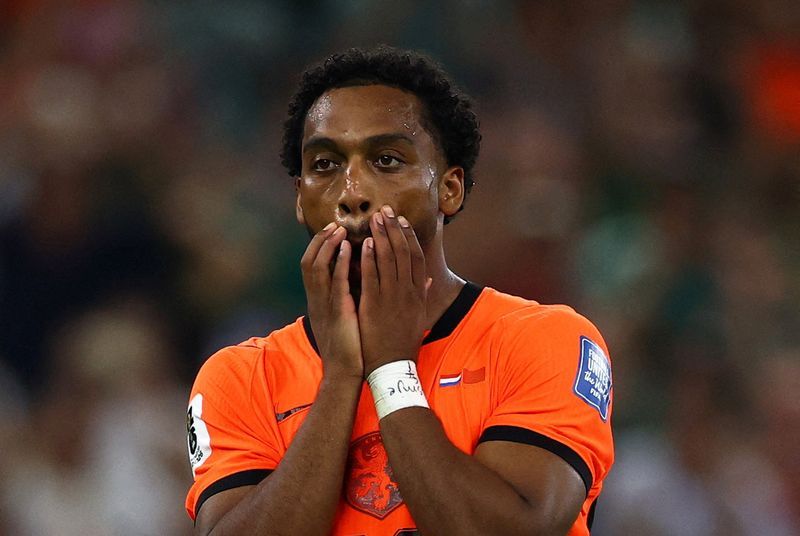
Three Netherlands players have fallen victim to racist harassment on social media platforms following their team's heartbreaking World Cup penalty shootout loss to Morocco on Monday, according to the Dutch football association. Justin Kluivert, Quinten Timber and Crysencio Summerville each failed to convert their penalty attempts as the African side secured a dramatic 3-2 victory in the decisive shootout, sending the Dutch home from the tournament held in Mexico. The defeat came after their last-32 encounter in Monterrey finished level at 1-1 following extra time, setting up the tense penalty sequence that would ultimately eliminate one of Europe's traditional football powerhouses.
In response to the abusive comments directed at the trio, the KNVB has initiated formal proceedings by filing reports with Meld Online Discriminatie, a Dutch organisation dedicated to addressing discriminatory content across digital platforms. The association's firm stance reflects growing institutional acknowledgment that online racism targeting athletes demands serious legal intervention rather than passive acceptance. The Dutch football body emphasised that such behaviour fundamentally contradicts the inclusive values that football is meant to champion, calling the racist attacks appalling and wholly unacceptable within sporting culture.
The mechanism for addressing these complaints operates through a structured legal framework. Once the Meld Online Discriminatie team receives a report, their legal specialists evaluate whether the flagged content meets the threshold for criminal prosecution under Dutch law. Substantiated cases can then be formally escalated to the Public Prosecution Service, which possesses authority to launch criminal investigations into perpetrators. This pathway has demonstrated effectiveness in previous incidents, offering a template for how sports organisations and governments can coordinate to hold digital abusers accountable.
The targeting of Dutch players resonates deeply within European football's ongoing battle against racism, which has plagued the sport across multiple competitions and platforms for years. The incident recalls the widely publicised harassment faced by England's Marcus Rashford, Bukayo Saka and Jadon Sancho following their team's loss to Italy in the Euro 2021 final, a match decided through the same nerve-wracking penalty shootout format. That particular episode galvanised British authorities into decisive action, with police conducting extensive investigations that resulted in multiple arrests and criminal prosecutions, demonstrating that online racism could trigger real-world legal consequences.
The England precedent proved instructive for European law enforcement and sports governing bodies alike. Following the Euro 2021 final, British police orchestrated a comprehensive crackdown on social media hate speech targeting the three England players, leading to several convictions and custodial sentences. Two individuals received imprisonment while another received a suspended sentence, sending a clear message that online racist abuse carried legal jeopardy. This coordinated enforcement effort represented a watershed moment in how authorities approached digital discrimination, moving beyond mere content removal toward criminal accountability for perpetrators.
For Southeast Asian observers and Malaysian readers, the Dutch case illustrates a wider pattern affecting global football that transcends geographic boundaries. When regional players compete in international tournaments or join European clubs, many face similar racist targeting online, yet remedies remain inconsistent across different jurisdictions. The willingness of established European football associations to pursue legal action against digital abusers creates a model that could inform how Malaysian and other Southeast Asian sporting bodies address comparable incidents affecting their own athletes.
The timing of this harassment also raises questions about the mechanics of online abuse networks. Social media platforms, despite implementing community guidelines prohibiting racial discrimination, remain inadequately policed and continue to amplify divisive content through algorithmic recommendation systems. The decision by the KNVB to escalate complaints beyond platform moderation toward criminal investigation reflects growing frustration with the inadequacy of company self-regulation. This institutional escalation signals that football authorities increasingly view platform governance failures as necessitating external legal intervention.
The broader implications for football culture warrant consideration. Penalty shootouts represent one of sport's most emotionally charged moments, where individual athletes bear responsibility for collective outcomes, making them vulnerable targets for hostile scrutiny. Yet the transition from legitimate criticism of missed opportunities to racist abuse represents a qualitative shift that undermines the sport's accessibility and inclusivity. Players from minority backgrounds face disproportionate harassment following errors, suggesting that online abuse reflects and reinforces existing patterns of discrimination within football and society more broadly.
Moving forward, the KNVB's proactive stance may establish a template for European football governance. By pursuing formal complaints rather than issuing merely symbolic statements of condemnation, the Dutch association demonstrates that football institutions possess agency to combat digital racism through legal channels. The outcome of the Meld Online Discriminatie investigation and any subsequent prosecution could establish valuable precedent for other national associations contemplating similar enforcement strategies, particularly regarding what evidence standards and legal frameworks prove most effective in securing convictions.

