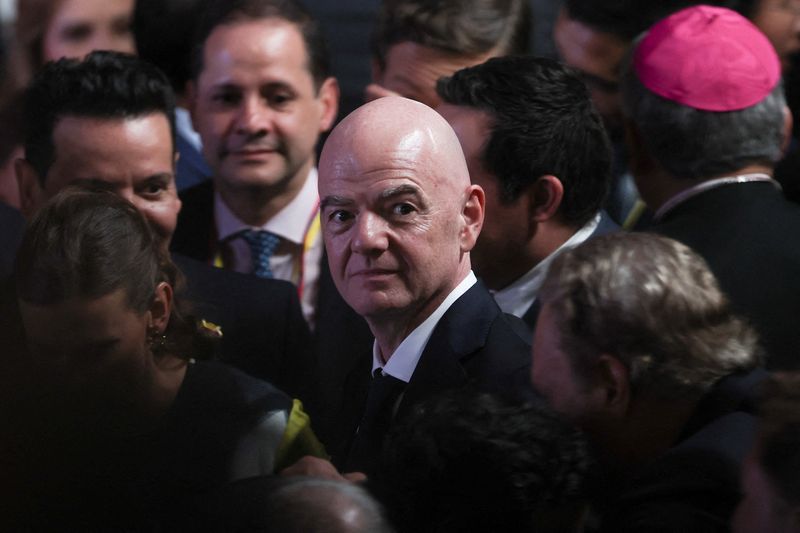
One of football's oldest institutions has turned against FIFA's leadership, with the Royal Netherlands Football Association (KNVB) publicly demanding fundamental structural reform of the world's soccer governing body. In a statement issued Sunday, the KNVB—which helped establish FIFA in 1904—announced it no longer backs President Gianni Infantino and wants him replaced by 2027 as part of a comprehensive overhaul that extends far beyond simply changing the person at the top.
The Dutch federation's dramatic withdrawal of support reflects deepening unease among international football's power brokers over FIFA's concentration of authority and Infantino's recent strategic missteps. The catalyst was his failed proposal to sell stakes in major tournaments like the World Cup to private equity investors, a move that provoked significant resistance from influential member associations worldwide. This proposal prompted football's regional confederations to explore whether a vote of no confidence against Infantino should occur before his scheduled re-election in March 2025, rather than waiting for the formal contest at that time.
What distinguishes the KNVB's position is its insistence that leadership change alone cannot salvage FIFA. The association argues that the fundamental problem lies in governance architecture that vests excessive power in the presidency while maintaining weak separation between the president's office and FIFA's administrative apparatus. The KNVB has previously supported Infantino but made clear that backing was always conditional on acceptable performance and direction—a condition it believes has now been breached.
To address these systemic issues, the KNVB has proposed hosting an International Summit on the Future of FIFA in Amsterdam. This gathering would precede leadership decisions, establishing instead what kind of institution FIFA should become before identifying suitable candidates to lead it. This approach represents a philosophical shift in how reform should proceed: defining the organisation's purpose and structure first, then finding people to fit that vision rather than simply replacing individuals within an unchanged system.
The Dutch federation has identified three foundational pillars for reform. Enhanced governance structures must incorporate meaningful checks and balances that distribute power more equitably and reduce presidential concentration. Human rights protections and environmental sustainability must become central to FIFA's decision-making processes rather than peripheral considerations. Finally, FIFA must strengthen mechanisms for genuine international cooperation among its 211 member associations and six continental confederations, ensuring decisions reflect global input rather than centralised authority.
Financial architecture represents another crucial reform area. The KNVB advocates redirecting up to 90 per cent of FIFA's distributable revenue directly into soccer development programmes. This would fundamentally alter FIFA's relationship with the sport at grassroots and developmental levels, ensuring that wealth generated by the sport's global audience flows back to nurture talent and infrastructure worldwide. Such redistribution would particularly benefit emerging football nations with limited resources, addressing historical inequities in international football economics.
The KNVB's criticism contains an important rebuke to suggestions that FIFA reforms should be designed primarily by Europe or wealthy nations. The association explicitly stated: "This should not be a European plan for the rest of the world." Instead, it advocates for collaborative development involving all member associations and confederations across Africa, Asia, Oceania, North and South America, and Europe. This framing acknowledges legitimate concerns that reform initiatives sometimes mask attempts by established powers to consolidate influence under the banner of modernisation.
Infantino has previously responded to such criticism by emphasising FIFA's responsibility to narrow financial gaps between wealthy member nations and those with scarce resources. His argument attempts to position FIFA as a redistributive force in global soccer, justifying his vision of how the organisation should evolve. However, the KNVB's challenge suggests that major federations question whether current leadership can credibly deliver on such redistribution or whether structural incentives under the present system work against genuine financial equity.
The Dutch association's intervention gains particular significance given UEFA's parallel legal action. Europe's football confederation has sought permission from U.S. federal courts to obtain testimony and documents from FIFA entities operating in Florida, materials intended to support a criminal complaint against Infantino being prepared in Switzerland. This dual-track pressure—one focusing on governance reform, the other on potential legal accountability—creates unprecedented scrutiny around FIFA's leadership and operations.
Southeast Asian nations and emerging football economies have particular interests in FIFA's governance direction. Reforms emphasising revenue redistribution and development investment could significantly enhance resources available for football advancement in the region. Conversely, if FIFA remains under concentrated presidential control without enhanced transparency and accountability mechanisms, developing nations may continue experiencing limited influence over decisions affecting their football industries and opportunities.
The KNVB's 2027 timeline for leadership transition provides a specific target while allowing time for summit discussions and consensus-building. However, Infantino's re-election scheduled for March 2025 creates immediate pressure. Whether other confederations and major member associations will join the KNVB in supporting a no-confidence vote before the formal election, or whether they prefer waiting until after the summit for a stronger collective position, remains uncertain.
This challenge represents the most serious threat to Infantino's position since his election in 2016. The combination of governance criticism, financial reform demands, and legal scrutiny indicates that FIFA faces substantial pressure to demonstrate commitment to meaningful change. The KNVB's proposal for an Amsterdam summit signals that football's establishment believes current leadership and structures are inadequate for the sport's future—a verdict that will reverberate through world soccer's corridors of power in coming months.

