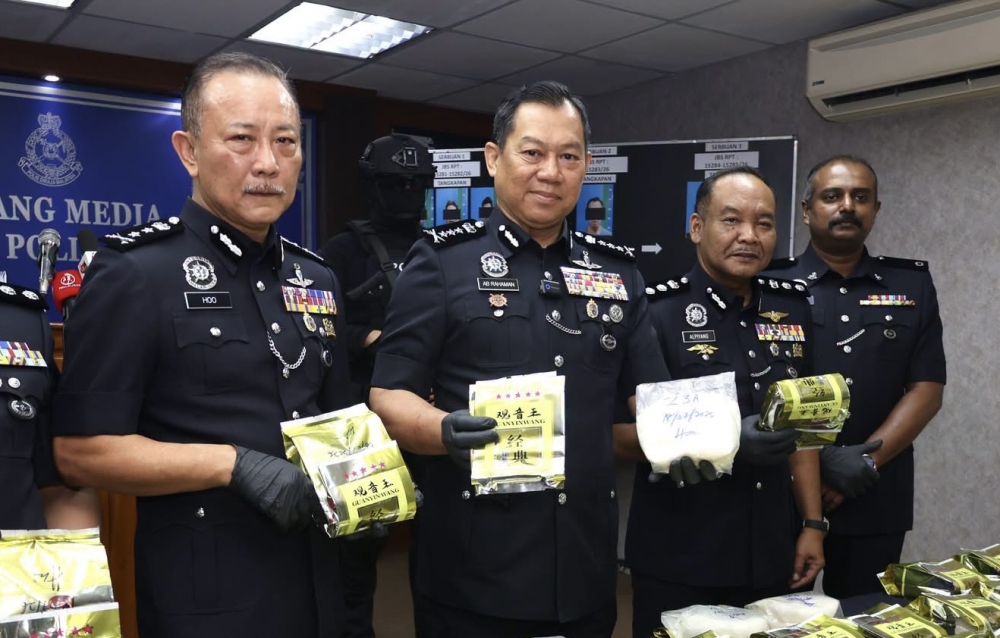
Police in Johor Bahru have successfully dismantled a synthetic drug trafficking ring that had been operating across the southern state, resulting in the arrest of eight individuals following coordinated raids. The operation, which concluded in late July, revealed a troubling trend of youth involvement in narcotics distribution, with investigators discovering that a teenager had become entangled in the criminal enterprise. The cases underscore persistent challenges law enforcement faces in combating drug networks that often exploit younger members to reduce legal consequences and evade detection.
Among those taken into custody was a 16-year-old, making the case particularly significant given Malaysia's ongoing concerns about substance abuse among minors and the methods criminal syndicates employ to recruit juveniles. The young suspect's involvement highlights how organised drug operations deliberately target adolescents, leveraging their lower perceived risk profile and the lighter sentences they face under juvenile justice provisions. This calculated strategy represents a fundamental shift in how narcotics traffickers operate within Malaysian communities, moving beyond traditional distribution models to incorporate family members and schoolchildren into their logistics chains.
What distinguishes this particular operation is the audacity and simplicity of its delivery mechanism. Investigators discovered that the gang had converted a private vehicle belonging to an elderly grandfather into a functioning drug depot, using the car as both storage and transportation for their synthetic narcotics inventory. This approach allowed the network to maintain mobility while reducing the visibility that a fixed location would attract. The repurposing of family vehicles in criminal activity reflects how drug operations have evolved to integrate into ordinary community routines, making detection increasingly difficult for authorities conducting street-level patrols.
The use of a family member's vehicle, particularly one belonging to an older relative, suggests either coercion or manipulation within family structures. The grandfather's involvement—whether willing or unwitting—raises questions about how organised crime groups exploit familial relationships and exploit gaps in household awareness. Such tactics place innocent family members at legal risk and represent a violation of domestic trust that extends the social damage of narcotics trafficking beyond direct users and into the heart of family units across Johor Bahru and surrounding areas.
The scope of the operation, involving eight arrests, indicates a network with defined roles and responsibilities rather than casual dealing. Such structured arrangements suggest a hierarchy typical of mid-level operations that connect street-level distributors with higher-tier suppliers. The geographic concentration in Johor Bahru, Malaysia's second-largest city and a critical commercial hub, means the network likely had access to substantial customer bases and was positioned to expand operations if left unchecked. The dismantling of this particular ring therefore represents a meaningful disruption to synthetic drug availability in the region, though authorities acknowledge similar networks continue operating across the country.
Synthetic drugs have emerged as a growing concern for Malaysian law enforcement, presenting distinct challenges compared to traditional heroin or cocaine trafficking. These substances are often produced in clandestine laboratories using readily available chemical precursors, making supply chains harder to intercept at source. Additionally, the constantly evolving chemical composition of synthetic narcotics allows producers to circumvent drug scheduling legislation, creating a perpetual regulatory chase that strains enforcement resources. Johor Bahru, as a border state with proximity to Singapore and the wider region, represents a particularly vulnerable market for such commodities.
The arrest of the teenager points to recruitment patterns that concern social welfare agencies and educators across Malaysia. Criminal networks increasingly target vulnerable youth through friendship networks and online platforms, offering quick money and status in exchange for distribution work. The appeal proves particularly strong in communities facing economic hardship or limited legitimate employment prospects for young people. Prevention programmes have proven only modestly effective, suggesting that demand-side interventions alongside law enforcement remain insufficient to address the underlying vulnerabilities being exploited.
Police investigations into the network have likely uncovered supply chains, customer lists, and financial flows that extend beyond the eight arrested individuals. Such operations rarely function in isolation; they typically maintain connections with larger distribution hierarchies and source networks. The intelligence gathered from this operation will inform broader anti-narcotics strategies and may facilitate investigation of connected cells operating in neighbouring states or cross-border routes. The collaborative nature of modern narcotics enforcement means discoveries in Johor Bahru frequently have implications for law enforcement coordination across Malaysia and with international partners.
The legal implications for the arrested individuals vary considerably based on their roles and ages. The 16-year-old will likely face proceedings in juvenile courts, where sentencing prioritises rehabilitation alongside punishment, though specific charges remain undisclosed. Adult suspects face significantly harsher penalties under Malaysia's narcotics legislation, particularly if the seized quantities exceed trafficking thresholds. The case illustrates how criminal networks deliberately structure operations to minimise individual culpability and exploit legal distinctions between adult and juvenile offenders. Prosecutors must balance deterrence objectives against rehabilitation possibilities, a tension that characterises contemporary drug enforcement in Malaysia. The outcomes of these proceedings will likely influence policy discussions regarding juvenile justice, sentencing guidelines, and the appropriate response to youth involvement in narcotics distribution networks.

