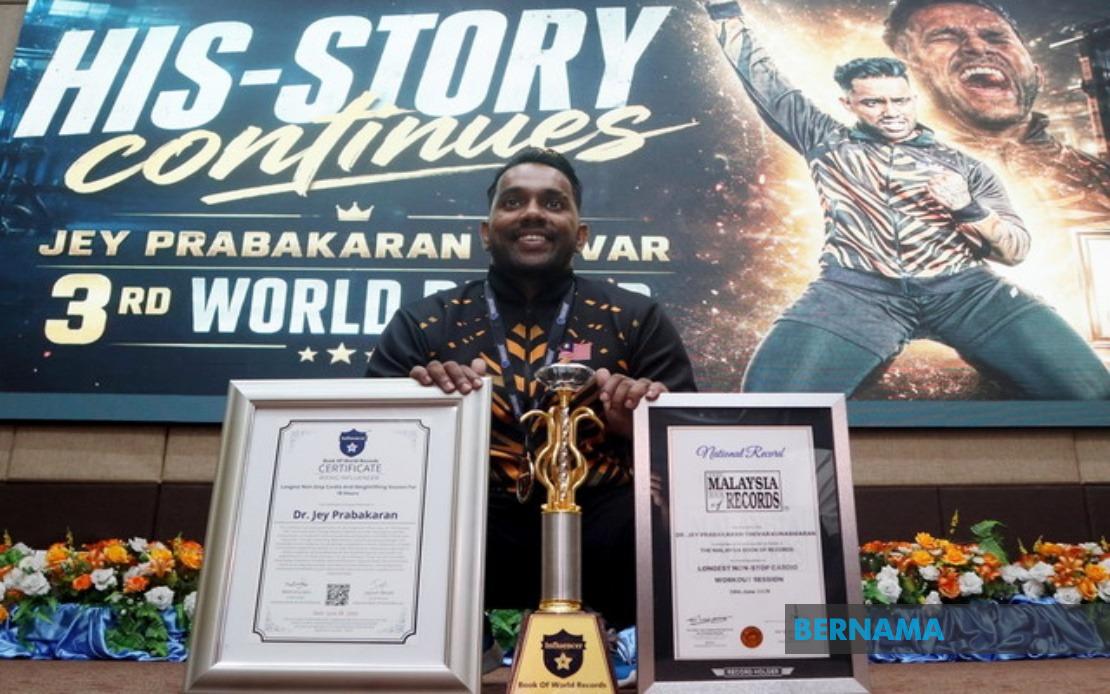
Malaysian fitness champion K. Jey Prabakaran Thevar, professionally known as Dr Kjey, has etched his name into sporting history by completing an arduous 18-hour non-stop cardio and weightlifting marathon last Sunday in Kuala Lipis, Pahang. The 29-year-old athlete's remarkable endurance feat marks his third world record achievement, with the record now officially recognised in both the Malaysia Book of Records and the Influencer Book of World Records. Beginning at 4 am and concluding at 11 pm at Healthland Kuala Lipis, the gruelling event showcased exceptional physical and mental fortitude that has rarely been witnessed in the fitness community across Southeast Asia.
What sets this accomplishment apart for Dr Kjey is the profound personal significance woven into the challenge. The Kuala Lipis native chose to dedicate this record-breaking performance to the memory of his father, Kunasigaran Suppiya Thevar, who passed away on March 3, 1999, when his son was merely four years old. Speaking to journalists at the venue, Dr Kjey reflected on how this loss became a catalyst rather than an anchor, explaining that growing up without paternal guidance paradoxically strengthened his resolve and determination to achieve excellence. His words underscore a deeply human dimension often absent from straightforward athletic narratives—that personal tragedy and bereavement can fuel the ambition to bring recognition and pride to one's nation on the international stage.
This latest achievement represents the culmination of a remarkable progression in endurance record-setting that Dr Kjey has maintained over the past two years. In 2023, he first broke records by completing a 12-hour non-stop cardio and weightlifting challenge, an accomplishment recognised by the Malaysia Book of Records. He subsequently elevated his performance to 15 hours in 2024, earning recognition from the prestigious Guinness World Records organisation. Between these achievements, Dr Kjey also secured an Asian record by completing a 13-hour variant of the challenge. Each milestone has built methodically towards this latest 18-hour triumph, demonstrating a systematic approach to pushing the boundaries of human physical capacity within the fitness discipline.
The preparation phase for this ambitious attempt began almost immediately after Dr Kjey completed a national record challenge in October of last year, coinciding with Malaysia's National Sports Day celebrations. The months of training and conditioning that followed were far from conventional, as the athlete completely overhauled his dietary approach to optimise his body composition and energy reserves. Moving to a fully vegetarian diet, Dr Kjey managed to shed 32 kilogrammes of body weight before the record attempt. This significant physical transformation required discipline and sacrifice, reflecting the level of commitment demanded by world-class endurance pursuits. Such dedicated preparation is indicative of the professional standards now characterising elite fitness record-breaking across the region.
During the gruelling 18-hour ordeal itself, Dr Kjey confronted the formidable physiological and psychological challenges inherent in such extreme endurance events. Beyond the obvious physical strain of continuous exertion, he battled persistent fatigue and drowsiness—the body's natural mechanisms fighting against sustained activity. Managing such internal resistance while maintaining form and consistency across weightlifting and cardio components simultaneously demands not merely physical conditioning but exceptional mental resilience and psychological training. His successful navigation of these obstacles illuminates why genuine endurance records remain rare achievements, even in an age of advanced sports science and training methodologies.
Beyond his individual achievements, Dr Kjey carries broader institutional responsibilities in Malaysia's fitness ecosystem. As president of the Malaysian India Fitness Association, he occupies a leadership position with influence over community fitness initiatives and grassroots development. He has expressed a genuine commitment to leveraging his record-breaking accomplishments as inspiration for younger Malaysians to embrace healthier lifestyles and consider serious engagement with fitness pursuits. In a region where sedentary lifestyles and lifestyle diseases are increasingly prevalent, such advocacy from accomplished athletes carries meaningful public health implications and can catalyse behavioural change across communities.
Looking forward, Dr Kjey's competitive ambitions show no signs of diminishing. He has already outlined plans to pursue another national record attempt during the next National Sports Day celebration scheduled for October of this year. The new challenge will involve completing 5,000 jumping jacks within a five-hour timeframe, shifting focus from traditional cardio and weightlifting combinations to a distinct single-exercise endurance endeavour. This planned pursuit suggests that the 29-year-old athlete views his current achievements not as a culmination but as a platform from which to explore fresh frontiers within the fitness record-breaking domain. Such forward momentum indicates a serious, long-term commitment to establishing Malaysia as a recognised centre for endurance fitness excellence on the global stage.
Dr Kjey's trajectory carries significance beyond individual achievement or even national sporting pride. His progression from relative obscurity to multiple world records within two years reflects the democratisation of elite performance goals in the modern era, where dedication and systematic training can elevate previously ordinary athletes to international recognition. For Malaysian youth, particularly those from the subcontinental Indian community that Dr Kjey represents, his visibility as a successful record-breaker provides representation in spaces traditionally dominated by athletes from other backgrounds. Furthermore, his public articulation of how childhood adversity became motivational fuel offers a narrative counterpoint to deterministic assumptions that parental absence inevitably constrains potential.
The broader Southeast Asian fitness community will likely regard Dr Kjey's achievements as raising the competitive bar for endurance-based record attempts throughout the region. As word of his accomplishments spreads through fitness networks and social platforms, other aspiring athletes may be inspired to undertake their own record-breaking quests, potentially generating a cluster of regional endurance achievements that could elevate Southeast Asia's profile within the global fitness and wellness discourse. This cascading effect—where one athlete's success catalyses broader community ambition—represents perhaps the most lasting legacy of Dr Kjey's world records.

