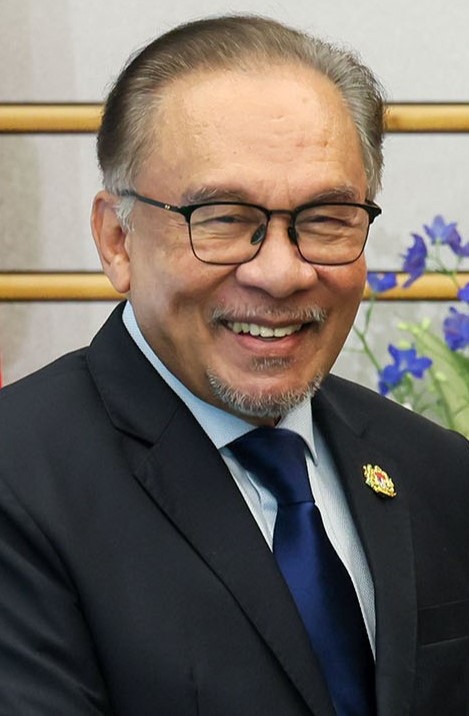
Datuk Seri Dr Adham Baba is entering the 16th Johor State Election campaign with considerable confidence, having been formally unveiled as the Barisan Nasional candidate for Pasir Raja. The former Health Minister is banking on a combination of proven electoral success and the personal networks he has cultivated across the constituency over more than a decade of representation to secure voter backing in what promises to be a keenly contested state election.
Dr Adham's candidacy marks a return to the state assembly after spending the past five years in federal politics. His two consecutive terms representing Pasir Raja from 2008 to 2018 form the cornerstone of his campaign strategy, as he argues that continuity and familiarity with constituency challenges offer distinct advantages in a crowded electoral field. He emphasised that his lengthy tenure as a state assemblyman provided him with deep insights into local priorities and the relationships required to serve residents effectively.
Beyond his legislative record, Dr Adham is positioning his ministerial experience as a significant asset. Having served as Minister of Health and later as Minister of Science, Technology and Innovation, he claims to understand the mechanics of government and resource allocation at the highest levels. This combination of state-level street credentials and federal-level governance exposure represents a pitch that he is not merely a local advocate but someone capable of channelling national resources and policy attention toward constituency development.
The networking dimension of his campaign carries particular weight in Malaysian electoral politics. Dr Adham has maintained his position as chief of the Tenggara UMNO division, allowing him to sustain organisational influence and grassroots connections even during his absence from state assembly. This dual institutional presence—formal divisional leadership coupled with lived experience as a former representative—underscores his argument that he remains genuinely embedded within Pasir Raja's social fabric rather than a distant politician returning only at election time.
In discussing the mechanics of electoral success, Dr Adham identified campaign intensity and voter engagement as the determining factors in the upcoming poll. His assertion that victory belongs to the side that mobilises most effectively and reaches the broadest voter base reflects a clear-eyed assessment of modern Malaysian state elections. This emphasis on ground-level organisation and direct contact suggests a campaign strategy built around extensive door-to-door activities, community events, and personal meetings rather than solely media-driven messaging.
The development agenda Dr Adham has outlined for Pasir Raja focuses on strengthening higher education and skills training infrastructure within the constituency. This emphasis on human capital development and educational advancement taps into aspirations common across urban and semi-urban Malaysian constituencies, where voters increasingly prioritise opportunities for youth employment and economic advancement. By framing development around these sectors, he is attempting to position himself as forward-looking rather than dwelling solely on maintenance of existing services.
Passir Raja itself occupies an interesting position within Johor's electoral geography. As a constituency that has previously supported BN, the party faces the dual challenge of retaining traditional support while defending against opposition advances in areas where voter sentiment has shifted in recent election cycles. Dr Adham's familiarity with local conditions and demonstrated ability to win the seat twice provides BN with a credible incumbent narrative, even though he is technically a returning candidate rather than a sitting assemblyman.
The broader context of Johor state politics adds layers of complexity to this candidacy. The state has experienced significant political volatility in recent years, with shifting coalitions and voter preferences reshaping electoral dynamics. In this environment, candidates with established track records and genuine community embeddedness become particularly valuable assets. Dr Adham's two previous victories in Pasir Raja suggest he has navigated local political currents successfully, though the electorate that awaits him in 2023 may differ in composition and priorities from those of previous contests.
His decision to step back from federal politics and contest a state seat also carries symbolic weight. In Malaysian politics, such moves can be interpreted as either strategic repositioning or acknowledgment that state-level politics offers better prospects for political longevity and influence. For BN, fielding a former minister with genuine state-level credentials represents an effort to convey that it takes state elections seriously and is willing to deploy senior talent to defend key seats.
The announcement of Dr Adham's candidacy occurred as part of BN's broader strategy for the Johor election, suggesting that party leadership regards Pasir Raja as a seat worth protecting and resources worth deploying. His nomination signals confidence that he remains an electoral asset despite time away from state assembly, and that his combination of experience, relationships, and organisational position justifies the party's backing.
Looking ahead, Dr Adham's campaign will likely emphasise the tangible benefits he delivered during his previous tenure, the continuation of development initiatives he previously championed, and his proven ability to translate voter support into electoral victory. The extent to which he can mobilise the organisational machinery he referenced, and whether he can convince voters that his decade away from state politics has not diminished his relevance to contemporary constituency concerns, will substantially determine his prospects in what is shaping up to be a competitive electoral contest.