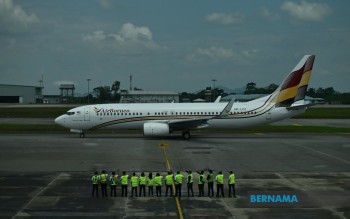
Deputy Prime Minister Datuk Seri Fadillah Yusof formally welcomed AirBorneo Airways into Malaysia's competitive aviation landscape today as the state-owned Sarawak carrier launched its inaugural commercial service into Kuala Lumpur International Airport. Flight MY5005 touched down at KLIA Terminal 1 carrying Sarawak Premier Tan Sri Abang Johari Tun Openg, senior state officials, and dignitaries who witnessed this pivotal moment for regional air connectivity. The development signals a significant shift in how East Malaysia intends to assert control over its aviation infrastructure and passenger networks.
The journey from Kuching to Kuala Lumpur represents far more than a routine route launch for the nascent carrier. AirBorneo chairman Datuk Amar Mohamad Abu Bakar Marzuki, who also serves as Sarawak state secretary, positioned the flight as a watershed moment in the state's long-term economic strategy. He emphasised that aviation connectivity forms the backbone of Sarawak's future prosperity, functioning as an essential economic artery that links communities, facilitates business growth, and creates employment opportunities across the region. This framing reflects broader concerns among Sarawak's leadership about ensuring the state maintains agency over its own transportation networks rather than remaining dependent on carriers based elsewhere in Malaysia.
The timing and scale of AirBorneo's entry into commercial operations underscores Sarawak's determination to develop indigenous aviation capacity. The airline commenced service with two Boeing 737-800 aircraft secured through wet-lease arrangements, allowing the state to begin operations without the immediate capital expenditure of aircraft ownership. This pragmatic approach enables AirBorneo to establish market presence and operational credibility while building the financial foundation necessary for fleet expansion. The move also reflects lessons learned from other regional airlines navigating the intensely competitive Southeast Asian aviation market.
From 21 July 2026, AirBorneo will operate two daily flights on the Kuching-Kuala Lumpur corridor, positioning itself as a viable alternative to existing carriers serving this high-traffic route. The airline has already begun ticket sales, with economy class fares set at RM375 and business class options commencing at RM736. These price points suggest a competitive strategy designed to capture market share from established operators while establishing AirBorneo's reputation for accessible air travel. The pricing structure indicates the airline recognises the route's potential passenger volume while remaining sensitive to the price consciousness of Malaysian travellers.
Several federal ministers attended the inaugural flight celebration, signalling national support for the venture despite it being a state-owned enterprise. Tourism, Arts and Culture Minister Datuk Seri Tiong King Sing, Women, Family and Community Development Minister Datuk Seri Nancy Shukri, and Deputy Transport Minister Datuk Hasbi Habibollah's presence underscored the political significance of the occasion. Their attendance reflected acknowledgment at the federal level that strengthening East Malaysian aviation infrastructure benefits the broader Malaysian economy through enhanced tourism, business connectivity, and regional integration.
AirBorneo's chief executive officer Megat Ardian Mohd Aminuddin characterised the launch as a critical inflection point for the airline's trajectory. His remarks emphasised the organisation's commitment to maintaining rigorous safety standards while delivering service quality that would satisfy increasingly discerning passengers. The CEO's focus on customer confidence and stakeholder support indicates awareness that success in Malaysia's competitive aviation environment requires more than simply offering cheaper fares. Sustained growth depends on building reputation for reliability and professional operations from the outset.
The Kuching-Kuala Lumpur service functions as the foundational route for AirBorneo's broader domestic expansion plans. Management has indicated that the airline will progressively introduce additional routes as operational capacity and financial performance permits. This measured growth strategy suggests AirBorneo leadership understands the risks of overextending resources during an airline's critical early years. Rather than attempting to launch multiple routes simultaneously, the company appears committed to establishing robust operations on the core corridor before geographic diversification.
International ambitions are already forming part of AirBorneo's strategic roadmap, with Singapore identified as the carrier's first international destination. This decision makes considerable commercial sense given Singapore's significance as a regional financial hub and major tourism generator. Establishing Singapore service would position AirBorneo as a transnational carrier while tapping into high-value business and leisure passenger segments. The route also offers opportunities for code-sharing arrangements and potential partnerships with other Southeast Asian carriers seeking to strengthen their regional networks.
For Malaysian aviation consumers, particularly those in Sarawak and Sabah, AirBorneo's arrival introduces competitive pressure that could benefit travellers through improved service offerings and more competitive pricing. The state-owned airline's entry challenges the market dominance of established carriers and may accelerate service improvements across the industry. However, AirBorneo faces substantial challenges including establishing brand recognition, building operational expertise, and sustaining profitability in a sector characterised by thin margins and intense competition.
The airline's success will significantly influence how Malaysia approaches regional aviation development and state economic initiatives. Should AirBorneo establish itself as a credible, profitable operator, it could serve as a template for other Malaysian states seeking greater autonomy over transportation infrastructure. Conversely, operational difficulties or financial underperformance could dampen enthusiasm for similar ventures. The carrier's performance will thus carry implications far beyond Sarawak's borders, potentially shaping how Malaysian governments think about state-led economic enterprises in strategically important sectors.
From a broader Southeast Asian perspective, AirBorneo's launch reflects the region's dynamic aviation landscape, where new entrants continue challenging established carriers. The airline's emergence adds to the complexity and competitiveness of intra-Malaysian air travel while contributing to enhanced regional connectivity. Success would demonstrate that smaller, regionally-focused carriers can operate profitably by identifying specific market niches and serving them effectively. As AirBorneo develops its network over coming months and years, observers will watch carefully to understand whether the Sarawak carrier can achieve the sustainable growth that state leaders envision.

