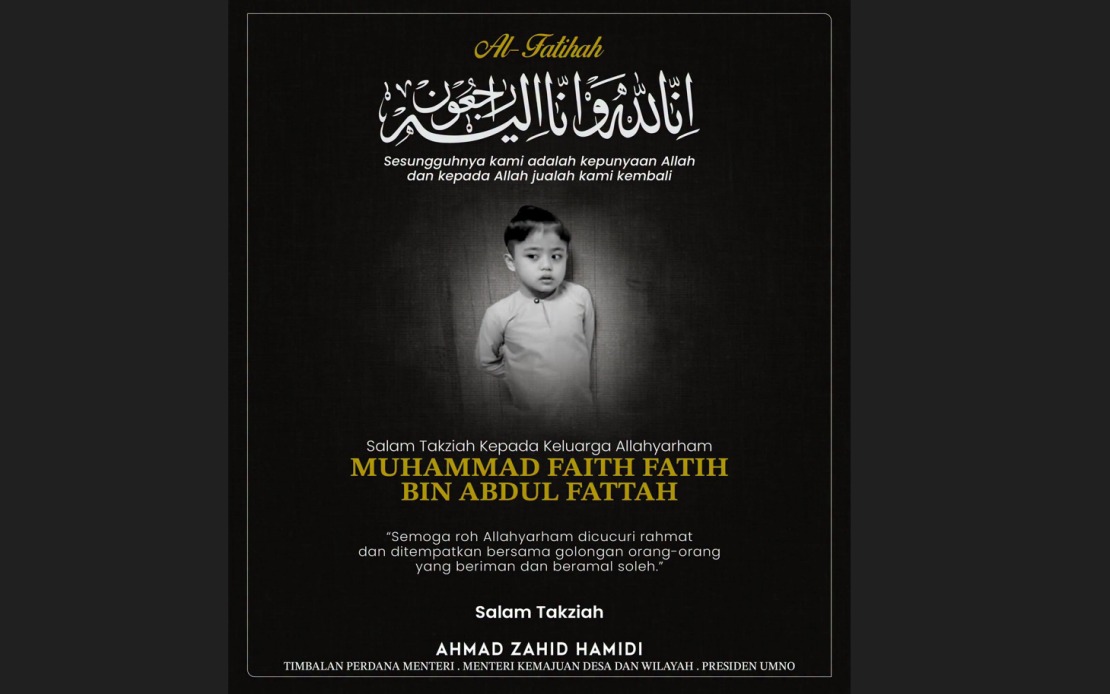
Deputy Prime Minister Datuk Seri Dr Ahmad Zahid Hamidi has expressed his deepest sympathies to the family of Muhammad Faith Fatih Abdullah Fattah, a six-year-old child with autism who tragically lost his life in a remote area of Perak. The boy was discovered deceased within a drain located in an oil palm plantation near Kampung Baru, adjacent to Sungai Sumun in Hutan Melintang, following an intensive search operation that concluded around 10.08 pm on the evening of June 30.
Through a social media statement released on July 1, Ahmad Zahid, who serves as Member of Parliament for Bagan Datuk, conveyed his profound sorrow at the devastating loss. The Deputy Prime Minister acknowledged the particularly harrowing nature of the tragedy, given the child's age and vulnerability as a young person with special needs requiring dedicated care and supervision. Such incidents inevitably draw heightened attention due to the compounded vulnerability of children with autism, who may face additional challenges in navigating dangerous environments or communicating their whereabouts during emergencies.
In his condolence message, Ahmad Zahid addressed the profound grief that accompanies the loss of a child, emphasizing the unique and irreplaceable bond between parents and their offspring. He remarked that few trials in human experience surpass the anguish of bereaved parents, acknowledging the deep emotional wounds such a loss inflicts on families. The statement reflected a recognition of the universal nature of parental love and the particular devastation that accompanies losing a young child unexpectedly.
The Deputy Prime Minister extended prayers for the family, invoking Islamic teachings and spiritual comfort during their time of mourning. He called upon the Muslim community to recite Al-Fatihah, a central chapter of the Quran traditionally recited for the deceased, and to pray that Allah's mercy would encompass the child's soul. This invocation of religious practice served as a means of mobilizing communal support and spiritual solidarity with the grieving family during their darkest hours.
According to police records, the circumstances surrounding the child's disappearance unfolded with alarming swiftness. Officers from the Bagan Datuk police station received an initial report at approximately 4.54 pm indicating that the boy had vanished from his home. Family members reported that he had last been observed in the living room of the residence, but subsequently could not be located despite immediate searches of the immediate vicinity. The notification time marked the beginning of what would become an urgent and ultimately tragic search operation.
The discovery of the child's body in a drainage channel within the vast oil palm plantation area highlighted the inherent dangers present in such environments, particularly for young children who may lack awareness of industrial hazards or proper supervision mechanisms. Oil palm estates, while economically crucial to Malaysia's agricultural sector, present numerous dangers including water-filled drains, dense vegetation, and machinery that pose serious risks to unsupervised individuals, especially vulnerable children with developmental differences.
This incident underscores ongoing concerns about child safety and the particular vulnerabilities faced by children with autism spectrum disorder. Families managing children with autism often contend with unique caregiving challenges, as some individuals with autism may lack typical danger awareness, have difficulty communicating their location or needs, or display behavioral patterns that increase risk of wandering or getting lost. The case raises important questions about safeguarding mechanisms and community support systems available to families managing these circumstances.
The tragedy also reflects broader societal discussions regarding inclusive infrastructure and community awareness about children with special needs. Malaysia has made progress in autism awareness and support services through various government and non-governmental initiatives, yet incidents such as this demonstrate that gaps remain in protecting vulnerable populations from preventable accidents and environmental hazards. Enhanced monitoring, better environmental design in hazardous areas, and increased community education about autism-related vulnerabilities could contribute meaningfully to injury prevention.
The response from political leadership, exemplified through Ahmad Zahid's official condolences, demonstrates recognition of the need for empathetic acknowledgment of such tragedies at the highest levels of government. When children with special needs experience harm, the impact reverberates through families and advocacy communities, often prompting broader discussions about social support systems and preventive measures. Formal acknowledgment from senior government figures validates the significance of the loss and emphasizes national commitment to protecting all citizens, particularly the most vulnerable segments of society.
As the family of Muhammad Faith Fatih Abdullah Fattah grieves their loss, this tragedy will likely serve as a catalyst for renewed discussions among policymakers, child welfare advocates, and disability rights organizations regarding enhanced protections for children with autism and improved safety protocols in plantation areas and other hazardous environments. The incident reinforces the importance of community vigilance, adequate supervision, accessible support networks for families managing special needs children, and continued investment in infrastructure modifications that reduce preventable accidents affecting vulnerable youth.

