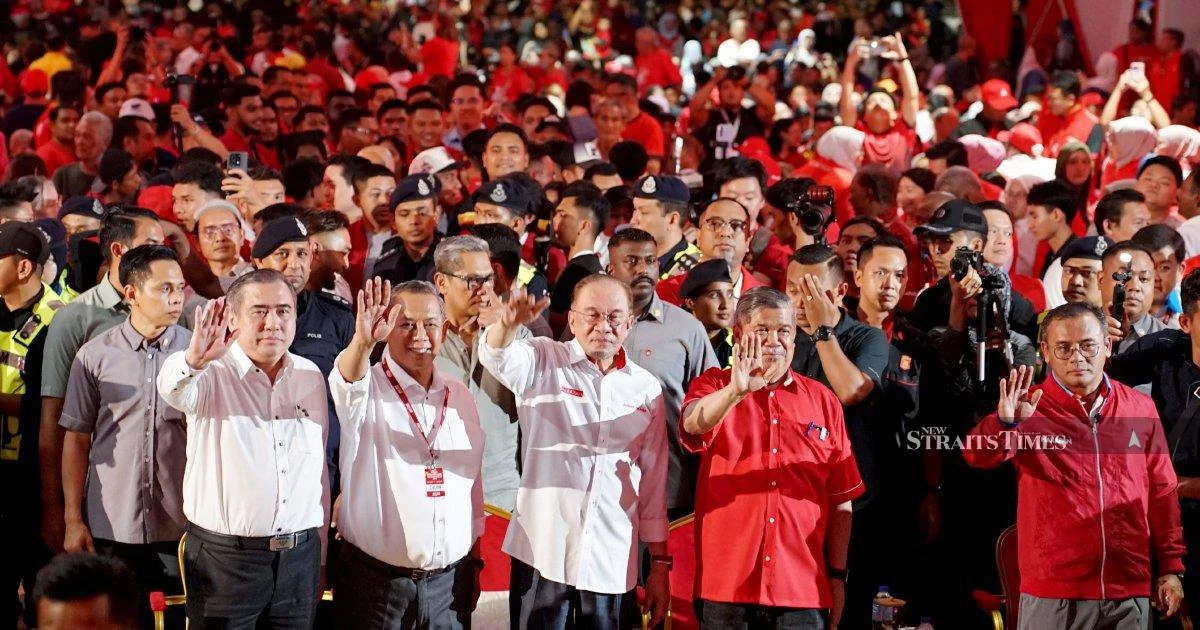
Prime Minister Datuk Seri Anwar Ibrahim has issued a pointed reminder to Malaysia's political establishment to refrain from instrumentalising the royal institution during the ongoing Negri Sembilan election campaign. Speaking in Kuala Pilah, Anwar underscored the importance of maintaining clear boundaries between electoral politics and the constitutional role of the monarchy, signalling heightened concern about the potential for institutional abuse in the pursuit of electoral advantage.
The warning reflects broader anxieties within the government about campaign tactics that risk politicising institutions traditionally positioned above partisan contestation. In Malaysia's Westminster-influenced constitutional framework, the monarchy occupies a distinctly protected position, serving as a unifying symbol of national identity rather than an instrument for factional advantage. Anwar's intervention suggests that campaign strategists on multiple sides have either directly invoked royal preferences or created inferences that might suggest royal backing for particular candidates or parties, crossing boundaries that custodians of democratic norms consider fundamental.
Negri Sembilan holds particular significance within this cautionary context, given the state's longstanding relationship with traditional governance structures. The state monarchy retains ceremonial and constitutional powers, and any attempt to manufacture perceived royal endorsement carries particular resonance with voters in the region who maintain strong attachments to customary institutions. Political operatives understand this cultural reality, making the Prime Minister's public intervention strategically important—it establishes a clear and unambiguous expectation that will be difficult for contravening parties to ignore without reputational cost.
The timing of Anwar's statement carries implications extending beyond a single state election. As Malaysia navigates the period following recent political realignments, questions about institutional integrity remain sensitive. The royal institution has periodically found itself at the centre of constitutional controversies and political speculation over recent years. By speaking directly to this issue, Anwar seeks to establish a protective cordon around constitutional institutions before speculation or campaign rhetoric gains traction.
From a governance perspective, this represents an effort to preserve what analysts term institutional autonomy—the capacity of non-elected bodies to function without subordination to partisan interests. Once royal institutions become openly mobilised for electoral purposes, their perceived neutrality erodes, and their ability to serve stabilising constitutional functions diminishes correspondingly. Anwar's warning essentially asks all parties to recognise that short-term electoral gains achieved through royal institution weaponisation exact longer-term institutional costs that ultimately disadvantage democratic governance itself.
The emphasis on cautioning "all parties, especially political leaders" suggests the Prime Minister recognises that institutional breaches may emanate from multiple quarters. This inclusive formulation avoids the appearance of singling out opposition forces, instead establishing a universal standard. Simultaneously, it places specific responsibility on political elites whose rhetorical choices and campaign strategies shape whether boundaries remain respected. Leaders who publicly discipline their own operatives and establish internal campaign standards become instrumental to upholding these norms.
For Malaysian voters, particularly in Negri Sembilan, this statement serves an educational function. It establishes clearly that candidates and parties invoking royal preferences or manufacturing inferences of royal support are operating in defiance of the Prime Minister's explicit guidance. Voters concerned about maintaining institutional health now possess a clear reference point for evaluating campaign conduct. This transparency strengthens the ability of citizens to hold political actors accountable to constitutional norms beyond electoral victory or defeat.
The regional dimension deserves consideration as well. Southeast Asian democracies grapple with recurring tensions between electoral competition and institutional preservation. Thailand's constitutional crises have repeatedly centred on institutional politicisation; Indonesia and the Philippines have experienced corrosive effects when political actors treat traditionally autonomous institutions as legitimate campaign resources. By establishing this boundary publicly and unambiguously, Anwar positions Malaysia as conscious of regional precedents and committed to preventing institutional degradation through preventive action rather than remedial crisis management.
Moving forward, the effectiveness of this warning depends substantially on enforcement mechanisms beyond rhetorical appeal. Media literacy campaigns that help voters recognise when institutions are being inappropriately mobilised would complement Anwar's statement. Regulatory bodies overseeing campaign conduct might clarify whether specific violations of this principle constitute actionable breaches. Democratic institutions strengthen when norms receive consistent reinforcement through multiple channels rather than relying solely on top-down declarations.
The Negri Sembilan election therefore becomes a test case for whether Malaysia's political class collectively internalises the principle Anwar articulated. The outcome will signal to future candidates and parties whether institutional protection remains a shared commitment or merely a rhetorical flourish deployed and abandoned as electoral calculations shift. Success requires sustained vigilance and willingness across party lines to prioritise constitutional integrity over marginal campaign advantages.

