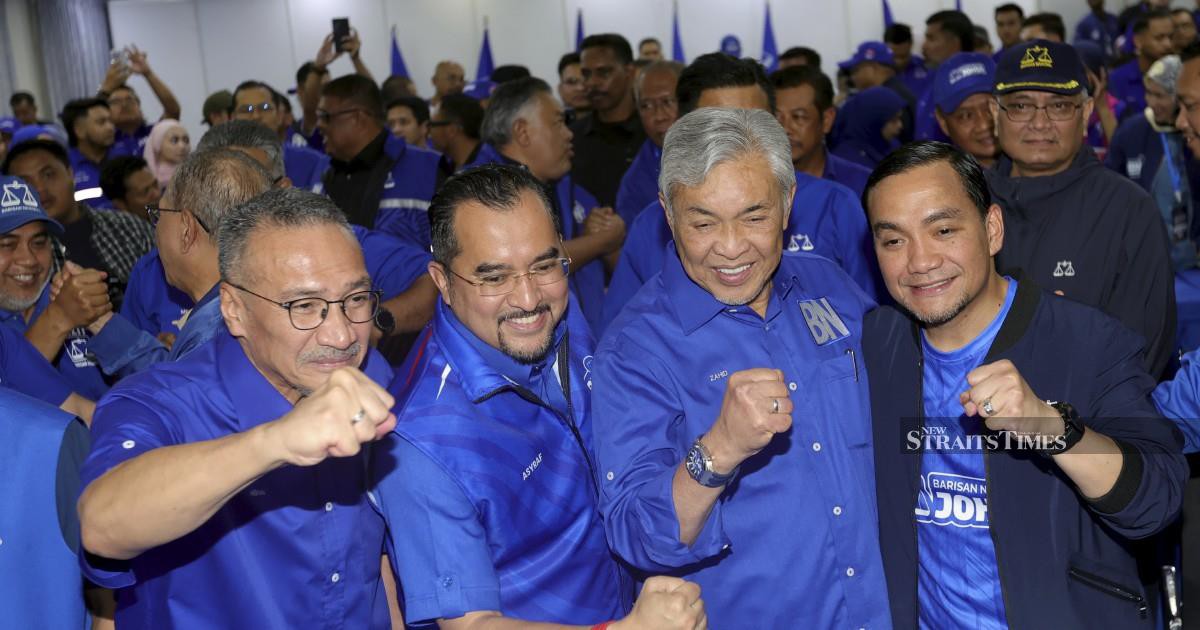
Following Barisan Nasional's commanding performance in the Johor state election, Umno secretary-general Datuk Dr Asyraf Wajdi Dusuki has issued a pointed reminder to party leadership: the coalition must translate its electoral success into meaningful governance while maintaining a grounded approach to power. The messaging reflects a deliberate strategy by Umno's central leadership to prevent the kind of institutional complacency that has historically undermined dominant political movements in Malaysia.
The Johor results represent a significant consolidation of support for the coalition in a state that has traditionally served as a barometer for national political sentiment. Barisan Nasional's performance in Malaysia's second-largest state by population carries symbolic weight extending beyond immediate local governance, as Johor has historically influenced electoral dynamics across the peninsula. The decisive nature of the victory suggests the coalition has successfully managed to rebuild voter confidence following earlier setbacks, a process that began in earnest after the 2022 general election redefined Malaysian politics.
Asyraf's cautionary tone appears deliberately calibrated to address a recurring challenge within Malaysia's political structures: the tendency for governing coalitions to grow detached from voter concerns once electoral victories are secured. Historical precedent demonstrates that overwhelming majorities can breed institutional arrogance, leading to governance failures that ultimately erode public trust. By publicly emphasizing humility and sustained effort, Umno's second-ranking official is attempting to establish a counter-narrative within party culture, one that prioritizes accountability and responsiveness.
The secretary-general's intervention also carries implications for managing expectations within Barisan Nasional's constituent parties and their grassroots networks. Coalition politics in Malaysia require constant negotiation between dominant Umno, its traditional Chinese and indigenous partners, and newer allies acquired during recent political realignments. Electoral success in one state can strain these delicate arrangements if senior figures fail to emphasize the collective nature of victory or if resource distribution becomes perceived as unfair by coalition partners.
For Malaysian voters, particularly those in states beyond Johor, Asyraf's messaging represents a signal that Barisan Nasional recognizes the provisional nature of electoral mandates. The statement implicitly acknowledges that even landslide victories do not grant indefinite political capital, and that the electorate retains the capacity to withdraw support if governance deteriorates or constituencies feel neglected. This recognition stands in contrast to political cultures where dominant parties interpret election results as validating any policy direction leadership chooses to pursue.
The timing of Asyraf's remarks also deserves scrutiny, coming at a moment when other Malaysian states face upcoming electoral cycles or face governance challenges that could affect national political balance. By establishing a public standard of humility and hard work, Umno's leadership is laying groundwork for explaining future electoral setbacks, should they occur, as the natural consequence of political competition rather than systemic failure. Simultaneously, the messaging provides a framework for evaluating the coalition's performance in the coming years: progress will be measured not merely by holding seats, but by the quality of development, service delivery, and public welfare improvements citizens experience.
For regional observers, Barisan Nasional's performance in Johor and the leadership's measured response offers insights into how established political forces navigate democratic systems after weathering significant challenges. Unlike one-party authoritarian models, Malaysia's competitive electoral environment requires coalitions to maintain both internal cohesion and public credibility simultaneously. The test of Asyraf's message will come not in its immediate reception but in whether institutional behavior within Barisan Nasional actually reflects the humility and commitment he is calling for.
The statement also reflects generational dynamics within Umno's upper ranks. Asyraf, as a younger leader speaking in his capacity as secretary-general, is positioning himself as an advocate for institutional renewal and professional governance standards. This positions him favorably for future leadership roles while simultaneously advancing a version of Umno politics oriented toward modern expectations of political parties. Whether this rhetoric translates into substantive changes in how the coalition governs remains the crucial question for voters and rival political formations alike.
Looking ahead, Barisan Nasional's ability to convert Johor's electoral success into tangible improvements in state administration will determine whether the caution Asyraf articulates becomes the foundation for sustained political dominance or remains merely aspirational messaging. The broader implication for Malaysian politics is that dominant coalitions cannot rely indefinitely on historical advantages or past victories—continuous effort, demonstrated competence, and attentiveness to citizen concerns form the actual basis of political legitimacy in contemporary Malaysia's competitive democratic landscape.

