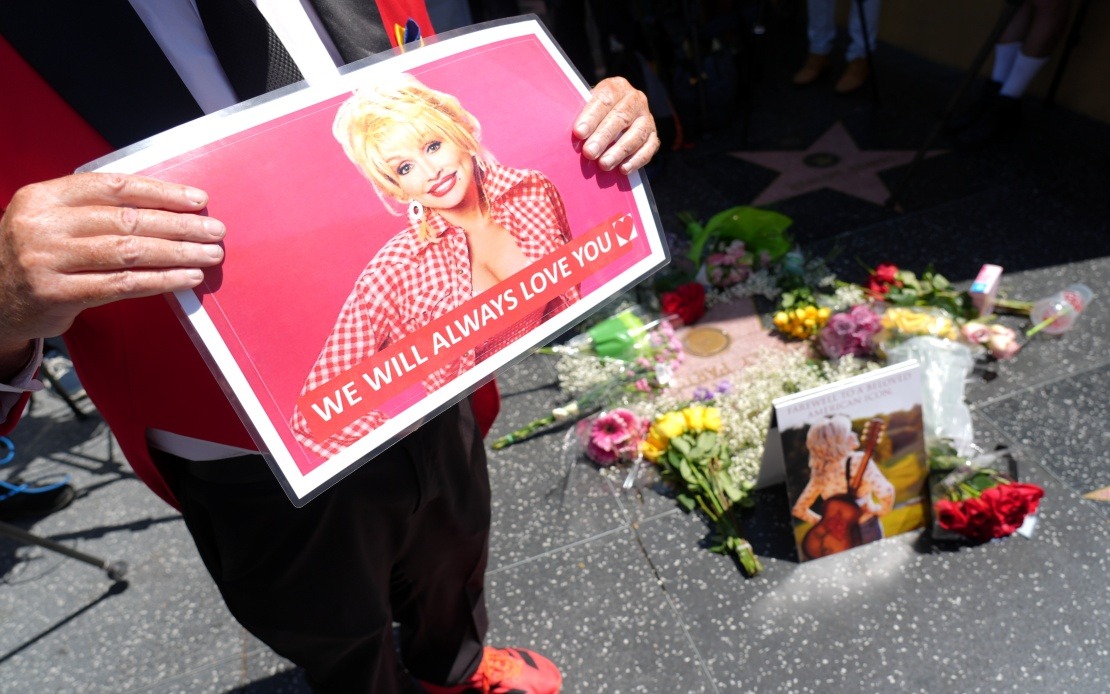
Dolly Parton, the legendary American country musician whose six-decade career defined a generation and whose influence extended far beyond music into entertainment and humanitarian endeavors, has died at the age of 80. The announcement came through video posted to her social media accounts by her nephew, Bryan Seaver, acting on behalf of the Parton family on Tuesday. The specific cause of her death was not disclosed by the family, though Parton had experienced significant health challenges in recent months that forced her to step back from public commitments.
Parton's health struggles had become increasingly apparent over the past year. She cancelled several performances and was compelled to postpone a Las Vegas residency that had been a major part of her touring plans. Just days before her passing, the beloved performer had communicated with her devoted fanbase through social media, expressing that she was on the mend and responding positively to medical interventions and ongoing treatment. Despite these setbacks, her spirit and determination to recover had remained evident in her public statements to supporters worldwide.
The trajectory of Parton's life embodied the classic American success story, though one rooted firmly in the traditions and culture of rural Appalachia. Born in 1946 in Sevierville, Tennessee, she emerged from circumstances marked by financial hardship and modest means. Her introduction to music came remarkably early, and by the tender age of ten, she had already begun performing on local radio stations. At just thirteen years old, she recorded her debut single, "Puppy Love," and made her historic first appearance at Nashville's Grand Ole Opry, the venerable institution that has long served as country music's most prestigious stage.
Parton's relocation to Nashville in 1964 marked a turning point in her professional development. Rather than immediately establishing herself solely as a performer, she cultivated a reputation as an exceptionally talented songwriter whose compositions caught the attention of established artists seeking quality material. This strategic approach to her craft allowed her to build credibility and industry connections before launching her solo career. Her collaboration with Porter Wagoner proved particularly instrumental in raising her public profile. As a regular performer on Wagoner's nationally broadcast television variety programme from 1967 through 1974, she gained exposure to millions of viewers and demonstrated her versatility as both vocalist and entertainer.
The 1970s represented the creative flowering of Parton's artistic vision, a period during which she produced many of her most enduring compositions. "Jolene," with its haunting melody and emotionally vulnerable lyrics about romantic rivalry, became one of her signature pieces and remains instantly recognizable to audiences across generations and geographical boundaries. "I Will Always Love You" emerged during this same prolific period, a power ballad that would later achieve unprecedented global recognition when Whitney Houston selected it for the 1992 film The Bodyguard, introducing the song to audiences who might never have encountered the original version. Houston's rendition became one of the best-selling singles of all time, yet many still recognize Parton as its author and originator.
Parton's ambitions extended considerably beyond the recording studio and concert stage. She demonstrated remarkable skill as a film actress, earning roles in major motion pictures including 9 to 5 and Steel Magnolias, proving that her star power transcended any single medium. This crossover success established her as a multifaceted entertainer capable of commanding attention and respect across the entertainment landscape.
Perhaps equally significant to her musical and cinematic achievements was Parton's extensive philanthropic work. She established and championed the Imagination Library, a groundbreaking initiative dedicated to distributing free books to children in economically disadvantaged communities. This programme reflected her deep commitment to literacy and educational opportunity, causes that grew naturally from her own humble origins and the challenges she had witnessed throughout her life. Her charitable endeavors positioned her not merely as an entertainer but as a conscientious public figure invested in social welfare and community development.
Across more than six decades of professional activity, Parton accumulated remarkable achievements that attest to her influence and artistry. She amassed record sales exceeding one hundred million copies worldwide, a figure that underscores the universal resonance of her music. Her trophy case included eleven Grammy Awards, alongside numerous other prestigious recognitions from the music industry. She secured induction into the Songwriters Hall of Fame, acknowledging her contributions as a composer, and later achieved the rare distinction of inclusion in the Rock and Roll Hall of Fame, a testament to her broader cultural significance beyond country music's traditional boundaries.
For Malaysian and Southeast Asian audiences, Parton's passing marks the end of an era that witnessed the globalization of American country music as a cultural export. Her influence shaped not only the sound of popular music but also demonstrated how authenticity and storytelling, whether in English or translated into other languages, can transcend borders and resonate with diverse audiences. The reimagining of her songs by artists from various cultures and musical traditions underscores the universality of her themes: love, loss, resilience, and hope. Her legacy extends beyond her discography to encompass the ways she modeled career longevity, reinvention, and commitment to causes larger than personal ambition. The regional music industry and aspiring artists throughout Asia will likely continue to reference her career trajectory and artistic principles as benchmarks for sustainability and relevance in an evolving entertainment landscape.

