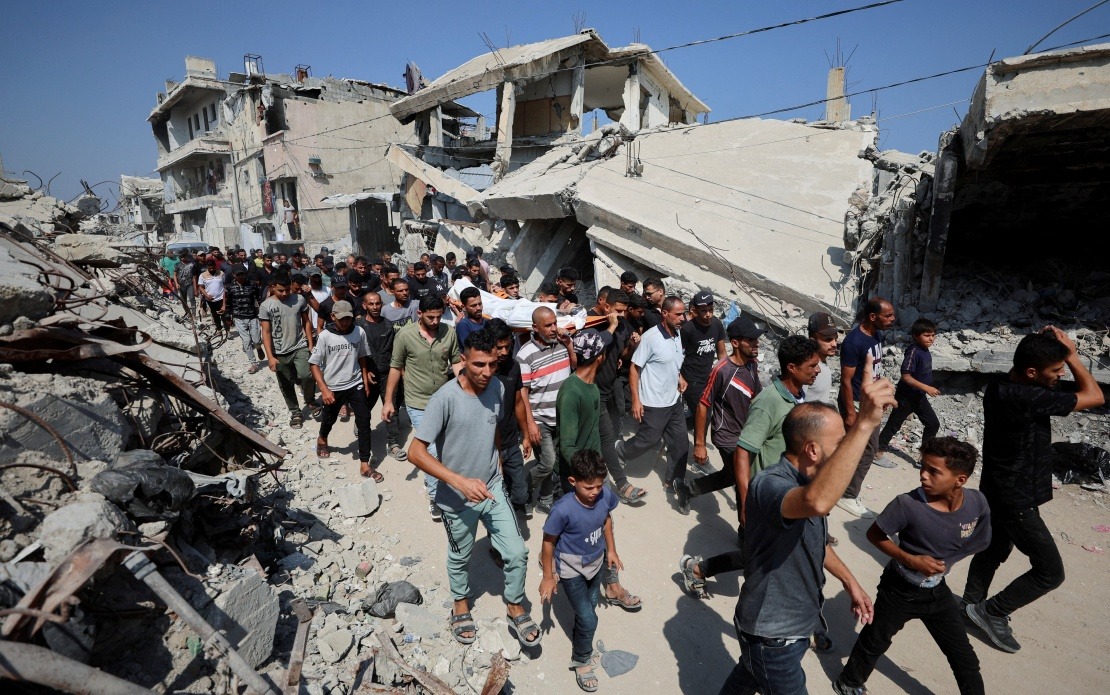
Médecins Sans Frontières (MSF), commonly known as Doctors Without Borders, has issued a sharp rebuke of the Israeli military's decision to shut down investigations into fatal attacks on its personnel and their relatives in Gaza without initiating any criminal proceedings. The organisation's statement, released on Thursday from Istanbul, represents a significant escalation in its criticism of Israel's handling of incidents that have claimed the lives of multiple MSF workers throughout the ongoing conflict in the enclave.
The decision to close these cases comes nearly two years after MSF first lodged formal requests for investigations into the deadly attacks. The humanitarian group had subsequently escalated its efforts by bringing a petition before Israel's High Court, challenging the Military Advocate General's apparent inaction and refusal to respond to their demands for accountability. This extended timeline reflects the frustration accumulated within MSF as traditional legal channels proved ineffective in advancing its case for independent scrutiny of the incidents.
MSF has consistently maintained that all available evidence points directly to Israeli military responsibility for the attacks that resulted in the deaths of its staff members. The organisation emphasises that it had taken considerable precautions to ensure the safety of its personnel, including sharing detailed information about staff members' identities and their locations with Israeli forces. Furthermore, MSF vehicles were visibly and clearly marked with organisational insignia, making them readily identifiable to military personnel operating in the field.
One particularly significant incident occurred in November 2023, when an MSF convoy came under attack, resulting in the deaths of two individuals related to the organisation's staff. Among those killed was Alaa Al Shawa, who served as a volunteer assisting MSF medical teams operating at Al-Shifa Hospital. This attack exemplifies the dangers faced by humanitarian workers attempting to deliver medical care in an active conflict zone, even when taking standard precautions to signal their non-combatant status.
A subsequent attack in February 2024 targeted an MSF shelter located in Khan Younis, with devastating consequences for one staff member's family. The assault resulted in the deaths of the wife and daughter-in-law of an MSF employee, while six additional individuals sustained injuries, including five women and children. These casualties underscore the indiscriminate nature of the violence and its impact on civilian family members of humanitarian workers, many of whom were not themselves engaged in any operational activities.
The scale of losses among humanitarian personnel in Gaza has been staggering. MSF reports that 15 of its staff members have been killed by Israeli forces since the conflict intensified in October 2023. This figure must be understood within the broader context of a devastating humanitarian crisis: approximately 1,700 healthcare workers have been killed during the same period according to available data, a statistic that highlights the systematic targeting or endangerment of medical professionals attempting to maintain essential services in the territory.
MSF's position represents a fundamental challenge to the legitimacy of Israel's internal military accountability mechanisms. The organisation asserts that the closure of these cases demonstrates conclusively that there exists no genuine prospect of justice or accountability within the Israeli legal system for attacks resulting in the deaths of its personnel. This critique extends beyond specific incidents to challenge the broader framework within which such investigations are conducted, arguing that a military institution investigating its own actions cannot deliver the neutrality and impartiality necessary for genuine accountability.
The group has explicitly rejected the notion that internal military reviews can substitute for independent, impartial investigation by external bodies. MSF is calling for all cases involving its staff to be referred to an impartial investigative mechanism that operates outside the chain of command responsible for conducting military operations in Gaza. This demand reflects growing international concerns about the adequacy of existing accountability structures in conflict situations where power asymmetries may influence investigative outcomes.
MSF's statement also connects these specific incidents to broader accusations regarding Israel's military conduct in Gaza. The organisation links the closure of investigations to allegations of genocide against Palestinians in the territory, framing the killing of its staff as part of a larger pattern of violence against protected categories of persons, including medical workers and humanitarian personnel. This framing positions the MSF cases within the international legal framework governing armed conflict and crimes against humanity.
The humanitarian organisation has articulated a fundamental principle underlying its position: no conceivable military objective can justify the indiscriminate harming of civilians or the deliberate targeting of protected persons such as health workers. This statement serves as a reminder of the humanitarian law obligations that bind all parties to armed conflict, obligations that require distinguish between combatants and non-combatants and taking precautions to minimise civilian harm.
For Malaysian and Southeast Asian observers, the MSF case illuminates critical questions about accountability mechanisms in complex emergencies and the adequacy of existing international frameworks for protecting humanitarian workers. The closure of these investigations without criminal proceedings raises concerns that may resonate beyond Gaza, affecting how regional states approach their own compliance with international humanitarian law and their treatment of independent humanitarian organisations operating within their territories.
According to Gaza's Ministry of Health, the recent 24-hour period saw 10 Palestinians killed and 25 wounded. The cumulative toll since October 2023 has reached 73,417 deaths and 174,360 injured. The ministry has documented that Israeli violations of ceasefire agreements have separately contributed to 1,283 Palestinian deaths and 4,248 additional injuries, suggesting that even periods of supposed restraint have been punctuated by continued violence.

