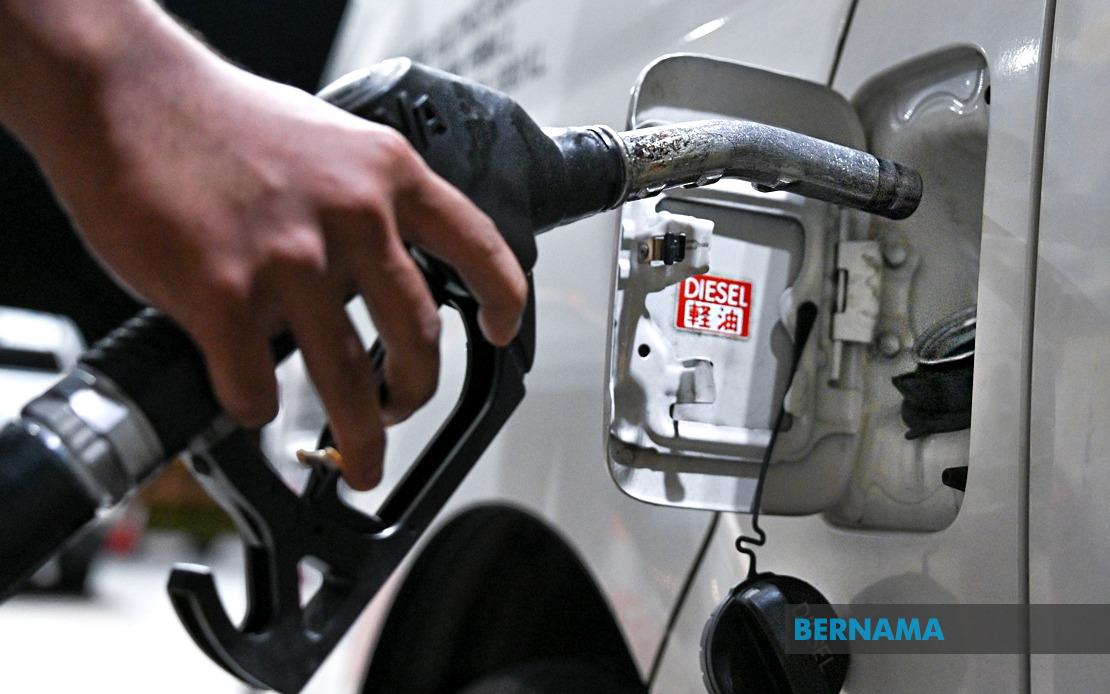
Malaysia's decision to lower subsidised diesel prices to RM2.10 per litre from July represents a tangible outcome of the government's broader economic reform agenda, according to Datuk Mustapha Sakmud, Minister in the Prime Minister's Department (Sabah and Sarawak). The reduction, announced yesterday by Prime Minister Datuk Seri Anwar Ibrahim, signals that targeted subsidy policies are beginning to translate into relief for ordinary Malaysians grappling with cost-of-living pressures that have intensified over recent years.
The mechanics underlying this price adjustment centre on a verified subsidy mechanism using MyKad identification, mirroring the approach deployed under the BUDI MADANI RON95 programme. This verification system represents a critical shift in how Kuala Lumpur approaches fuel subsidies—rather than blanket support that benefits all consumers regardless of income, the government now ties eligibility to citizenship and identity confirmation. The framework aims to ensure subsidy allocations reach those who genuinely qualify while simultaneously addressing a longstanding weakness in Malaysia's subsidy architecture: the leakage of heavily discounted fuel across borders through smuggling networks that have historically drained billions from government coffers.
Current pricing arrangements illustrate the stark regional disparities embedded within Malaysia's energy policy framework. Diesel currently trades at RM2.15 per litre in Sabah and Sarawak under the existing subsidy regime, while Peninsular Malaysia consumers pay the unsubsidised market rate of RM4.37 per litre. The July reduction to RM2.10 per litre in Sabah and Sarawak, contingent on MyKad verification, will narrow but not eliminate this price divide. For consumers in Peninsular Malaysia, the absence of subsidised diesel availability underscores how fuel support in Malaysia remains geographically fragmented—a legacy of constitutional arrangements that accord Sabah and Sarawak greater autonomy over energy pricing within their respective territories.
Placing this policy shift within its geopolitical context proves essential for understanding Kuala Lumpur's strategic calculations. Mustapha emphasised that the diesel price adjustment unfolds amid persistent instability in West Asian energy markets, where regional conflicts continue to create uncertainty around global petroleum supplies and pricing volatility. The ongoing Middle Eastern tensions have prompted energy-importing nations across Asia to reassess their vulnerability to external energy shocks and to diversify sourcing arrangements. Malaysia, though an energy producer, remains attentive to global market dynamics that influence domestic pricing and subsidy sustainability.
In response to these regional pressures, the Malaysian government has been cultivating energy partnerships with non-traditional suppliers. Mustapha highlighted cooperation with Russia and Turkmenistan as evidence of Kuala Lumpur's push to secure diverse energy streams and reduce reliance on conventional Middle Eastern sources. These initiatives reflect a broader strategy to insulate Malaysia from future supply disruptions or price spikes originating from geopolitically volatile regions. By securing long-term arrangements with major energy producers beyond the traditional Gulf suppliers, the government seeks to underpin both economic stability and energy resilience—prerequisites for sustaining any subsidy programme over the medium to long term.
The fiscal implications of this pricing adjustment warrant careful consideration. Diesel subsidies impose substantial direct costs on the Treasury, and the price reduction from RM2.15 to RM2.10 per litre will increase government spending on fuel support, at least in the short term. However, the government calculates that improved subsidy targeting through MyKad verification will offset some of these costs by preventing non-citizens and smugglers from accessing artificially cheap fuel. Historical evidence suggests that cross-border fuel smuggling from Malaysia to Indonesia and Thailand costs Kuala Lumpur hundreds of millions of ringgit annually. By restricting subsidised access to verified Malaysian citizens, the administration hopes to recover portions of these leakages and thereby improve the cost-effectiveness of the subsidy programme relative to its population benefit.
For ordinary Malaysian consumers, particularly those in Sabah and Sarawak, the RM0.05 per litre reduction carries symbolic and practical significance. Though modest in nominal terms, a five-sen decrease translates to measurable savings for households and small businesses that depend on diesel for transportation, agriculture, and commerce. For long-haul freight operators, fishing communities, and agricultural enterprises across East Malaysia, every reduction in fuel costs trickles through supply chains and helps moderate inflation in essential goods. The dividend becomes more pronounced when multiplied across thousands of daily transactions and the cumulative fuel consumption of entire economic sectors reliant on diesel.
Mustapha framed the diesel reduction as evidence that Prime Minister Anwar Ibrahim's administration is delivering on its MADANI economic reform platform—a governance agenda centred on administrative efficiency and prudent fiscal management. The government's central claim is that by tightening subsidy targeting, improving revenue collection, and combating corruption and waste, sufficient budgetary space emerges to fund lower consumer prices without unsustainable fiscal deficits. This narrative carries weight for voters concerned about rising living costs and forms a counterpoint to opposition critiques that the government prioritises fiscal consolidation over consumer welfare. Whether the targeted subsidy model achieves both fiscal sustainability and broad-based affordability remains an empirical question that will unfold as the MyKad verification system operates at scale across the market.
The implementation from July onwards will test the technical and administrative capacity of relevant agencies to deploy MyKad verification seamlessly across petrol stations in Sabah and Sarawak. Procedural friction—delays, system failures, or consumer confusion at the pump—could undermine public confidence in the mechanism and create perceptions of unfairness if some eligible customers face barriers to accessing subsidised fuel. Conversely, if the system functions smoothly, it could become a template for broader subsidy targeting across other categories of government support, from healthcare to food assistance.
Regionally, Malaysia's experience with verified fuel subsidies may influence how other Southeast Asian governments approach similar challenges. Indonesia, the region's largest economy, has long grappled with fuel subsidy costs and smuggling losses; Thailand and Vietnam face comparable pressures. Should Malaysia's MyKad-based system prove effective at curbing leakages while maintaining consumer price relief, neighbouring countries may examine its design and viability as a model for their own subsidy modernisation efforts.
Ultimately, the RM2.10 diesel price from July encapsulates broader tensions within Malaysian economic governance: the desire to shield consumers from global energy price volatility, the fiscal reality that universal subsidies drain government resources, and the operational challenge of directing limited support to those most in need. The MADANI Government is betting that technology-enabled targeting can square this circle, simultaneously easing living costs, improving budget discipline, and enhancing energy security through strategic international partnerships. The months ahead will reveal whether this calculus translates into tangible improvements in Malaysian households' purchasing power and government finances.