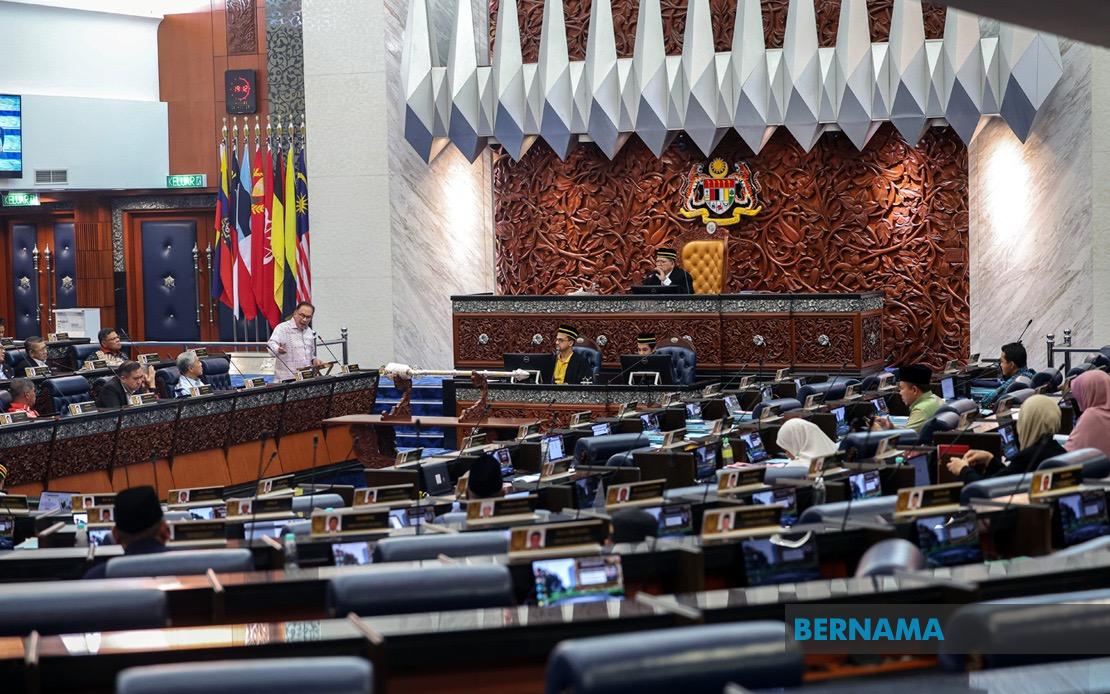
Malaysia's legislature has endorsed a revised enforcement framework for job vacancy reporting, approving amendments to the Employment Insurance System (Amendment) Bill 2025 that impose escalating financial penalties on employers who neglect their notification obligations to the Social Security Organisation. The Dewan Rakyat adopted the measure by majority voice vote on June 30 following deliberation among 13 parliamentarians representing both government and opposition parties, marking a legislative step intended to modernise labour market administration and improve workforce placement mechanisms across the nation.
The graduated penalty structure that has now received parliamentary endorsement represents a compromise between stricter accountability measures and the operational concerns raised by the business community. First-time offenders now face a fine of RM1,000, with second-time violators liable for RM3,000, and repeat or subsequent infractions attracting penalties of up to RM5,000. This tiered approach reflects a deliberate policy choice to incentivise voluntary compliance through proportionate consequences rather than imposing uniform maximum sanctions that might disproportionately burden smaller enterprises or those new to regulatory obligations.
The legislative evolution of this bill illustrates how parliamentary oversight and stakeholder engagement can reshape policy outcomes. The Dewan Negara had previously approved the amendments on March 12, targeting Clause 11 and Subsection 45F(4) of the principal legislation. Notably, the final penalty framework represents a substantial reduction from an original proposal that contemplated maximum fines of RM10,000, suggesting that government responsiveness to business feedback played a meaningful role in calibrating the enforcement regime. Deputy Human Resources Minister Datuk Khairul Firdaus Akbar Khan emphasised during the parliamentary conclusion of debate that this calibration reflects genuine consultation conducted by PERKESO across various economic sectors nationwide.
The underlying rationale for mandatory vacancy reporting connects to broader labour market policy objectives that extend beyond simple administrative compliance. By requiring employers to declare open positions to PERKESO, the legislation aims to create a more transparent and efficiently matched employment ecosystem, theoretically reducing structural unemployment and enabling government agencies to better understand sectoral labour demands. For Malaysia's economic planners, comprehensive vacancy data provides intelligence essential for skills development programmes, immigration policy calibration, and targeted interventions in underemployed regions or demographics.
During parliamentary proceedings, multiple members stressed the importance of designing implementation mechanisms that do not inadvertently penalise small and medium enterprises or impose technical barriers that exceed the capacity of less-sophisticated employers. Azahari Hasan, representing Padang Rengas under Perikatan Nasional, highlighted that reporting systems must function with genuine simplicity and efficiency, since the underlying objective—matching jobseekers with available positions and supporting evidence-based labour policy—cannot succeed if the administrative process itself becomes a source of friction. This concern reflects legitimate tensions between regulatory ambition and practical implementation across an economically diverse business landscape.
Geographic disparity in regulatory awareness emerged as a significant parliamentary concern. Nurul Amin Hamid, from Padang Terap, specifically noted that rural and regional businesses may lack familiarity with the Act's reporting requirements and may require sustained educational outreach to achieve genuine compliance rather than enforcement-driven grudging adherence. This observation points toward a deeper policy philosophy articulated by Khairul Firdaus, namely that the amendments deliberately prioritise guidance and voluntary compliance over immediate punishment. The government committed to continuing engagement sessions with employers and to issuing compliance notices that allow corrective action before any financial penalty materialises, effectively creating a graduated intervention ladder.
The legislative framework also incorporates transparency principles intended to protect worker interests and prevent discriminatory hiring. Syerleena Abdul Rashid, representing Bukit Bendera under Pakatan Harapan, underscored that job advertisements channelled through government portals ensure equitable access to employment opportunities and reduce informal hiring networks that may exclude disadvantaged groups. This dimension of the legislation reflects recognition that labour market transparency serves social objectives beyond mere administrative convenience, potentially contributing to more inclusive economic participation.
For Malaysian employers, the practical implications of this legislative approval centre on compliance planning and system readiness. Organisations must establish internal processes to identify job vacancies and transmit notifications to PERKESO within required timeframes, while ensuring their human resources personnel understand reporting obligations. The emphasis on compliance notices preceding financial penalties suggests a de facto grace period will operate during the early implementation phase, provided employers demonstrate good-faith engagement with requirements. However, businesses disregarding notifications or consistently failing to report vacancies should anticipate escalating financial consequences.
The amendments also reflect evolving legislative approaches to enforcement in Southeast Asia more broadly. Rather than imposing uniform maximum penalties that may appear arbitrary or disconnected from violation severity, progressive penalty structures offer policy makers a tool for encouraging behavioural change while reserving harsher consequences for persistent or deliberate non-compliance. This model has gained currency across labour-related legislation in the region as governments seek to balance developmental objectives with business sustainability concerns.
For Malaysia's labour market dynamics, the success of these amendments ultimately depends on implementation quality and the effectiveness of PERKESO's engagement infrastructure. If reporting systems prove user-friendly and employers receive clear, accessible guidance, the amendments may meaningfully improve vacancy matching and reduce information asymmetries that impede efficient employment matching. Conversely, if implementation encounters technical difficulties or employers perceive the system as burdensome, compliance may require enforcement intervention, potentially resulting in the financial penalties now embedded in law. Parliamentary debates and stakeholder feedback have been incorporated into the framework; execution will determine whether the legislative compromise successfully incentivises voluntary reporting without imposing undue operational burden on employers operating across Malaysia's diverse economic sectors.

