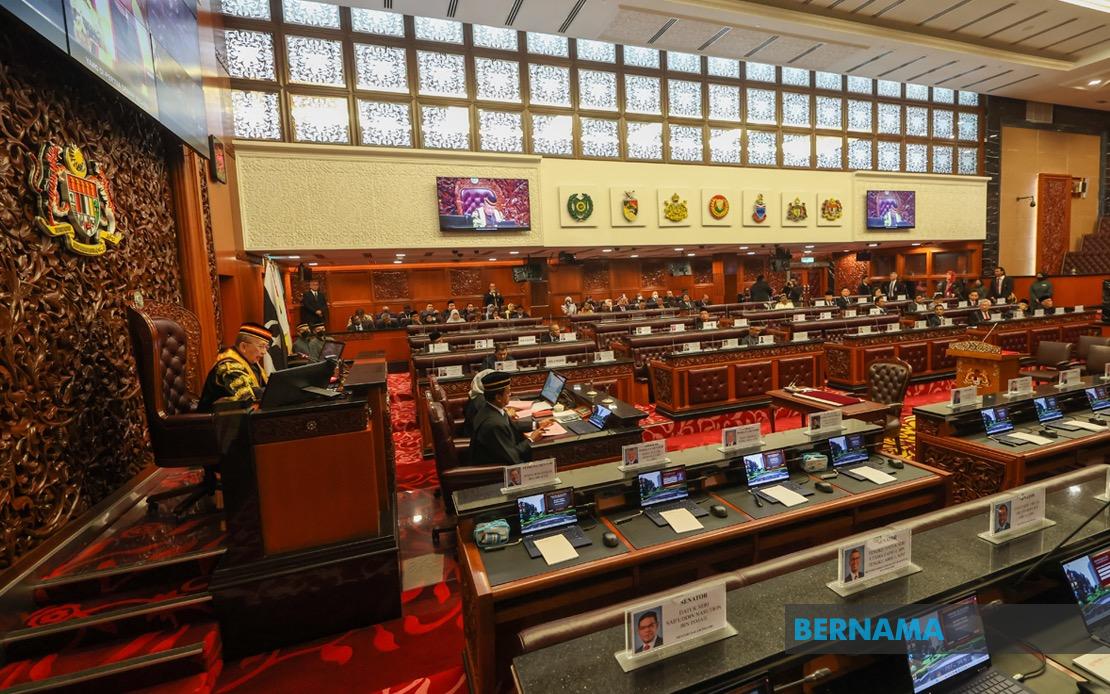
Malaysia's upper house has wrapped up a 10-day parliamentary sitting that culminated in the passage of two significant pieces of legislation designed to modernise the nation's governance architecture and statistical infrastructure. The Dewan Negara's second meeting of the Fifth Session, which ran from July 20 through August 4, saw the successful enactment of the National Trust Fund (KWAN) Bill 2026 and the Statistics Bill 2026, representing substantive progress on the government's legislative agenda aimed at strengthening institutional frameworks across multiple sectors.
The National Trust Fund Bill, introduced by Deputy Finance Minister Liew Chin Tong, represents a critical step in enhancing oversight mechanisms governing withdrawals from the nation's trust fund holdings. The legislation establishes stricter protocols and clearer disciplinary measures to ensure prudent stewardship of these resources, addressing longstanding concerns about accountability and transparency in fund management. Complementing this effort, the Statistics Bill 2026, tabled by Deputy Economy Minister Datuk Mohd Shahar Abdullah, creates a more robust and contemporary legal framework for collecting, managing and disseminating national statistical data—a foundational requirement for evidence-based policymaking in an increasingly data-driven global economy.
Parallel to legislative achievements, the sitting addressed broader macroeconomic challenges facing Southeast Asia's third-largest economy. At the outset of proceedings, the government articulated its commitment to protecting public welfare and maintaining sustainable growth in light of geopolitical instability in West Asia. The government outlined a comprehensive response strategy encompassing supply chain security, inflation management, sectoral support measures and strengthened economic resilience—issues of acute concern to Malaysia given its dependence on stable energy supplies and regional trade routes.
Prime Minister Datuk Seri Anwar Ibrahim took the opportunity to defend the investment performance of the Retirement Fund (Incorporated), known as KWAP, following its recent disclosure of a net profit of RM12.9 billion. While acknowledging that the fund's investment in eFishery had yielded valuable lessons for future decision-making, the Prime Minister argued that assessment of KWAP's performance must account for broader context and long-term objectives rather than focusing narrowly on specific ventures. This defence reflects ongoing scrutiny of sovereign wealth management and the need to balance commercial returns with strategic objectives.
Energy security emerged as a dominant theme throughout the parliamentary sitting, reflecting Malaysia's vulnerability to global energy price volatility and supply disruptions. The government informed lawmakers of its assessment of establishing a strategic petroleum reserve, a measure requiring careful evaluation of fiscal implications, operational logistics, governance structures and international precedent. In a related development, the government highlighted the significance of a newly concluded 20-year fuel supply agreement with Russia, spanning petrol, diesel, crude oil and natural gas. Officials stressed that this arrangement aligns coherently with Malaysia's National Energy Transition Roadmap, providing stability and diversification within an evolving global energy landscape.
Investment attraction, a cornerstone of Malaysia's economic strategy under the 13th Malaysia Plan, received substantive parliamentary discussion. Approved Japanese investments in the electrical and electronics sector totalled RM10.5 billion across 46 projects between 2021 and 2025, with projections of creating 9,009 employment opportunities. This influx of high-technology manufacturing investment underscores Malaysia's continued appeal as a destination for multinational capital seeking to establish or expand operations in Southeast Asia, though the government faces ongoing pressure to attract even higher-value activities and develop indigenous innovation capacity.
Competitiveness metrics provided encouraging signals for economic policymakers. Deputy Economy Minister Mohd Shahar reported on July 27 that Malaysia remains positioned to achieve its ambitious target of ranking among the world's 12 most competitive economies by the end of the 13th Malaysia Plan period. This trajectory is supported by Malaysia's improved standing in the 2024 World Competitiveness Ranking, suggesting that structural reforms and targeted investments are yielding measurable returns in international competitiveness assessments.
Financial sector governance underwent refinement through the government's announcement of a new Performance Measurement Framework for Development Financial Institutions, to take effect from July 1, 2027. Administered by Bank Negara Malaysia, this framework mandates more comprehensive evaluation of DFI activities across development impact, governance standards, operational efficiency and institutional sustainability—addressing recognised gaps in accountability mechanisms and ensuring that development-focused institutions deliver measurable outcomes aligned with national economic priorities.
The emerging electric vehicle sector received parliamentary attention as a critical component of Malaysia's green economy transition. The Ministry of Investment, Trade and Industry confirmed that the EV ecosystem would continue expanding through private sector-led initiatives without imposing price controls on public charging infrastructure—a market-based approach designed to stimulate competitive deployment of charging networks. As of May 31, 6,416 public EV chargers had been installed nationwide, representing meaningful progress though still modest relative to Malaysia's transportation needs and ambitions to position itself as a regional EV hub.
Post Malaysia's ongoing transformation programme also featured in parliamentary deliberations, with government assurances that the postal service would continue implementing its strategic restructuring to curtail operational losses. The proposed strategy encompasses network optimisation, digital channel expansion and disciplined financial management. The government signalled that it is exploring the creation of a dedicated Postal Service Fund to provide long-term financing stability—acknowledging that Malaysia's postal infrastructure, like that of many developed and developing nations, requires sustainable funding mechanisms to balance universal service obligations with commercial viability.
Fiscal performance provided a backdrop of cautious optimism for the legislative agenda. The Finance Ministry reported that the federal fiscal deficit has contracted for five consecutive years, reflecting the impact of economic and fiscal reform measures implemented under successive budgets. Deputy Finance Minister Liew disclosed that expenditure controls deployed during the first half of 2024 generated approximately RM5 billion in spending restrictions while preserving critical public service delivery—demonstrating that efficiency gains can be achieved without compromising government's capacity to meet essential societal obligations. Federal debt remained within statutory limits, suggesting that Malaysia's fiscal consolidation efforts are yielding tangible results, though the sustainability of these improvements depends on maintaining reform discipline and managing the impact of external economic shocks.
The Dewan Negara's passage of both bills and the breadth of economic issues addressed during the sitting reflect a government focused on modernising institutional frameworks, strengthening competitiveness and managing near-term macroeconomic pressures. For Malaysian businesses and investors, the legislative priorities signal continued emphasis on governance, energy security and technology-driven growth, while acknowledging the complexities of navigating geopolitical tensions and global economic headwinds that extend beyond Kuala Lumpur's policy reach.

