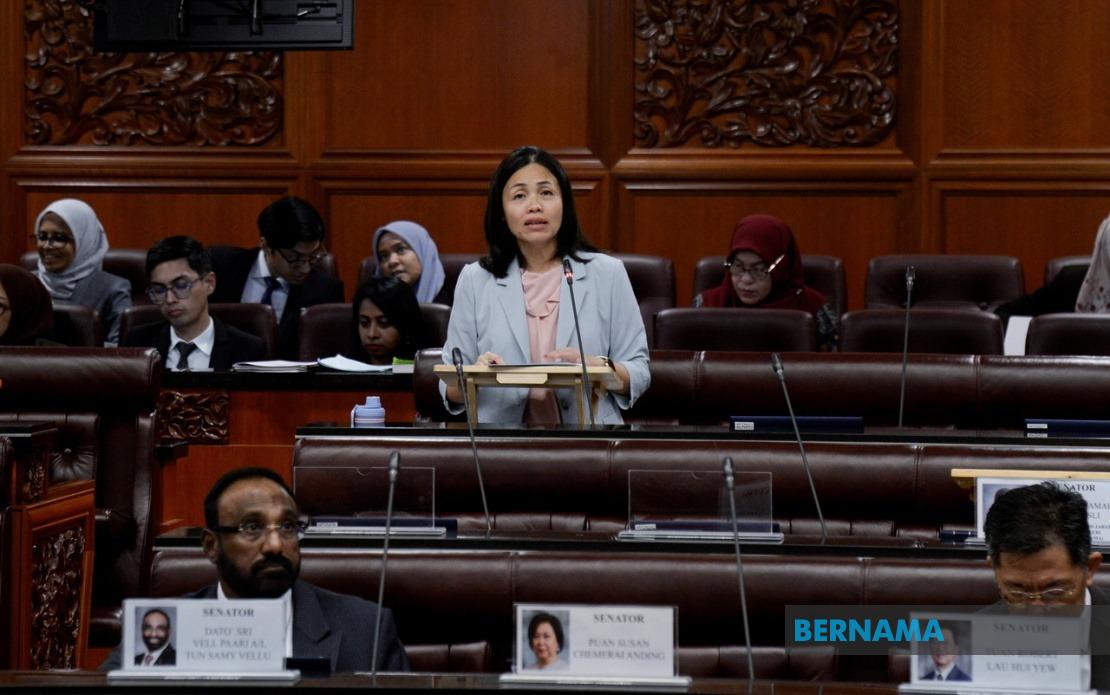
Malaysia's Dewan Negara has passed the Communications and Multimedia Commission (Amendment) Bill 2026, marking a significant step toward strengthening the country's digital regulatory framework. The legislation, approved by majority vote following deliberations from 11 senators, seeks to reshape the governance, operational capacity and regulatory reach of the agency responsible for overseeing the nation's communications sector. This comes as Malaysia grapples with rapidly evolving digital challenges, from online gambling proliferation to the need for cohesive digital infrastructure standards across an increasingly complex media landscape.
The amendment carries particular significance given that communications and multimedia infrastructure is no longer merely an economic concern but has become fundamental to national security and social stability. As Senator Datuk Abdul Halim Suleiman noted during the upper house debate, the success of these regulatory enhancements depends not simply on legislative authority but on MCMC's capacity to execute its functions with professionalism, transparency and genuine accountability to the public. This distinction reflects growing concerns among Malaysian lawmakers that regulatory bodies must balance expanded powers with institutional safeguards against political or bureaucratic abuse.
Among the bill's most consequential provisions is the prohibition on political figures serving as MCMC chairman. Deputy Minister of Communications Teo Nie Ching explained that the amendment prevents members of Parliament and state assemblymen from holding the leadership position, thereby insulating the regulator from direct legislative pressure and ministerial discretion. The measure responds to longstanding debates about regulatory independence in Malaysia, where oversight bodies have historically faced scrutiny over perceived political influence. By establishing this separation, lawmakers aim to create space for merit-based appointments and professional decision-making within the commission.
The amendment also addresses the composition and qualification standards for MCMC commissioners more broadly. Senator Muhammad Hasbie Muda stressed during deliberations that reform must extend beyond granting expanded powers; it requires ensuring each power is exercised transparently, effectively and with clear accountability mechanisms. This reflects a maturing approach to regulatory governance in Southeast Asia, where agencies are increasingly expected to justify decisions through evidence-based reasoning rather than administrative fiat. The emphasis on expertise and merit in the appointment process signals recognition that MCMC's effectiveness depends on recruiting specialists capable of navigating sophisticated digital and technological issues.
One area where MCMC's enhanced mandate will prove immediately consequential is online gambling enforcement. The commission has already demonstrated aggressive action against illegal gambling platforms, with Deputy Minister Teo revealing that MCMC removed over 222,000 pieces of gambling-related online content in the first seven months of 2026 alone. This represents a dramatic acceleration in digital enforcement activity. In 2022, platform operators removed merely two pieces of gambling content at MCMC's request; by 2023 that figure rose to 18,814, jumping to 189,484 in 2024 and reaching 289,486 in 2025. The trajectory illustrates both the escalating scale of online gambling operations and MCMC's growing capacity to coordinate removal efforts with social media companies and internet service providers.
Beyond content removal, the commission has strengthened its technical infrastructure-targeting capabilities. Over the period from 2022 through July 2026, MCMC blocked approximately 6,982 gambling websites entirely, leveraging technical measures to prevent user access rather than relying solely on content takedowns. However, the regulatory framework recognises that MCMC functions within a broader enforcement ecosystem. Primary criminal jurisdiction over gambling activities remains with the Royal Malaysia Police; MCMC's role centers on providing technical assistance, digital forensic analysis and access-blocking capabilities upon official request from law enforcement agencies. This division of labour reflects pragmatic recognition that communications regulators lack police powers but can amplify enforcement effectiveness through technical expertise.
The amended legislation restructures MCMC's statutory functions by clarifying the commission's authority over digital infrastructure development and platform standard-setting. Section 16 of Act 589 now explicitly recognises MCMC's role in developing and regulating the technical and operational standards that undergird digital platforms. This matters because as Malaysia pursues digital transformation initiatives and seeks to establish itself as a regional technology hub, coherent infrastructure standards become essential. Fragmented, uncoordinated platform regulations risk creating compliance burdens on legitimate operators while creating loopholes for bad actors. By clarifying MCMC's standard-setting mandate, the legislation creates institutional capacity for more coordinated digital governance across the country.
The bill's passage through Dewan Negara follows its earlier approval in Dewan Rakyat on July 15, meaning the legislative process is substantially complete. The comprehensive 17-clause amendment represents the government's most significant institutional recalibration of digital regulation in several years. For Malaysian businesses operating in digital media, telecommunications and platform services, the legislation signals strengthened expectations regarding compliance with content standards, data handling protocols and infrastructure requirements. Multinational technology companies operating regionally will likely face more consistent and technically sophisticated regulatory demands from Malaysia going forward.
The timing of this regulatory reform reflects broader Southeast Asian trends toward more assertive digital governance. Countries across the region have increasingly recognised that hands-off approaches to platform regulation create governance vacuums filled by foreign companies operating under foreign legal frameworks. Malaysia's approach seeks to establish domestic regulatory capacity while remaining cognisant that excessive restrictions might discourage investment and innovation. The emphasis on MCMC independence and merit-based governance suggests policymakers recognise that sustainable digital regulation depends on institutional credibility rather than political control. Whether these safeguards prove effective in practice will become clearer as the amended legislation is implemented over coming months.

