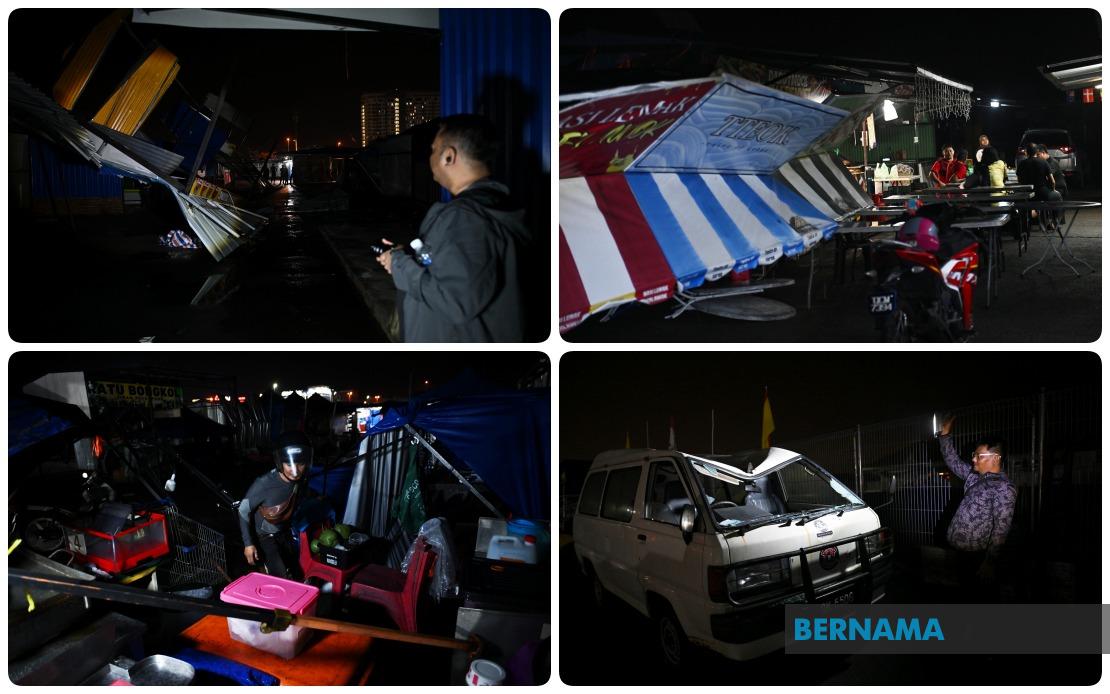
A violent thunderstorm that swept through Kuching on the weekend has resulted in the temporary closure of the N6 Metrocity 2 Youth Night Market, one of the city's most popular evening shopping destinations. The intense weather system, which brought heavy rain and powerful winds, caused extensive damage to vendor infrastructure and forced traders to abandon their stalls during the peak business hours when foot traffic typically surges. The incident has left the business community reeling from what market officials describe as the most catastrophic weather event to strike the venue in its recent operating history.
The sudden onset of dangerous conditions forced vendors and customers to evacuate the market grounds in what eyewitnesses describe as a harrowing scene. Mohamad Faisal, a 42-year-old trader who has operated at the market, recounted the alarming moment when canopy structures began lifting into the air with sufficient force to pose a direct threat to human safety. The strength of the wind was such that multiple protective coverings were caught aloft simultaneously, creating a hazardous environment where flying debris could strike unsuspecting people below. The psychological impact on traders was immediate, with many deciding discretion was the better part of valour and fleeing the premises rather than risk injury from the airborne structures.
Among the immediate casualties of the storm were the livelihoods of traders who have invested significantly in their operations. Vendors who have maintained businesses at the market for a decade indicate that the storm inflicted approximately RM2,000 in damage per stall, encompassing both structural losses and merchandise destruction. This figure represents a meaningful blow to small business operators who typically work on narrow profit margins and lack the financial buffers of larger commercial enterprises. The inventory losses compound the physical damage to equipment such as cooking appliances and water containers that form the backbone of food service operations at the market.
The scale of the disaster becomes clearer when viewed through the lens of the entire market operation. Hamzah Hassan, who serves as deputy chairman of the N6 Metrocity 2 Youth Night Market management committee, confirmed that more than forty out of approximately three hundred active trading lots sustained severe damage requiring immediate intervention. The destruction was comprehensive, extending beyond individual vendor stalls to encompass communal infrastructure that supports the entire market ecosystem. The main stage where entertainment and promotional activities occur suffered structural failure, the management office sustained significant damage, and the electrical supply system that powers the entire venue was compromised by the weather event.
The financial toll on individual traders demonstrates the vulnerability of this business model to meteorological events. While canopy replacement costs alone range from RM2,000 to RM5,000 depending on size and structural specifications, this represents merely one component of the total losses incurred. Equipment damage to cooking facilities, refrigeration units, and water systems adds substantially to the financial burden. For vendors operating without comprehensive business interruption insurance, the combination of immediate replacement costs and lost revenue from the market closure creates a genuine hardship that threatens the viability of their enterprises. Many traders lack access to formal credit facilities that might allow them to cover these emergency expenses.
This disaster illuminates the fragility of outdoor markets as economic engines in Southeast Asia's tropical climate. Unlike indoor shopping malls or enclosed commercial spaces, traditional night markets remain exposed to the full force of the region's severe weather patterns. Sarawak's monsoon season and the broader equatorial climate generate conditions that can produce powerful thunderstorms with minimal warning, making infrastructure designed solely for benign conditions inadequate. The Malaysian Meteorological Department had issued a thunderstorm warning for Kuching and surrounding areas for a five to nine hour window on the day of the incident, providing some advance notice but insufficient specificity to prevent the damage.
The broader Sarawak region experienced the same weather system across multiple districts, with METMalaysia's warning extending to Serian, Siburan, Samarahan, Simunjan, Kapit and Song. This geographic spread suggests that other communities and commercial operations may have suffered comparable damage, pointing to a larger regional weather event rather than a localized phenomenon. The coordinated nature of the warning indicates that meteorological patterns affecting multiple jurisdictions simultaneously, raising questions about whether existing infrastructure standards adequately account for the intensity of storms that advancing climate patterns may generate with increasing frequency.
Market management has publicly appealed for assistance from government ministries, elected representatives, and cooperative organizations to distribute the financial burden more broadly rather than leaving individual traders to absorb losses independently. This appeal reflects recognition that small traders lack sufficient individual resources to recover from major infrastructure damage, and that community support through either direct assistance or preferential credit terms may represent the difference between business continuity and permanent closure for marginal operations. The precedent of public support for disaster-affected small traders exists in various government programs, though accessing these typically requires navigation of bureaucratic processes that vendors may find daunting.
The closure of the N6 Metrocity 2 Youth Night Market carries economic consequences extending beyond the directly affected traders and their families. Kuching residents have come to depend on this venue as an established shopping destination for evening leisure and dining activities, particularly on weekends. The temporary closure represents a disruption to consumer habits and forces shoppers to seek alternative venues or defer purchases. Local suppliers who provision the market's vendors also face reduced demand during the closure period, creating a ripple effect through the broader informal economy that supports markets of this type. The recovery timeline will determine whether this disruption translates into a mere inconvenience or a more consequential interruption to community commercial patterns.
Looking forward, the incident raises strategic questions about the long-term resilience of outdoor market infrastructure in a region increasingly subject to severe weather events. Market operators and government agencies responsible for public spaces may need to evaluate whether existing protective structures are engineered to withstand anticipated storm intensities, whether improved early warning systems and evacuation protocols could reduce human risk, and whether insurance or mutual aid mechanisms could better distribute the financial consequences of unavoidable natural disasters. The N6 Metrocity 2 Youth Night Market's recovery will likely inform how similar venues across Malaysia and Southeast Asia approach the intersection of commercial activity, weather resilience, and trader welfare in the years ahead.

