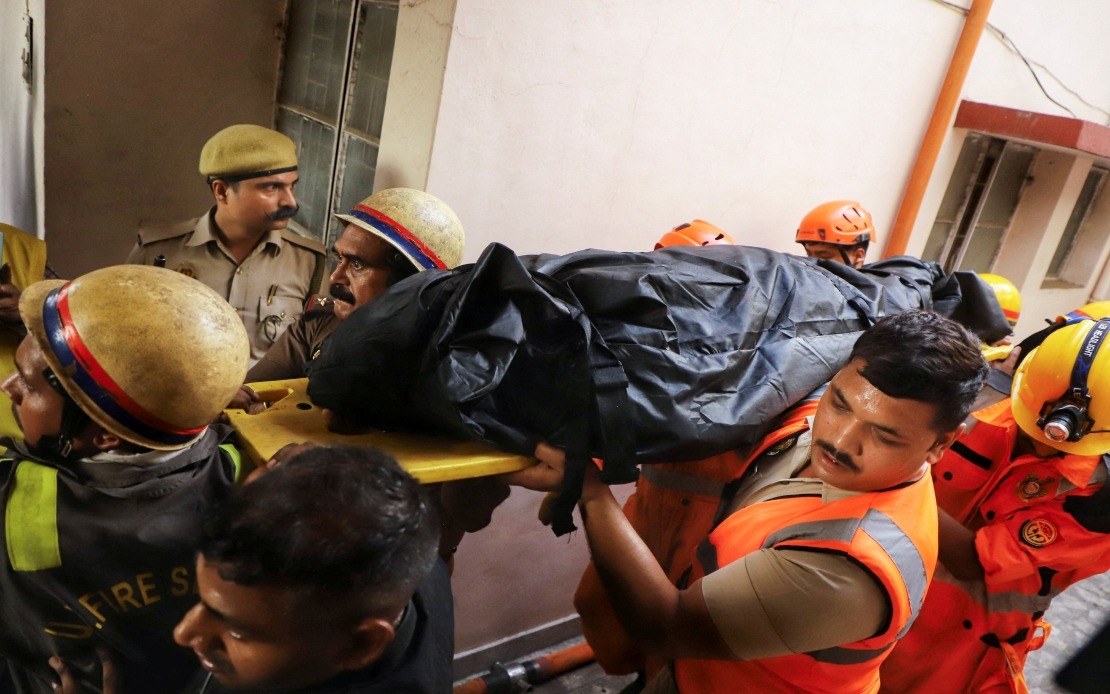
At least 15 people, predominantly young students, perished in a devastating fire that swept through a commercial building in Lucknow, the capital of India's Uttar Pradesh state, on Monday. The incident occurred at a three-storey structure in the Aliganj neighbourhood that housed an animation training centre alongside various retail outlets. Desperate scenes unfolded as the facility filled with smoke, forcing some occupants to jump from windows while onlookers attempted to contact emergency services. The tragedy underscores the vulnerability of educational facilities and commercial spaces to fire hazards across India and the broader South Asian region.
Emergency responders transported more than 20 survivors to King George's Medical University (KGMU), where the trauma centre became overwhelmed with casualties. Of those admitted, five individuals required ongoing medical treatment for injuries sustained during the evacuation and fire exposure. However, fifteen victims had already succumbed to the blaze before reaching the hospital, indicating the rapid and catastrophic spread of the fire through the confined building. The speed with which the disaster claimed lives raises serious questions about the building's fire safety infrastructure and whether adequate escape routes existed for occupants.
Uttar Pradesh Chief Minister Yogi Adityanath expressed his condolences to bereaved families, characterising the incident as "extremely tragic and heart-rending." His statement, delivered at a political rally in another city, reflected the shock resonating across state and national leadership. Yet the Chief Minister's words, though appropriate in tone, arrived only after emergency personnel had already recovered bodies from the charred structure. The delayed personal engagement from senior officials highlights a pattern in India where substantive fire safety reforms often lag behind expressions of sympathy following catastrophic incidents.
This Lucknow tragedy emerges within a disturbing pattern of major fire disasters across northern India. Just weeks earlier, a hotel fire in Delhi claimed at least 22 lives, with a significant proportion of victims being foreign medical tourists who had travelled to India seeking healthcare. The Delhi incident shocked international observers and raised alarms about whether India's accommodation and hospitality sectors maintained adequate fire prevention standards for transient guests unfamiliar with building layouts. The proximity of these two major disasters within the same month suggests systemic deficiencies rather than isolated oversights.
The concentration of casualties among students attending the animation training centre indicates that the facility may have housed young learners during daytime operations. Commercial buildings repurposed to accommodate educational institutions frequently lack comprehensive fire suppression systems, emergency lighting, and clearly marked evacuation routes designed for rapid student egress. The animation sector has grown considerably across India as digital media production expands, yet the training centres operating within existing commercial structures often occupy lower regulatory scrutiny than established educational institutions with dedicated purpose-built facilities.
For Malaysian observers, the Lucknow incident carries particular resonance given that thousands of Malaysian students pursue vocational and professional training across Indian educational centres annually. Families considering similar opportunities in neighbouring countries should scrutinise institutional fire safety credentials rigorously, including the presence of sprinkler systems, fire exits, and emergency procedures. The tragedy demonstrates that economic considerations and course reputation cannot supersede physical safety infrastructure when evaluating overseas educational placements.
The animation training centre tragedy also reflects broader challenges within India's building codes enforcement mechanisms. While national and state-level regulations technically mandate fire safety compliance, implementation remains inconsistent, particularly for smaller commercial establishments operating in residential or mixed-use neighbourhoods. Municipal authorities responsible for issuing occupancy certificates and conducting periodic inspections face resource constraints and corruption pressures that weaken enforcement. Buildings that house educational activities may undergo minimal scrutiny if they operate as private, unregistered training facilities rather than formally recognised institutions.
Regional fire service capacity emerges as another critical factor in understanding disaster mortality. The delayed arrival or insufficient scale of emergency response could have magnified casualties in the Lucknow incident. In many Indian cities, fire brigades struggle with equipment shortages, inadequate personnel, and outdated vehicles that impede response times. While bystanders attempted emergency calls, the trajectory from initial ignition through loss of life suggests either that rescue teams arrived too late or that escape from the burning structure proved impossible due to blocked exits and rapid smoke accumulation.
The incident underscores why building owners and operators must prioritise structural fire safety as a fundamental operational requirement rather than a bureaucratic formality. Regular maintenance of fire extinguishers, unobstructed emergency exits, clearly marked evacuation routes, and staff training in fire response protocols could have substantially altered outcomes. The animation training centre housed commercial activity alongside educational use, a combination that requires heightened safety vigilance given the potential presence of younger individuals with varying awareness of emergency procedures.
India's construction sector continues expanding at unprecedented rates across metropolitan and tier-two cities, accommodating rapid urbanisation and commercial growth. However, this expansion frequently outpaces institutional capacity to inspect, enforce, and monitor safety compliance. The Lucknow and Delhi fires occurring within weeks of each other signal that incremental improvements to building codes prove insufficient without simultaneous enhancement of implementation infrastructure. South Asian governments, including India, must confront whether current regulatory frameworks adequately protect occupants of mixed-use buildings where safety infrastructure lags behind commercial demand.
For regional policymakers and business operators, the cascading tragedies demand comprehensive reassessment of fire safety protocols governing educational facilities housed within commercial structures. Insurance companies, municipal authorities, and industry associations should collaborate on mandatory safety audits, with penalties for non-compliance rather than warnings alone. The animation sector and similar growth industries require that regulatory expansion keeps pace with commercial proliferation, preventing a repeat of Lucknow's preventable loss of young lives. Until structural reforms address enforcement and inspection capacity, India's commercial buildings will remain vulnerable to similar catastrophic incidents.