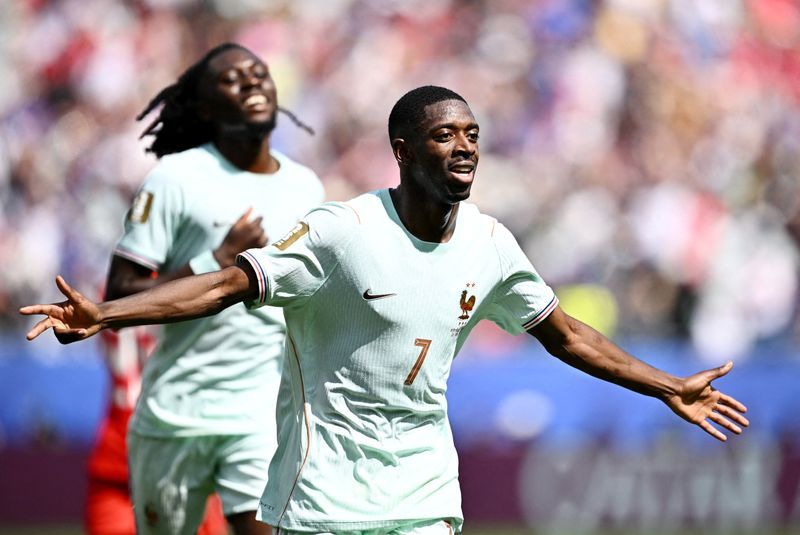
Ousmane Dembele delivered a devastating performance in the first half as France cruised to a 4-1 victory over Norway in Foxborough, Massachusetts on Friday, cementing the defending champions' position at the summit of World Cup Group I. The winger's stunning three-goal burst over just 25 minutes showcased the clinical precision and ruthless efficiency that has defined France's tournament campaign so far. With the two nations already assured of knockout stage progression before kickoff, the contest became a statement of intent from the French, who sought to maximize their advantage in the tournament's draw structure by claiming top-seeding status in their pool.
France's intensity from the opening whistle suggested an entirely different level of preparation and commitment compared to their opponents. Kylian Mbappé nearly set the tone within 20 seconds, his angled attempt crashing off the crossbar and showcasing the attacking prowess that has kept the Paris Saint-Germain star in contention for the Golden Boot award. The early pressure translated into tangible reward when Mbappé orchestrated a sweeping attack from deep, dispatching a searching cross-field pass that found Dembele perfectly positioned on the flank. The winger's intelligent movement and composure in front of goal allowed him to carve space before unleashing a well-placed finish past goalkeeper Egil Selvik in the sixth minute.
Dembele's second arrival came through similar constructive play, with Mbappé again instrumental in engineering the opportunity. By the 20th minute, France had established such dominant control that they appeared capable of extending their lead at will. Dembele's clinical finishing—a dipping shot that caught the goalkeeper flat-footed—doubled his personal tally and underscored the vulnerability in Norway's defensive setup. The Scandinavian side briefly threatened a comeback when Thelo Aasgaard reduced the deficit, but France's response came swiftly and emphatically. Dembele's third goal, a beautifully curled low shot into the bottom corner during the 32nd minute, completed a memorable hat-trick and placed him among elite company in World Cup history. Only Just Fontaine and Mbappé himself had previously achieved the feat for France at the tournament, a distinction that highlights the rarity and significance of Dembele's accomplishment.
The timing of Dembele's performance holds particular significance given the circumstances surrounding France's campaign. Coach Didier Deschamps had travelled home from the United States to attend his mother's funeral, prompting the squad to dedicate their efforts to their absent leader. The players' collective commitment to securing victory as a tribute to Deschamps manifested in their intensity and precision, with every player seemingly motivated to honor their manager's legacy during his time away. This emotional undercurrent added depth to what might otherwise have been dismissed as a routine match between two already-qualified teams.
Norway's management faced considerable scrutiny following their tactical approach to the fixture. Coach Stale Solbakken opted to rotate his squad extensively, resting virtually all of the players who had featured in the midweek clash against Senegal. Most notably, prolific striker Erling Haaland and captain Martin Odegaard remained on the bench, a decision that fundamentally altered the competitive balance of the encounter. The absence of these key performers was immediately apparent, as Norway lacked the attacking incisiveness and midfield control necessary to mount meaningful resistance against France's onslaught. Whether this represented pragmatic squad management ahead of knockout competition or a missed opportunity to assess the team's depth remains a subject for debate.
Norway's second-half adjustments revealed pockets of promise that were ultimately insufficient to bridge the growing deficit. Jorgen Strand Larsen was presented with an opportunity to narrow the scoreline when he stepped up to take a penalty, but his soft effort proved insufficient against Mike Maignan's commanding presence in the France goal. Winger Oscar Bobb generated additional anxiety in the French defence, forcing Maignan into further saves and exposing vulnerabilities that suggested France's backline remained capable of being troubled by determined opposition. However, these instances of Norwegian enterprise proved merely momentary distractions within an otherwise one-sided contest. France's fourth goal arrived in the closing stages when substitute Bradley Barcola provided a cross that Desire Doue powered home via a header, cementing a convincing result that delivered the group victory Deschamps' side had targeted.
France's achievement of topping Group I carries significant implications for their knockout trajectory. By finishing first, they position themselves for a potentially advantageous path through the remaining stages, with Sweden likely awaiting them in the Round of 32. This grouping preference reflects the tournament's geographical structure across North America, which creates substantially different travel demands compared to traditional World Cup configurations. For Norway, the runners-up finish dictates a meeting with Ivory Coast in their opening knockout match, potentially a considerably more demanding proposition given the African nation's attacking capabilities. The difference between these two paths underscores how group positioning, even among already-qualified teams, retains meaningful consequences for a squad's tournament trajectory and physical demands.
Dembele's personal performance demonstrated the kind of clinical finishing that separates elite international forwards from their peers. His hat-trick achievement ranks as the second-fastest in World Cup history, surpassed only by Erich Probst's three goals for Austria against Czechoslovakia in 1954, which were completed after 24 minutes. This historical context elevates Dembele's accomplishment beyond mere statistical achievement into the realm of genuine rarity in world football's premier competition. For France, the victory provided both the practical advantage of top-seeding status and the intangible benefit of momentum heading into knockout competition. The display showcased a team entirely capable of sustaining their challenge for a second consecutive World Cup final appearance, though questions about defensive solidity remain areas for refinement as the tournament progresses.

