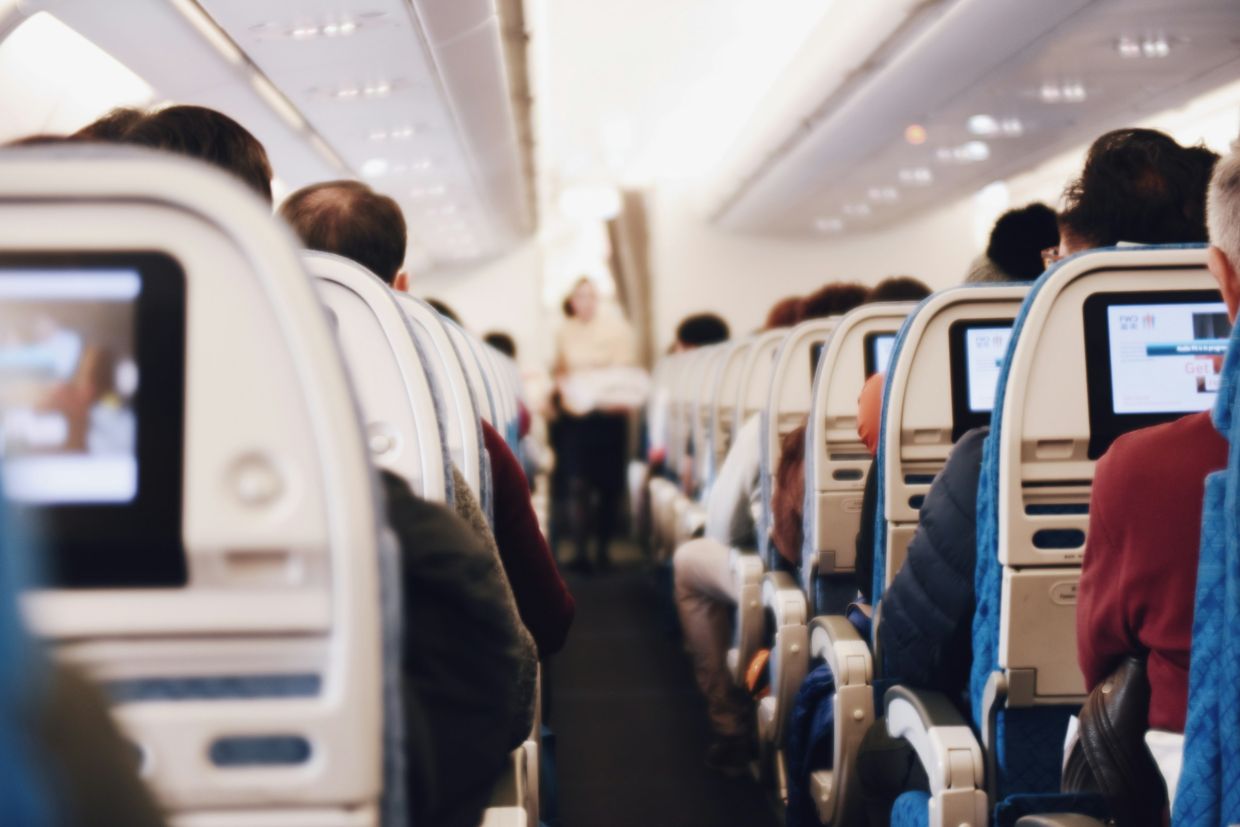
Delta Air Lines faced an unusual security incident when an unauthorised WiFi network unexpectedly appeared on a Boeing 757 aircraft departing Las Vegas on Monday, August 10, prompting the airline to disable the plane's internet connectivity for approximately half an hour. The discovery occurred just one day after the conclusion of Def Con, one of the world's most prominent cybersecurity and hacking conferences, raising immediate questions about whether the two events were connected. While Delta confirmed the network activation was unauthorised, the airline has stressed that no actual breaches of its operational systems occurred and that passenger safety was never compromised.
Delta Air Lines spokesperson Morgan Durrant detailed the airline's response in a statement released on August 11, emphasising that while the situation warranted investigation, it presented no immediate risk to aircraft operations. The unauthorised network materialised for only a brief window before flight crew recognised the anomaly and took action to deactivate the aircraft's WiFi system. Durrant noted that air traffic control personnel did not deem the incident serious enough to declare an emergency, a telling indicator of the low risk posed to actual flight safety. The carrier is collaborating with both federal law enforcement agencies and aviation regulators to understand precisely what occurred and to prevent similar incidents in the future.
The Federal Bureau of Investigation confirmed awareness of the incident through its Atlanta office, stating that the bureau is maintaining contact with local and corporate partners as the investigation unfolds. However, the FBI declined to provide additional specifics at this early stage of the inquiry. Meanwhile, the Federal Aviation Administration also confirmed it was examining the circumstances surrounding the event. An FAA representative clarified that even if the unauthorised network had successfully intercepted data transmitted through the aircraft's WiFi, it would have had no bearing on the plane's critical flight systems, which operate independently from passenger connectivity infrastructure.
Delta Flight 591 travelled from Harry Reid International Airport in Las Vegas to Hartsfield-Jackson Atlanta International Airport, with the timing of the incident raising immediate suspicions about its connection to Def Con. The conference, which concluded on Sunday before the Monday flight, markets itself globally as the preeminent gathering for hackers, cybersecurity researchers, and technology enthusiasts. A spokesperson for the conference organisation stated that they had not yet been contacted by Delta or law enforcement authorities but indicated plans to launch their own parallel investigation into potential involvement by attendees. The conference made clear that while it exists as a space for exploring cybersecurity concepts and techniques, it categorically discourages illegal activities, and any attendee found to have perpetrated the WiFi incident would face lifetime expulsion from future events.
Cybersecurity experts suggest the technical execution of such an attack remains within the realm of possibility for reasonably knowledgeable individuals, even those without advanced formal training. Lennart Koopmann, founder of cybersecurity firm Nzyme, explained that disrupting an existing WiFi network and replacing it with a fraudulent access point that mimics legitimate service requires relatively straightforward methodology. Such an attack enables the perpetrator to intercept unencrypted data flowing across the network, potentially exposing sensitive information transmitted by unsuspecting users. The attack itself comprises two distinct phases: initially overwhelming the legitimate network, then deploying the rogue access point to capture traffic.
The technical barriers to executing this form of cyberattack have diminished substantially as specialised hardware has become more accessible and affordable. Koopmann highlighted that the necessary equipment—compact battery-powered devices no larger than a cigarette packet—can be purchased for approximately US$250, or roughly RM1,022 in Malaysian currency. These same devices are routinely employed by legitimate security professionals conducting authorised penetration testing and vulnerability assessments for organisations seeking to strengthen their defences. This dual-use nature of the technology means that distinguishing between malicious exploitation and authorised security testing remains challenging without additional context.
Based on available evidence and technical plausibility, Koopmann speculated that a single passenger travelling on the flight may have carried such a device onto the aircraft with the intention of testing its capabilities in an unconventional environment. The proximity of the incident to Def Con naturally invites suspicion that an attendee with newly acquired technical knowledge or hardware might have attempted to experiment with their understanding in a real-world setting, perhaps without fully appreciating the legal implications or the seriousness with which aviation authorities treat security matters. This hypothesis aligns with broader patterns observed in cybersecurity communities where theoretical knowledge sometimes precedes mature judgment about appropriate application.
The incident highlights the persistent vulnerability of passenger-facing systems aboard commercial aircraft, particularly wireless networks that exist specifically to serve customer needs rather than to operate aircraft. While aviation regulators have invested considerable effort in hardening critical flight systems against digital intrusion, the integration of convenience technologies creates new potential attack surfaces that must be constantly monitored and defended. The separation between safety-critical systems and passenger amenities, while effective in this instance, requires sustained vigilance as aviation becomes increasingly interconnected.
For Malaysian and Southeast Asian readers, this incident carries broader implications regarding cybersecurity risks in the region. As commercial aviation expands throughout Asia-Pacific and as tech-savvy populations gain greater exposure to cybersecurity concepts, similar incidents may emerge on regional carriers. Airlines operating in this region, from Malaysia Airlines to carriers across Indonesia, Thailand, and Singapore, likely face comparable risks and would benefit from examining their wireless security protocols and crew training procedures in light of this incident. The episode serves as a reminder that even well-resourced major international carriers can experience unexpected security challenges, and that preparation and rapid response protocols remain essential components of aviation safety culture.

