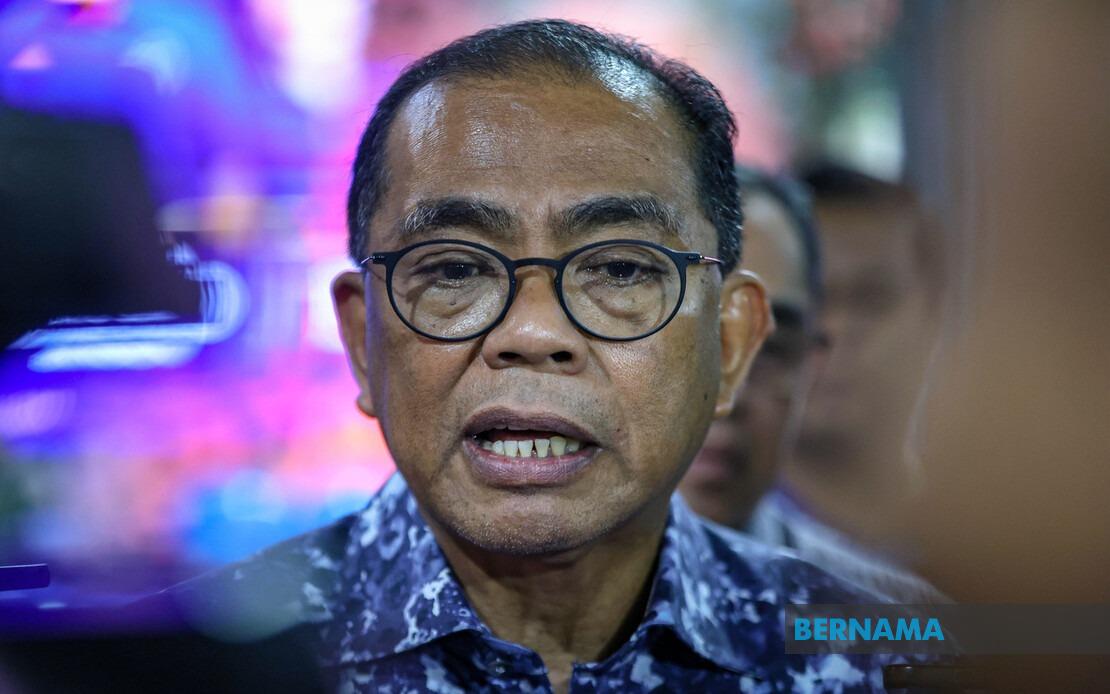
The Ministry of Defence is intensifying efforts to restructure the Malaysian Armed Forces through a multi-pronged approach addressing staffing hierarchies, remuneration systems and career pathways that have increasingly constrained qualified personnel from advancement. Defence Minister Datuk Seri Mohamed Khaled Nordin outlined the government's commitment to these reforms at a Pasir Gudang event, emphasizing that detailed proposals covering organisational structure, career progression and military allowances have been formally submitted to federal authorities and the Public Service Department for evaluation.
The timing of these initiatives reflects a fundamental challenge within the military establishment: competent officers who satisfy performance and technical standards find themselves trapped in their current ranks owing to insufficient promotional vacancies at higher levels. This bottleneck, Mohamed Khaled explained, creates a misalignment between the actual responsibilities officers discharge and their formal rank designations. Rectifying this disparity has become imperative as the armed forces modernise its defence capabilities and technological infrastructure, requiring leadership that understands contemporary operational demands.
MINDEF's advocacy for these structural changes builds upon groundwork initiated following the Defence White Paper launched in 2022, which charted a comprehensive modernisation trajectory for Malaysia's security apparatus. The ministry recognised that organisational frameworks designed for previous operational contexts could not accommodate the sophisticated skill sets now demanded by contemporary defence challenges. Consequently, the Defence Ministry has maintained consistent pressure on higher government echelons to implement improvements, with specific proposals regarding the Public Service Remuneration System submitted to the Public Service Department in March of the previous year.
A distinctive component of the reform agenda addresses the specialist nature of military service itself. Officers frequently undertake extended professional courses spanning nine months to two years, commitments that fundamentally differ from typical civilian public service demands. Mohamed Khaled advocated for consideration of tailored allowances that reflect these unique occupational requirements, acknowledging that current compensation frameworks were formulated without adequate regard for military personnel's particular circumstances and sacrifices.
Critically, the Defence Ministry has emphasised that any acceleration of promotions will remain anchored to meritocratic principles rather than becoming automatic entitlements. Mohamed Khaled explicitly rejected any suggestion of expedited advancement based on seniority alone, insisting instead that promotion decisions continue drawing from established evaluation mechanisms that assess performance, competency, personal integrity and organisational requirements. This stance reflects broader Malaysian civil service values whilst simultaneously addressing the legitimate grievances of capable officers whose progress has stalled.
These defensive sector initiatives align closely with Prime Minister Datuk Seri Anwar Ibrahim's recent announcement regarding in-principle government agreement to streamline and accelerate promotion timelines for both military and Royal Malaysia Police personnel. The proposed mechanism aims to bring armed forces and police advancement procedures into parity with other public service promotion schemes, eliminating historical disparities that have created personnel retention challenges. The Prime Minister indicated that comprehensive details regarding the new promotional framework would be unveiled during the Ambang Merdeka celebration scheduled for August 30 at Stadium Merdeka in Kuala Lumpur.
For Malaysian military personnel and the broader defence establishment, these prospective reforms carry substantial implications. Career progression blockages have historically contributed to talent attrition, with experienced officers departing for private sector opportunities or seeking advancement through lateral transfers. By removing structural impediments to promotion and introducing remuneration adjustments that reflect military service's distinctive demands, the government aims to enhance retention of institutional knowledge and operational expertise.
The budgetary dimension reinforces this commitment. The government has pledged to increase Defence Ministry allocation under Budget 2027, resources designated specifically for strengthening Malaysian Armed Forces operational capabilities whilst simultaneously protecting security personnel welfare. This dual-focus approach signals recognition that modernising defence infrastructure requires not merely acquiring sophisticated equipment but equally cultivating and retaining the human capital essential for effective deployment and maintenance of such systems.
From a regional perspective, Malaysia's military modernisation efforts occur within a broader Southeast Asian security environment characterised by evolving strategic challenges and technological advancement among neighbouring defence establishments. Countries throughout the region are contending with comparable pressures to attract and retain military talent whilst managing budgetary constraints. How Malaysia successfully implements these reforms may offer instructive lessons regarding balancing organisational effectiveness with fiscal prudence in defence sector management.
The interconnection between career structure reform and defence asset modernisation deserves particular attention. Contemporary military operations increasingly demand officers possessing sophisticated technical knowledge alongside traditional command competencies. Rigid hierarchical structures that restrict advancement may prevent such individuals from reaching positions where their expertise can be most effectively deployed. By realigning rank structures with actual responsibilities, MINDEF seeks to optimise human resource allocation throughout the defence establishment.
The emphasis on merit-based advancement also addresses potential criticism that accelerated promotion mechanisms might undermine military standards or create perceptions of favouritism. By explicitly anchoring reforms to established evaluation procedures emphasising competency and integrity, the Defence Ministry reinforces public confidence that military appointments reflect genuine capability rather than political patronage or seniority considerations alone.
Moving forward, implementation success will depend substantially upon how rapidly the Public Service Department processes these proposals and how thoroughly the government incorporates feedback from defence establishment stakeholders. The August 30 announcement will provide crucial clarity regarding timeline and specific operational parameters. For Malaysian military personnel awaiting these reforms, the accelerating pace of government action suggests that long-standing barriers to career advancement may finally yield to policy innovation.

