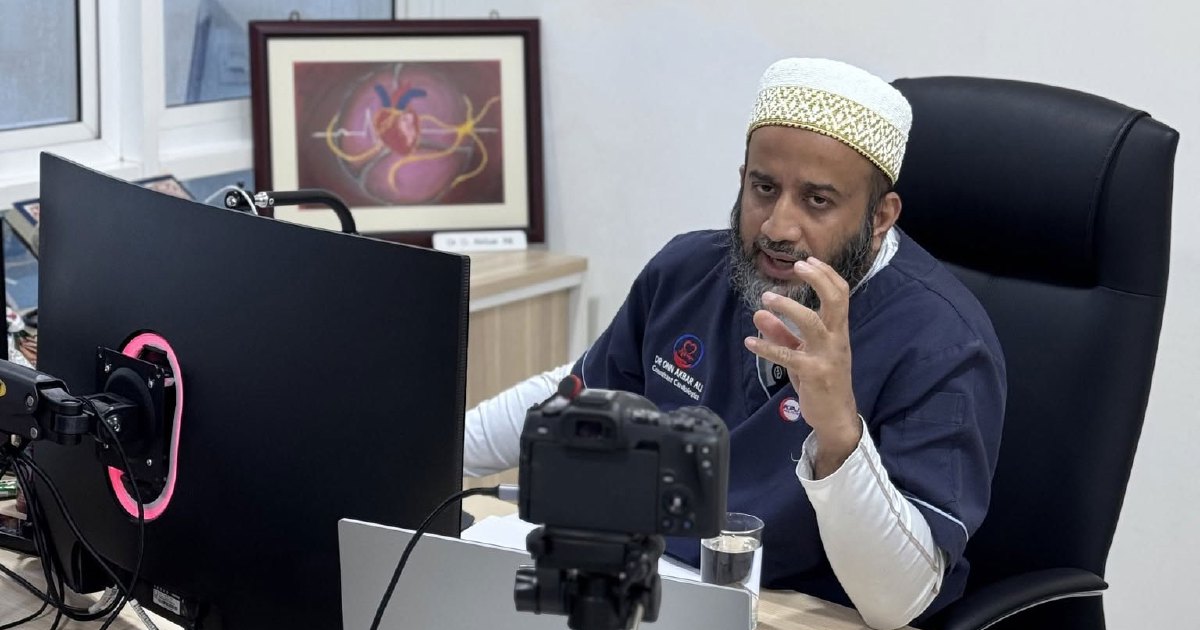
A prominent Malaysian cardiologist has become the unwitting face of a deepfake scam, sparking fresh concerns about artificial intelligence-enabled medical fraud sweeping the region. Consultant cardiologist Dr Onn Akbar Ali discovered that his likeness and voice had been weaponised in a fabricated video falsely endorsing herbal tea as a treatment for diabetes. The disturbing incident underscores how medical professionals—trusted sources of health information—are increasingly becoming targets for criminals seeking to lend false credibility to bogus remedies and questionable treatments.
The deepfake video circulated online portrays Dr Onn making claims he never made, leveraging his professional credentials to persuade vulnerable patients to purchase unproven herbal products. The ease with which such convincing imitations can now be created represents a fundamental shift in the nature of health fraud. Unlike traditional scams that rely on obvious fabrications, deepfake technology produces near-photorealistic impersonations that are extraordinarily difficult for ordinary people to distinguish from authentic recordings. This capability transforms the landscape of medical misinformation, enabling fraudsters to bypass the healthy skepticism people normally apply to unknown figures promoting health products.
The implications for Malaysia and Southeast Asia are particularly acute given the region's large population of elderly and less digitally literate individuals who may be less equipped to identify synthetic media. Many patients in these demographics maintain strong trust in the medical establishment and are predisposed to believe endorsements from doctors, even when presented through unusual channels. Deepfake technology thus weaponises legitimate authority, turning the credibility of real professionals into a liability rather than a safeguard. The incident involving Dr Onn Akbar Ali reveals how scammers are adapting to exploit this vulnerability at scale.
The creation of such deepfakes has become technically accessible to criminal networks that lack sophisticated resources. Open-source software and cloud-based tools have democratised synthetic media generation, allowing even moderately skilled operators to produce convincing video and audio forgeries. Herbal remedies and unproven dietary supplements remain particularly vulnerable to this form of fraud, partly because their marketing traditionally relies on testimonials and celebrity endorsements. A fraudulent video of a cardiologist endorsing a herbal tea as a diabetes treatment combines the persuasive power of authority with the emotional appeal that resonates in health-conscious communities seeking natural alternatives to pharmaceutical interventions.
For patients seeking information about managing chronic conditions like diabetes, the spread of such misinformation carries real health consequences. Individuals who might otherwise consult qualified physicians or follow evidence-based treatment protocols may instead delay proper medical care, instead investing in unproven products. This diverts both financial resources and precious time away from effective interventions. The vulnerability extends beyond individual health decisions; widespread medical misinformation erodes public trust in legitimate health institutions and qualified practitioners, potentially discouraging people from seeking credible medical advice when they genuinely need it.
The incident raises challenging questions about how the medical profession and regulatory authorities can protect both practitioners and patients in an era when visual and audio evidence can no longer be reliably used to verify identity. Traditional approaches to combating health fraud—including education campaigns about suspicious claims and warnings against unlicensed practitioners—become inadequate when fraudsters can impersonate licensed doctors with near-perfect fidelity. The Malaysian Medical Council and related regulatory bodies face pressure to develop new frameworks for authenticating medical endorsements and establishing protocols that help patients verify whether a video or statement genuinely originated from a real physician.
Technology companies have made progress in developing deepfake detection tools, but these solutions remain imperfect and typically lag behind improvements in deepfake generation. The arms race between fraudsters and detection technology continues to favour those creating the fakes, who have strong financial incentives to stay ahead of detection methods. For healthcare systems already stretched thin, the prospect of dedicating resources to identifying synthetic media represents an additional burden. More fundamentally, detection-focused approaches address symptoms rather than root causes; they cannot prevent the initial damage caused when deepfakes circulate widely before they are identified and removed.
Dr Onn Akbar Ali's experience illuminates how even well-known, professionally accomplished individuals with significant public profiles remain vulnerable to identity theft through deepfake technology. The incident suggests that this threat is not limited to celebrities or politicians—professions where misinformation already carries serious consequences. Healthcare professionals of all levels could potentially find their identities exploited to market harmful or ineffective treatments. As deepfake technology becomes more prevalent and accessible, virtually any doctor with a visible online presence faces the risk of impersonation.
The emergence of deepfake health fraud also reveals gaps in current regulatory frameworks. Laws governing medical advertising, unlicensed practice, and consumer protection were designed for an era when false claims could be more easily traced to identifiable actors. Prosecuting deepfake scams requires cooperation between multiple jurisdictions, raises questions about platform responsibility, and involves complex questions about authentication that existing legal structures have yet to adequately address. Malaysia, like many Southeast Asian nations, lacks comprehensive legislative frameworks specifically addressing synthetic media generated for fraudulent purposes.
Responding effectively will require coordination across multiple stakeholders. Regulatory bodies must develop new authentication standards for medical communications. Social media platforms and streaming services should implement detection technologies and verification systems to identify and quarantine suspicious content. Medical professional organisations could establish public registries of authentic video statements and endorsements, allowing patients to verify claims against official records. Public health campaigns should educate populations about deepfake technology and encourage critical evaluation of medical claims, particularly those presented through unconventional channels.
For individual practitioners like Dr Onn, the discovery of deepfake impersonation represents a troubling violation that extends beyond reputation management. His response will likely influence how the Malaysian medical establishment approaches this emerging threat. Some practitioners may restrict their online presence, limiting accessibility to patients seeking legitimate information. Others may pursue legal action or demand stronger platform safeguards. However, the fundamental challenge remains: in a world where audio and visual evidence can be fabricated convincingly, how can healthcare systems maintain the trust that underpins effective patient care while simultaneously protecting vulnerable populations from AI-enabled exploitation?
The broader trajectory is clear: as deepfake technology continues advancing, health fraud will become increasingly sophisticated and harder to combat through traditional approaches. Malaysia and the region must act decisively now to establish robust detection, authentication, and regulatory frameworks. Failure to do so risks creating an environment where patients increasingly cannot distinguish legitimate medical guidance from convincing imposters, ultimately undermining the credibility of the healthcare system and the safety of vulnerable populations seeking reliable health information.

