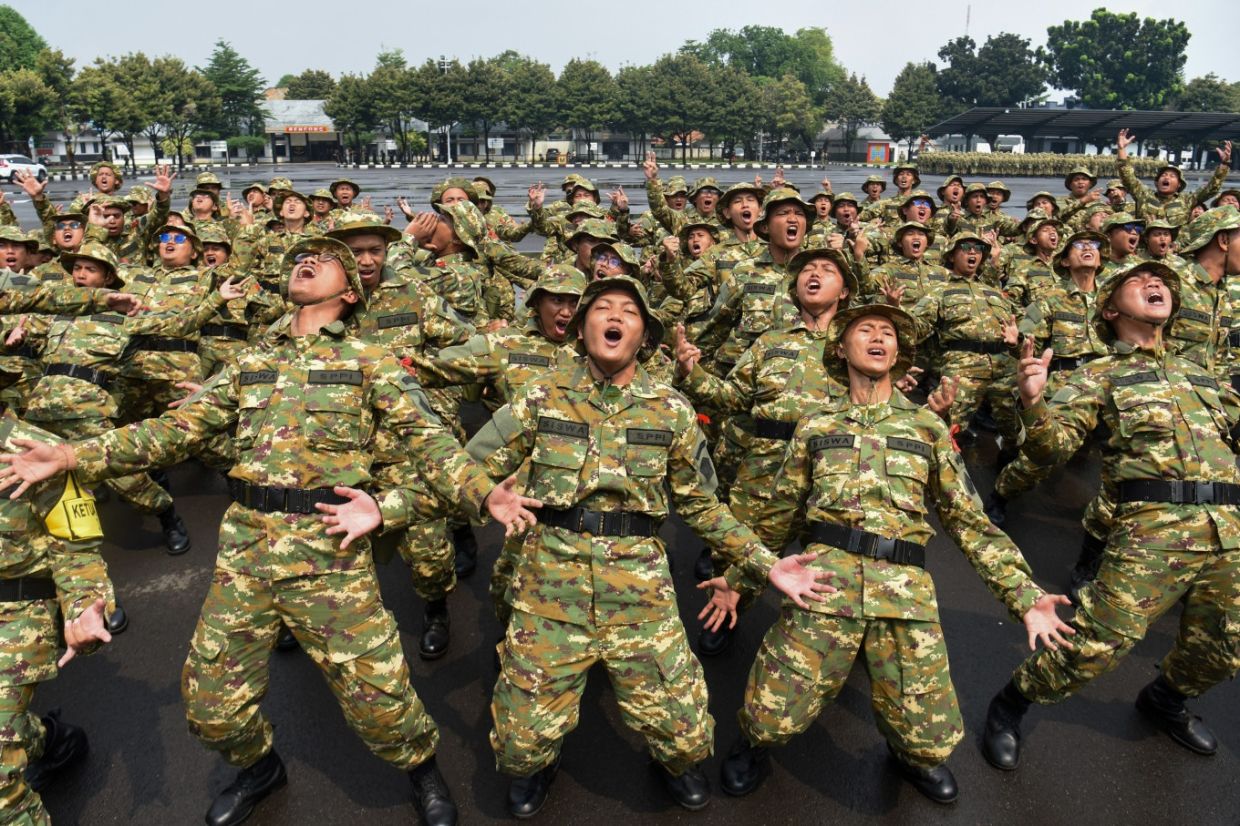
Four deaths during a mandatory military-style training programme for cooperative managers under President Prabowo Subianto's administration have intensified debate about the proper role of military discipline in civilian governance. The fatalities, occurring within days of the 30-day basic military training commencing under the Defence Ministry's reserve component, have affected more than 35,000 participants enrolled in preparation for managing the government's Red and White Rural Cooperatives and fishing villages initiatives.
The sequence of deaths reveals a pattern of acute health emergencies at different training locations. Anisa Muyassaroh collapsed from heat stroke while undergoing training in Balikpapan, East Kalimantan, earlier in the week. In a separate incident at a training center in Baturaja, South Sumatra, Yonanda Muhammad Taufiq suffered cardiac arrest following introductory activities. A third participant, Novia Rahmadhani Sihotang, fell ill in Jakarta and died from health complications the Defence Ministry linked to tuberculosis. Most recently, Muhammad Rifqi Renaldi Gunawan experienced severe breathing difficulties while training at an Air Force facility in Jakarta, entering intensive care but succumbing to his condition on Friday morning, June 26.
The pattern of sudden medical crises has exposed significant gaps in the programme's health management infrastructure. Defence Ministry spokesperson Brigadier General Rico Ricardo Sirait acknowledged the concerns by announcing a comprehensive review covering health screening procedures, early detection of medical conditions, participant monitoring, and emergency response protocols. However, the announcement came only after mounting public pressure, raising questions about whether such safeguards should have been implemented before the training commenced at such a massive scale.
International human rights organisations have interpreted the deaths as evidence of a fundamental problem with the programme's structure. Amnesty International Indonesia executive director Usman Hamid characterised the military training for cooperative managers as a grave policy error requiring immediate termination. Rather than military-style instruction emphasising hierarchy and discipline, Hamid argued that cooperative managers require education focused on business management and cooperative principles that prioritise democratic decision-making and collective participation—values fundamentally at odds with military command structures.
Beyond the immediate safety concerns, critics view the programme as emblematic of troubling governance trends in the early months of Prabowo's presidency. Usman warned that militarising civilian institutions echoes the military's controversial dual function during Indonesia's New Order era—a comparison that resonates deeply in a nation still grappling with memories of authoritarian rule. This historical context makes the programme's civilian fatalities particularly contentious, as they become entangled with broader anxieties about institutional militarisation.
Parliamentary oversight bodies have emerged as important pressure points for reform. Members of the House of Representatives Commission I, which oversees defence matters, have called for systematic evaluation of the programme's implementation. Dave Laksono of the Golkar Party, serving as deputy chair of Commission I, acknowledged concerns while attempting to balance accountability with support for the government's stated objectives. He conceded that the training's methods and emergency response systems require refinement to protect participant safety, even as he maintained that the programme's underlying goals of instilling discipline, leadership, and nationalism remain worthy.
Colleague Imas Aan Ubudiyah from the National Awakening Party took a more assertive stance, insisting that rigorous health screening must become integral to the selection process. Her emphasis on risk mitigation standards, medical supervision, and physical capability assessment reflects growing recognition that a programme affecting 35,000 individuals cannot proceed without robust protective mechanisms. These calls signal that even within government-aligned parties, there is appetite for meaningful structural change rather than cosmetic adjustment.
The government's initial response has emphasised investigation and improvement rather than fundamental reconsideration. Presidential Chief of Staff Dudung Abdurachman stated that preliminary findings have uncovered no evidence of negligence in programme administration, suggesting instead that underlying health conditions or other unidentified factors may explain the deaths. This framing attempts to deflect responsibility while supporting continued programme operation, though Dudung acknowledged that future sessions must prioritise safety more explicitly.
The broader context of this controversy involves the government's ambitious infrastructure targets. The administration aims to establish 80,000 cooperative units and 5,000 fishing villages by 2029, an expansion that requires training tens of thousands of managers and administrators. The scale of this undertaking raises fundamental questions about whether military training is an appropriate or proportionate tool for civilian capacity-building, particularly in communities where such models may be culturally unfamiliar or medically risky.
For Southeast Asian observers, the Indonesian case illustrates persistent tensions between national development ambitions and protection of citizen welfare in large-scale programmes. The programme structure—combining 30 days of military training with 15 days of managerial instruction before field deployment—suggests that military discipline was conceived as foundational rather than supplementary to cooperative management skills. This pedagogical choice now faces scrutiny as fundamental mismatch with both cooperative principles and occupational health standards.
The coming weeks will reveal whether the government implements genuine structural reforms or conducts largely symbolic reviews designed to deflate political pressure. Malaysian policymakers and regional observers should monitor this situation carefully, as it raises important questions about the limits of military-style training in civilian governance contexts. The deaths have shifted from being individual tragedies to becoming a test case for whether government institutions can respond meaningfully to evidence-based critiques of problematic programmes.

