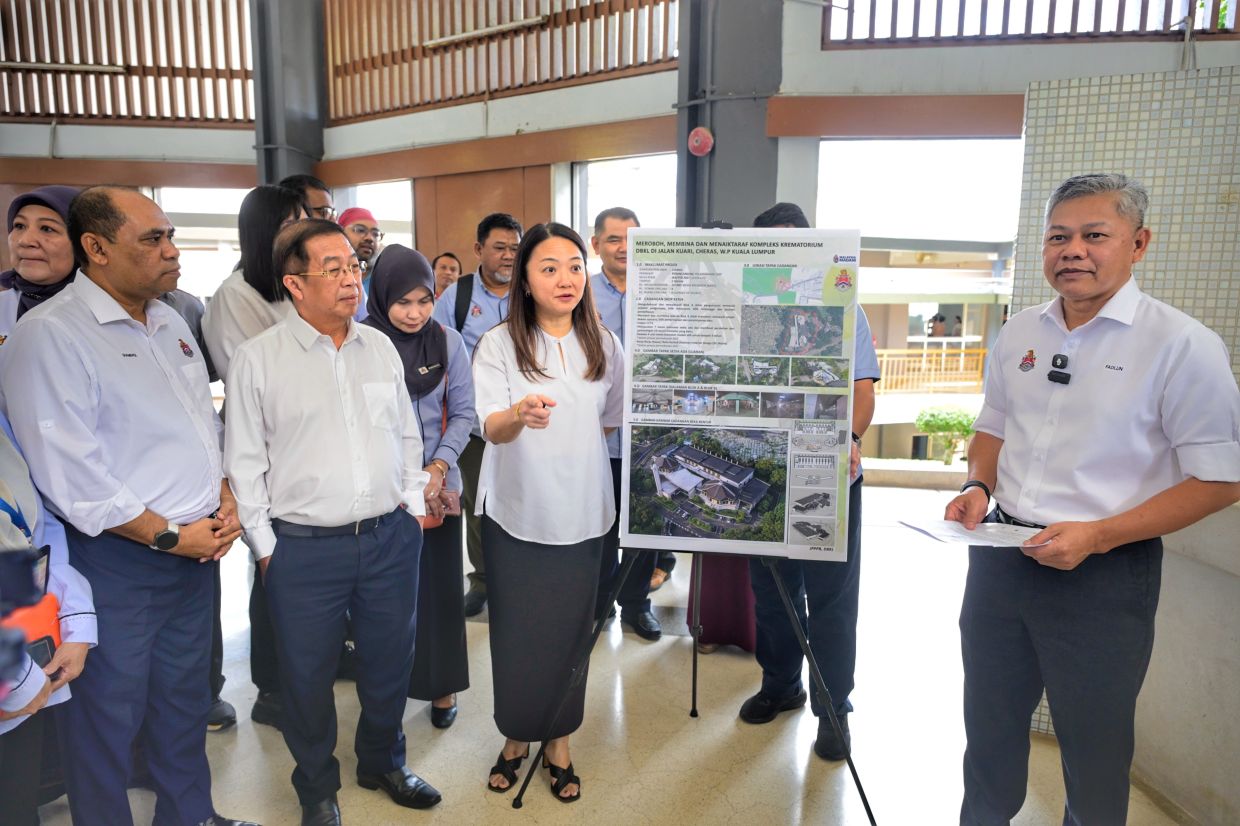
Kuala Lumpur City Hall is embarking on a significant infrastructure project to address the mounting pressure on funeral services in the nation's capital. The RM45 million renovation of the crematorium on Jalan Kuari in Cheras marks a critical step in expanding capacity for non-Muslim communities, with construction set to commence in February 2026. Datuk Seri Fadlun Mak Ujud, the mayor of Kuala Lumpur, outlined the modernisation initiative during an on-site inspection on Wednesday, July 8, emphasising the facility's role in serving the city's diverse population.
The expansion will introduce three new cremation units to the existing seven operational units, doubling the facility's infrastructure. A key operational strategy will maintain four cremation units in continuous service throughout the two-year construction period, ensuring the facility continues meeting public demand without significant interruptions. This approach reflects careful planning to balance the city's immediate funeral service needs with the modernisation requirements of an ageing facility. The decision to keep half the operational capacity accessible during renovation demonstrates DBKL's commitment to maintaining essential services while pursuing long-term improvements.
The funding for this project has been secured through Malaysia's 13th Malaysia Plan, indicating national-level recognition of Kuala Lumpur's infrastructure challenges. City Hall's decision to prioritise this upgrade underscores how demographic shifts and urbanisation patterns are placing unprecedented strain on municipal funeral services. The capital has experienced substantial population growth over recent decades, with non-Muslim communities constituting a significant segment requiring dedicated cremation facilities.
Since its establishment in 1977, the Jalan Kuari crematorium has become the single facility operated by DBKL across the entire federal territory. The complex currently processes more than 5,800 cremations annually, a figure that reflects both the facility's essential role and the practical limitations of its current capacity. At nearly 50 years old, the facility represents one of Kuala Lumpur's longest-serving infrastructure assets, yet its aging infrastructure increasingly struggles to meet contemporary demand patterns.
Cheras Member of Parliament Tan Kok Wai, present during the mayor's visit, stressed the urgency of accelerating the upgrade timeline. He highlighted that the facility's age relative to Kuala Lumpur's expanding population creates a genuine service bottleneck. The MP's advocacy for expedited completion reflects broader political attention to this municipal challenge, positioning infrastructure investment as a responsive governance priority addressing real community needs.
Beyond cremation facilities, the Malaysian government is simultaneously grappling with burial ground scarcity affecting Muslim communities. Hannah Yeoh, Minister in the Prime Minister's Department (Federal Territories), revealed ongoing negotiations between federal and Selangor state authorities to locate suitable sites in Semenyih for Muslim cemeteries. This parallel initiative acknowledges that Kuala Lumpur itself lacks adequate space for expanding burial grounds, creating a multi-faceted challenge across different faith communities' funeral requirements.
The crematorium upgrade represents more than mere capacity expansion; it reflects evolving municipal governance in Malaysia's largest urban centre. As Kuala Lumpur's population becomes increasingly diverse and dense, city authorities must proactively plan infrastructure that accommodates religious and cultural practices equitably. The Cheras facility serves as a critical node in the city's social infrastructure network, quietly but indispensably supporting community wellbeing during moments of profound personal significance.
For residents across Kuala Lumpur and surrounding areas, the completion of this two-year project will eventually deliver tangible improvements through reduced service delays and more modern facilities. The expanded cremation capacity should alleviate current bottlenecks while positioning the facility to accommodate projected population growth across the next decade. The investment signals that DBKL recognises funeral services as legitimate infrastructure deserving substantial capital allocation alongside more visible projects.
The timing of this announcement, emerging from both mayoral and ministerial engagement, suggests consolidated institutional commitment to addressing long-standing capacity concerns. With construction commencing in less than a year, the project timeline is now concrete, moving from planning stages toward implementation. As Malaysia continues urbanising and Kuala Lumpur's multi-ethnic character deepens, such infrastructure investments demonstrate pragmatic policymaking responding to genuine demographic and cultural realities that define contemporary Malaysian life.

