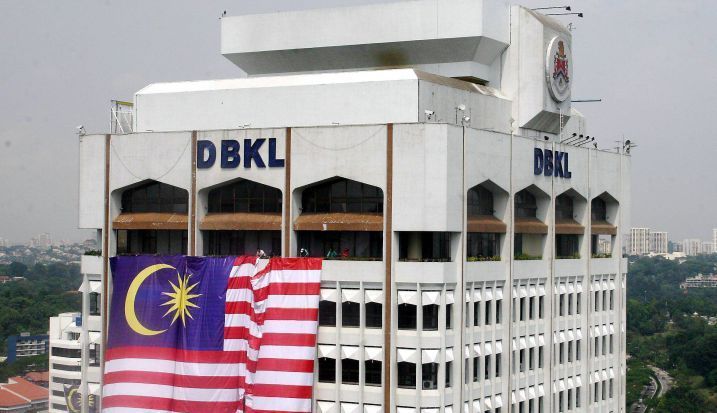
Kuala Lumpur City Hall (DBKL) has escalated its dispute with the Taman Desa Phase 1 Residents Association by issuing a two-week removal order for facial-recognition scanners and boom gates that were installed on public roads without official consent. The enforcement action represents a significant moment in an ongoing tension between residential security aspirations and municipal authority over shared public infrastructure in one of Kuala Lumpur's established neighbourhoods.
Enforcement officers from DBKL moved swiftly on Thursday, 27 August, affixing red notice placards to the facial-recognition scanners stationed at Guard Posts 1 and 4, while simultaneously wrapping the scanning equipment and gates with yellow DBKL enforcement tape to signify official intervention. The notices explicitly referenced the absence of approval from the Kuala Lumpur mayor and cited Section 70 of the Street, Drainage and Building Act 1974 as the legal basis for the directive. A DBKL spokesperson subsequently confirmed that the city administration had consulted its legal department before issuing the enforcement notice, lending formal weight to the directive.
The confrontation reflects months of regulatory correspondence and mutual non-compliance. Following an inspection conducted on 17 August, DBKL discovered that the residents association had not implemented corrections despite receiving a 30-day extension to align its guarded-neighbourhood scheme with municipal requirements. The city hall subsequently issued a formal letter on 18 August demanding that the association fully restore vehicle access at Posts 2, 5, and 6 and remove all unapproved structures, thereby reopening the affected roads to the public. This demand represented the culmination of earlier warnings, notably a 5 March letter in which DBKL had already flagged that the closed-circuit television cameras and facial-recognition infrastructure lacked municipal authorization.
The residents association's security initiative has proven divisive within the community and problematic under city planning regulations. The facial-recognition and barrier system was designed to restrict vehicle access and monitor entry to the neighbourhood, embodying a gated-community approach that has become increasingly common in Malaysian urban residential areas. However, the closure of Gate 5 on Jalan Desa Ria—permanently sealed to vehicles and locked to pedestrians until 6am—has generated considerable friction among residents who rely on unobstructed access to public amenities. On 24 August, more than 40 residents, predominantly aged 50 and above, assembled in protest at the gate, articulating specific grievances about the restricted access arrangements.
Those who gathered to voice their concerns emphasized multiple practical and philosophical objections to the security scheme. Early-morning walkers reported being forced to undertake lengthy detours along busy thoroughfares to reach nearby public parks, transforming a simple neighbourhood stroll into a traffic-exposed journey. Beyond the inconvenience factor, residents raised substantive safety arguments, contending that the barriers could impede the rapid passage of emergency vehicles responding to medical crises or other urgent situations. Additionally, protesters characterized the facial-recognition technology as unnecessarily invasive, reflecting broader societal discomfort with biometric surveillance in residential settings—a concern that has gained prominence across Southeast Asia as communities grapple with privacy implications of automated identification systems.
The Taman Desa Phase 1 Residents Association has maintained that it acted with proper authorization and community backing. Frank Yeh, the association's president, argued previously that the organization followed required procedures and secured the endorsement of 81 per cent of residents through what the association characterizes as a mandate for enhanced security measures. This competing claim of legitimacy—residents association asserting community consensus versus municipal authority asserting regulatory supremacy—sits at the heart of the disagreement and raises broader questions about the balance between neighbourhood autonomy and municipal governance in increasingly privatized residential developments.
The dispute illustrates a recurring tension in Malaysian urban management: the conflict between residents' desires for gated-community security and the public authorities' obligation to maintain unimpeded access to roads designated as public thoroughfares. Taman Desa's case is not isolated; similar conflicts have emerged across Kuala Lumpur and other Malaysian cities where residents associations have attempted to implement security measures that restrict access to roads that remain technically public property. City Hall's intervention signals that municipal authorities intend to enforce compliance with planning regulations and prevent what officials regard as unauthorized privatization of public space.
The enforcement notice positions DBKL as willing to take action if voluntary compliance does not materialize. The spokesperson's statement—"We hope they do the right thing"—carries both a gentle suggestion and an implicit warning that unilateral removal will follow non-compliance. The two-week timeframe provides the residents association with a final opportunity to negotiate or implement corrections before the city administration proceeds with physical removal of the structures, likely at the association's cost. This escalation suggests that softer approaches, including the 30-day extension previously granted, have been exhausted.
For residents of Taman Desa and similar neighbourhoods across Malaysia, the case presents a cautionary reminder about the limits of residents associations' authority over public infrastructure. While such associations play valuable roles in community maintenance and security, their powers do not extend to permanently modifying public roads or installing surveillance infrastructure without municipal approval. The episode also underscores the growing importance of transparent community consultation; had the residents association managed to achieve near-universal support before implementation rather than afterwards, the confrontation might have unfolded differently, though regulatory compliance would have remained essential.
The broader implications extend to how Malaysian cities manage the rising demand for residential security in an increasingly urbanized context. Rather than outright prohibitions, city authorities might benefit from developing streamlined approval processes for residential security enhancements that satisfy both community concerns and regulatory requirements. The Taman Desa case provides an opportunity for DBKL to articulate clearer guidelines about what security measures are permissible on public roads, potentially reducing future conflicts in other neighbourhoods contemplating similar initiatives.

