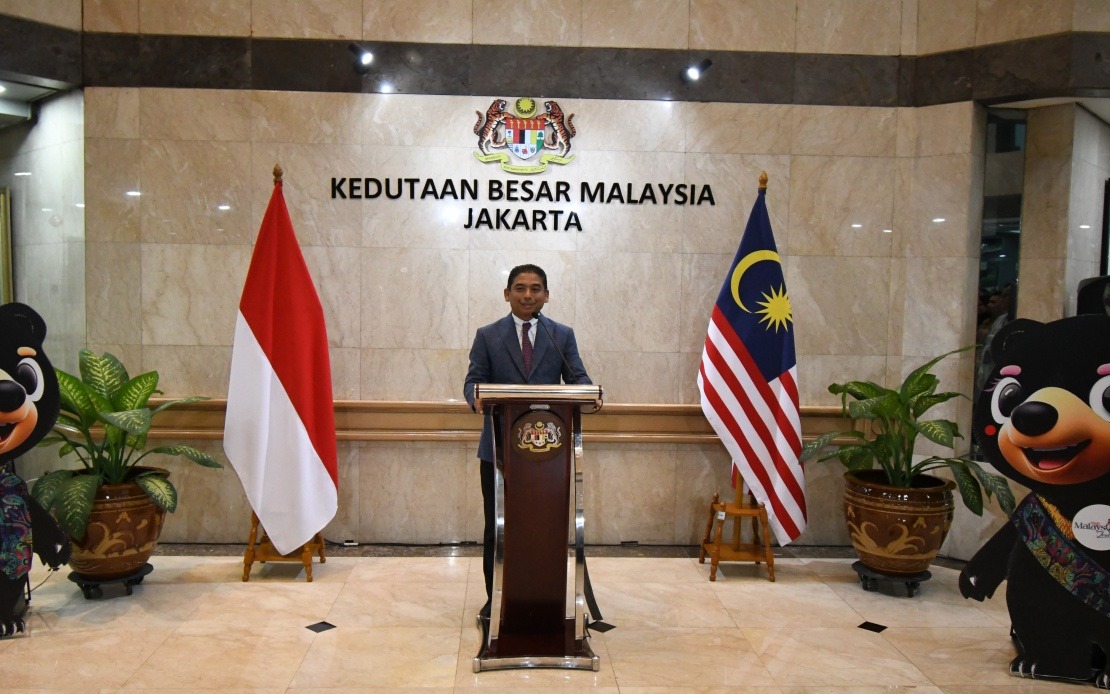
Datuk Muzafar Shah Mustafa, Malaysia's freshly appointed Ambassador to Indonesia, commenced his duties in Jakarta on August 10 following his three-year deployment in New Delhi. The diplomatic posting, confirmed by the Malaysian embassy through social media channels, marks the beginning of what is expected to be a significant chapter in Malaysia-Indonesia bilateral relations, two nations whose ties extend across trade, regional security and cultural exchanges.
Muzafar's transition to one of Malaysia's most strategically important missions comes after the Yang di-Pertuan Agong Sultan Ibrahim formally presented his letter of credence at Istana Negara on July 14. The ceremonial occasion underscored the significance of the appointment, as Indonesia remains a cornerstone partner for Malaysian foreign policy within the Association of Southeast Asian Nations and beyond. His previous posting as High Commissioner to India ended in early July, allowing a brief transition before assuming his new responsibilities in the Indonesian capital.
The timing of Muzafar's arrival carries particular relevance given the complex regional dynamics currently shaping Southeast Asia. With bilateral relations between Malaysia and Indonesia spanning decades of cooperation tempered occasionally by maritime disputes and trade considerations, the appointment of an experienced diplomat signals continuity in managing these multifaceted connections. The embassy's public acknowledgement of his first day at work demonstrates the institutional commitment to maintaining robust diplomatic engagement between the two nations.
Muzafar's career trajectory reflects a diplomat shaped by diverse international experience spanning nearly three decades. Having joined Malaysia's Foreign Ministry in 1995, he has navigated postings across continents, providing him with insights into varied political systems, economic frameworks and cultural contexts. This breadth of exposure equips him with the sophisticated understanding necessary for navigating contemporary diplomatic challenges in Jakarta, where Malaysia's interests intersect with Indonesian concerns across multiple domains including trade, security cooperation and regional architecture.
His most recent posting to India from October 2023 to July 2024 placed him at a mission covering one of Asia's largest economies and a critical player in regional geopolitics. Before that assignment, Muzafar spent five years representing Malaysia in Mexico from 2018 to 2023, a posting that simultaneously covered Central American nations including Belize, Costa Rica, El Salvador, Guatemala and Honduras. This consolidated regional responsibility demonstrates the Foreign Ministry's confidence in his ability to manage complex multi-country portfolios where diplomatic efficiency and strategic presence are paramount.
Earlier phases of Muzafar's career showcase the foundational experience that built his diplomatic credentials. His tenure as Ambassador to Venezuela from 2016 to 2018 exposed him to Latin American geopolitics during a period of significant regional turbulence. Prior to these ambassadorial positions, he served as counsellor at the Malaysian Embassy in Berlin between 2007 and 2011, providing him grounding in European affairs and North Atlantic perspectives on global issues. His posting as second secretary at the Malaysian Embassy in Baghdad from 1999 to 2003 placed him at a mission operating amid unprecedented regional instability, an experience that likely sharpened his crisis management and risk assessment capabilities.
The geographic diversity of Muzafar's assignments reflects a deliberate career strategy within Malaysia's foreign service. Ambassadors stationed across Europe, Latin America, the Middle East and South Asia accumulate comparative knowledge of how different regions approach diplomacy, economic engagement and security matters. This experiential foundation proves invaluable when transitioning to Indonesia, where understanding both developing-world perspectives and sophisticated regional diplomacy becomes essential.
Muzafar's family background adds personal dimension to his professional commitment. Married to Datin Najwa Zainal and father of four children, his household experience navigating multiple international relocations mirrors the adaptability required of career diplomats. Family stability during postings across continents demonstrates the personal resilience that underpins professional effectiveness in demanding ambassadorial roles.
The appointment arrives amid Malaysia's broader diplomatic recalibration in Southeast Asia. As ASEAN navigates questions surrounding regional unity, Myanmar's political crisis, South China Sea tensions and economic integration challenges, the quality of Malaysia-Indonesia coordination proves instrumental. Muzafar's arrival signals that Kuala Lumpur is investing in seasoned diplomatic talent for this crucial bilateral relationship, reflecting recognition that Indonesia remains fundamental to Malaysian strategic interests.
Indonesia's significance for Malaysia transcends conventional diplomatic courtesy. Economic interdependence encompasses trade, investment and labour movements affecting millions of citizens on both sides of the Straits of Malacca. Security cooperation addresses maritime challenges, counterterrorism and maritime domain awareness. Cultural and people-to-people exchanges reflect shared Islamic heritage and Malay linguistic kinship. Muzafar's multi-continent experience suggests he approaches these dimensions as interconnected elements of a comprehensive relationship rather than separate bilateral tracks.
The transition from High Commissioner in India to Ambassador in Indonesia represents a lateral movement between missions of comparable strategic weight. Both postings engage Malaysia with major regional powers whose policies shape the Indo-Pacific landscape. India's growing role in regional security architecture and Indonesia's position as ASEAN's largest economy demand ambassadors capable of sophisticated analysis and nuanced engagement. Muzafar's movement between these pivotal postings suggests the Foreign Ministry views him as capable of contributing substantively to Malaysian interests in each location.
Looking forward, Muzafar's tenure will likely be measured against Malaysia's ability to advance bilateral cooperation while managing inevitable disagreements, particularly regarding maritime boundaries and resource management in shared waters. His demonstrated capacity to manage complex multi-country responsibilities and navigate diverse cultural contexts suggests preparedness for these inherent tensions. The appointment reflects institutional confidence that his experience and judgment will serve Malaysian interests effectively throughout his tenure in Jakarta.

