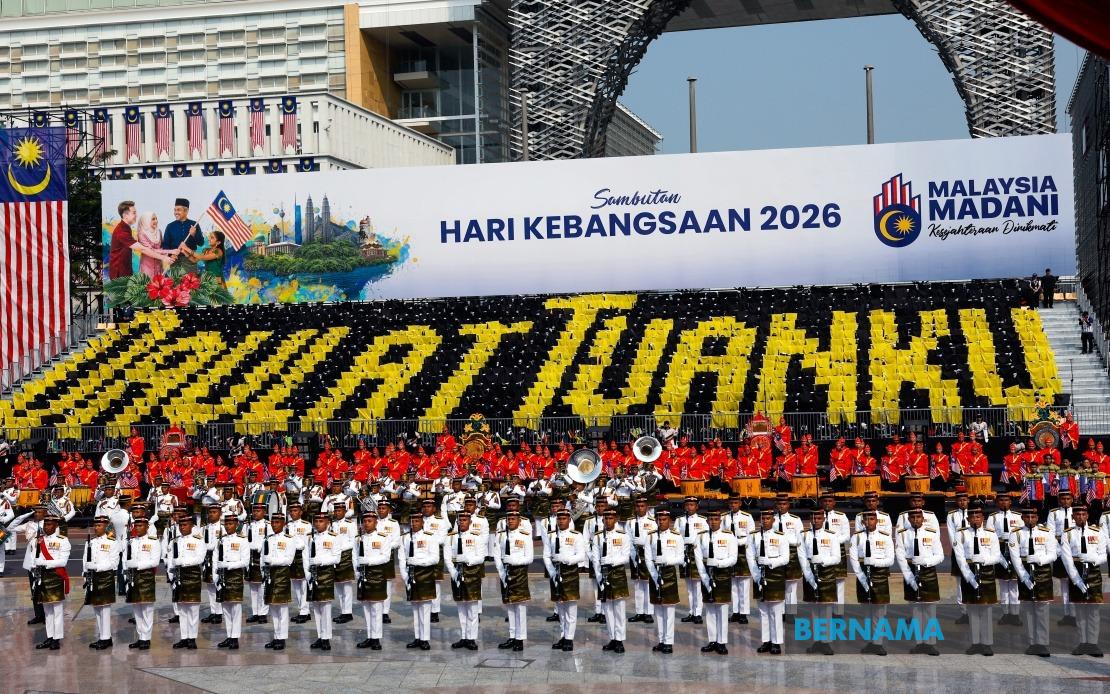
Dataran Putrajaya will transform into a patriotic showcase tomorrow as the nation marks its 69th National Day with an elaborate celebration combining traditional heritage, modern innovation, and displays of national strength. Under the MADANI theme "Kesejahteraan Dinikmati" (Shared Prosperity Enjoyed), organisers have orchestrated a comprehensive programme designed to reinvigorate civic pride whilst celebrating Malaysia's journey toward inclusive development. The spectacle will draw together tens of thousands of participants, from military contingents to schoolchildren, performing artists to business representatives, in a coordinated display intended to embody the government's vision of a unified, prosperous Malaysia.
The royal family will anchor the proceedings, with His Majesty Sultan Ibrahim and Her Majesty Raja Zarith Sofiah gracing the event alongside Prime Minister Datuk Seri Anwar Ibrahim and Cabinet ministers. This high-level attendance underscores the political significance of the celebration, signalling continuity between the constitutional monarchy and the executive branch at a moment when Malaysia navigates complex regional and domestic challenges. The 8:00 am start time reflects traditional protocol, establishing a full morning of structured activity before the conclusion around 10:00 am.
The sheer logistical scale reveals the ambitions of planners to create a multimedia spectacle accessible to diverse age groups and social constituencies. Approximately 10,819 personnel will participate across 76 contingents, including uniformed services, youth organisations, and civilian groups. The procession will incorporate 22 marching bands, 11 float vehicles, and 328 military assets spanning land, naval, and air components, alongside 112 working animals and 22 electric vehicles. This assemblage of human and mechanical resources illustrates how modern state celebrations harness technological and organisational capacity to project national coherence.
The opening performance, "Gema Inovasi MADANI", orchestrated by the National Department for Culture and Arts, represents a deliberate attempt to reconcile Malaysia's multicultural heritage with contemporary innovation narratives. Featuring 150 musical instruments and 700 kompang (traditional frame drums), the performance prioritises percussion traditions associated with Malaysia's main ethnic communities as emblems of harmony and shared identity. This symbolic choice reflects official policy emphasising unity-in-diversity, though such representations remain contested terrain where questions of dominance, authenticity, and equitable representation persist beneath surface celebrations.
The programme's architecture divides the celebration into thematic components addressing statehood, wellbeing, public order, and national security. The statehood segment will showcase military cadet officers from the National Defence University of Malaysia (UPNM) and the National Service Training Programme (PLKN), institutions central to state capacity-building and ideological formation of young citizens. The sporting wellbeing component will feature athletes and medalists from upcoming Commonwealth Games, positioning athletic achievement as an extension of national prowess and international standing.
A notably expanded role for private enterprise within the parade reflects contemporary Malaysian governance, with major corporations including Munchy's Malaysia, ZUS Coffee, MR. D.I.Y Group, and Carsome Sdn Bhd participating as representatives of economic vitality and consumer culture. This integration of commercial entities into state spectacle illustrates how modern national celebrations function as platforms for corporate visibility and the narrative framing of capitalism as integral to national development. Such partnerships also distribute the financial burden of elaborate ceremonies across public and private sectors.
The Visit Malaysia Year 2026-2027 campaign component demonstrates tourism promotion embedded within patriotic ritual, with state-specific floats showcasing regional attractions, flora, fauna, and cultural symbols. This integration exemplifies how national celebrations increasingly serve multiple policy objectives simultaneously—reinforcing civic identity whilst marketing Malaysia as a destination to both domestic audiences and potential international visitors. Strategic airline partnerships with Malaysia Airlines, AirAsia, Batik Air, and Air Borneo further amplify this commercial dimension.
Inclusion of animation characters Upin and Ipin from Les' Copaque demonstrates deliberate targeting of younger demographics and families through popular culture iconography. This reflects recognition that national ceremonies must compete for attention within media-saturated environments where traditional pageantry alone may not engage all segments of the population. The human graphics component, involving 1,500 students from 36 Selangor schools executing synchronised formations, similarly enlists youth participation whilst creating visually dynamic content optimised for digital circulation.
The Royal Malaysian Air Force airshow climax—fighter jets demonstrating aerial capabilities above Putrajaya—reasserts the military dimension of national celebration at the crescendo moment. This deployment of defence assets for patriotic display reinforces state monopoly on legitimate force whilst showcasing technological investment in military modernisation. Such demonstrations carry particular resonance in Southeast Asia, where territorial disputes and regional power competition maintain military readiness as a salient national concern.
Theme song "Aku Berjanji" (I Promise), composed and performed by Faizal Tahir, provides an emotional and sonic anchor for the celebration, inviting audiences to internalise promises of national loyalty and shared commitment. Popular music's integration into state ceremony reflects how contemporary governments employ entertainment and emotional affect to cement civic attachment, operating beyond purely rational or institutional appeals.
Practical preparations reveal underlying environmental and safety concerns shaping the celebration's execution. Distribution of N95 face masks to over 10,000 participants responds to current haze conditions affecting air quality across the region—a climate-related challenge with increasing frequency and severity that constrains outdoor public events. This allocation acknowledges differential vulnerability to air pollution, particularly among high-risk populations, though it also illustrates how environmental degradation has become normalised within official planning frameworks.
The comprehensive road closure affecting Putrajaya's Core Island area—spanning five major bridges including Seri Wawasan, Seri Saujana, Seri Gemilang, Putra, and Seri Ehsan bridges from 5:00 am August 30 through 6:00 pm August 31—imposes substantial traffic disruption across the federal territory. Public transport utilisation represents the recommended alternative, reflecting broader policy preferences for modal shift toward mass transit, though such shifts require functioning infrastructure and adequate capacity. The Ministry of Home Affairs' transport guidance underscores the celebration's real impacts on ordinary commuters and residents, imposing temporary constraints on mobility in exchange for access to patriotic spectacle.
Overall, tomorrow's celebration illustrates contemporary nation-branding practices where state identity is constructed through carefully choreographed spectacles combining military power, cultural heritage, commercial enterprise, popular entertainment, and technological display. The MADANI framework—emphasising shared prosperity and inclusive development—provides the rhetorical scaffold within which these disparate elements cohere. Yet such celebrations remain sites where official narratives encounter public reception, potentially generating enthusiasm, indifference, or critique depending on viewers' positioning within the national order and their assessments of whether promised prosperity reaches their own circumstances.

