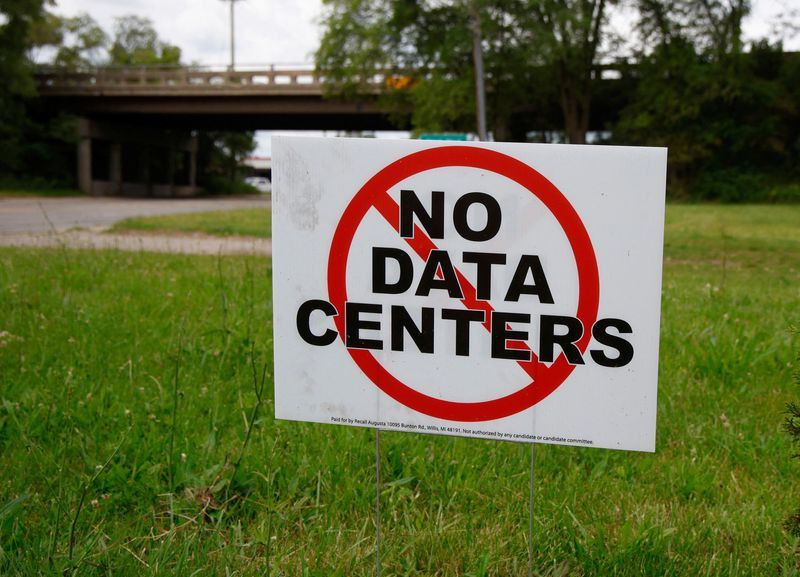
A landmark moment in American grassroots activism unfolded this weekend as opponents of rapid data centre expansion organised protests in at least 125 locations nationwide, marking the first major coordinated nationwide effort to voice discontent with the AI infrastructure boom reshaping communities across the country. The scale and reach of the demonstrations underscore how intensely the data centre issue has captured public attention within a remarkably short timeframe, transforming what began as isolated local disputes into a potential force in national politics.
The movement is being orchestrated by HumansFirst, a nascent grassroots organisation founded by Amy Kremer, a prominent figure from the Tea Party movement that energised conservative activism starting in 2009. Kremer has intentionally positioned the data centre struggle as comparable to that earlier populist uprising, drawing explicit parallels between voter anger at perceived government overreach then and public alarm at what activists view as corporate overreach now. What distinguishes this campaign, however, is its decidedly cross-partisan character—an increasingly rare phenomenon in polarised contemporary America where data centre opposition transcends traditional left-right boundaries.
The breadth of this political coalition became evident in the geography of planned protests. Texas, the nation's leading data centre hub and a reliably Republican state, was poised to host 16 demonstrations. Georgia, the closely contested swing state that shaped recent presidential elections, had secured 11 protest locations. Both California and Florida, representing opposing political poles, and Pennsylvania, another crucial electoral battleground, each planned seven protests. This distribution reveals how the data centre question has penetrated every region and political demographic, suggesting genuine grassroots mobilisation rather than elite-orchestrated activism.
The core grievances animating protesters reflect interconnected anxieties about resource depletion, fiscal burden and democratic accountability. Communities across America discovered that data centre developers and local officials had negotiated development agreements shrouded in non-disclosure arrangements, effectively shutting out residents from the decision-making process. The lack of transparency proved particularly troubling given the substantial implications for local electricity grids, freshwater supplies and environmental quality. Poll data captures this sentiment starkly: only one-third of Americans endorse the current pace of data centre construction, and merely 14 percent would welcome such facilities in their own neighbourhoods, regardless of the purported economic benefits.
The environmental dimensions of data centre expansion have proven especially polarising in water-stressed regions. Ivan DelSol, a left-leaning activist organising protests in California's Imperial County, highlighted a proposed facility's projected consumption of 260 million gallons annually from the Colorado River—a particularly fraught prospect in a region where water scarcity shapes every planning decision. The industry dismisses such concerns as overstated relative to water consumption by agriculture and manufacturing, yet this framing fails to address growing public unwillingness to sacrifice already-constrained freshwater resources for artificial intelligence systems benefiting distant technology corporations.
Electricity demand represents another critical pressure point. The electricity-intensive nature of data centre operations, particularly those powering machine learning workloads, threatens to escalate power bills for ordinary consumers already grappling with inflation and cost-of-living pressures. Local governments have struggled to manage this tension between attracting lucrative data centre projects promising tax revenue and protecting constituents from rising utility costs. The question of who bears the financial burden of infrastructure expansion capable of supporting these facilities—and who captures the profits—has animated fierce debate in numerous communities.
Kremer and her fellow organisers have articulated specific demands reflecting this nuanced frustration. Rather than simply opposing all data centre development, activists are advocating for genuine transparency in the approval process, enforceable commitments to environmental protection and resource conservation, community benefits including well-compensated unionised employment, and mechanisms to hold developers accountable should they fail to honour pledges. Notably, Kremer has publicly rejected New York's blanket moratorium approach adopted by the Democratic state government, suggesting that thoughtfully-regulated development might be acceptable provided communities genuinely shape outcomes.
The political implications extend well beyond this particular weekend's demonstrations. Kremer has predicted that data centre politics will emerge as a defining issue in the 2024 midterm elections and potentially the 2028 presidential contest. This forecast carries weight given the issue's demonstrated capacity to mobilise first-time activists and unite constituencies ordinarily divided by ideology. Eva Cardona, a 31-year-old Texas organiser participating in her first political action, exemplifies this phenomenon—someone sufficiently alarmed by unregulated artificial intelligence expansion and rapid development to move beyond passive social media engagement toward direct community organising.
The corporate response has remained conspicuously muted. The Data Center Coalition, the industry's principal lobbying organisation, declined to comment on the protests, having previously offered only generic assurances about being responsible community neighbours. This rhetorical gap between industry platitudes and community demands for concrete environmental commitments and democratic participation suggests the sector has yet to grapple seriously with the scale of public scepticism it confronts.
For Malaysian observers and Southeast Asian policymakers, the American data centre backlash carries instructive lessons. As artificial intelligence infrastructure expands globally, nations throughout Asia will confront similar tensions between attracting valuable tech investment and protecting environmental resources, managing utility costs and ensuring genuine community participation in development decisions. The cross-partisan consensus evident in American polling suggests these tensions are not merely ideological constructs but reflect legitimate material concerns about resource distribution and democratic accountability that transcend cultural and political contexts.
The data centre controversy also illuminates how rapid technological transformation can generate unexpected political coalitions when elite institutions fail to accommodate public preferences. The convergence of Tea Party conservatives and left-leaning environmentalists opposing the same infrastructure reflects neither ideological consistency nor political confusion, but rather shared recognition that communities deserve voice in decisions profoundly affecting their material wellbeing. Whether American policymakers at state and federal levels can devise frameworks satisfying both technological investment imperatives and genuine community governance remains an open question with significant implications for how artificial intelligence infrastructure develops across the globe.

