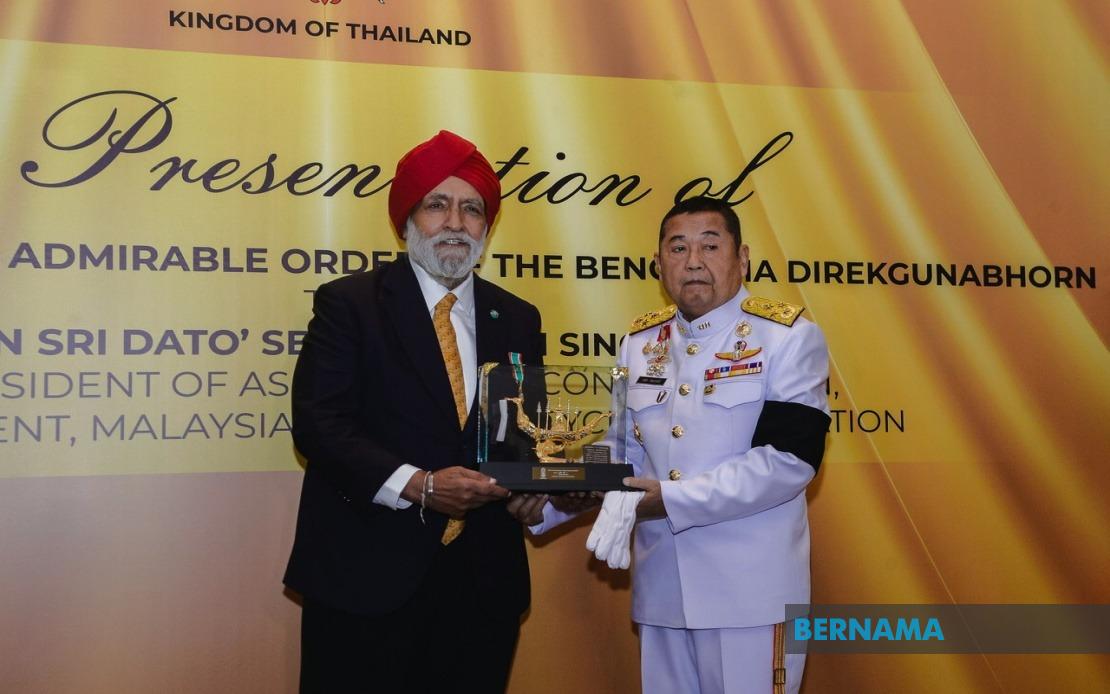
Tan Sri Darshan Singh Gill, who shaped Malaysian and Asian cycling for over two decades through his leadership roles, has been recognised with one of Thailand's highest honours. The Most Admirable Order of the Direkgunabhorn (Fifth Class - Benjama Direkgunabhorn) was presented to him here on August 6, marking a significant acknowledgement of his contribution to the development of the sport across the region. The royal decoration, originally bestowed by the late King Bhumibol Adulyadej The Great, Rama IX, was formally presented by ACC senior vice-president General Decha Hemkasri, reflecting Thailand's appreciation for cross-border cooperation in cycling governance.
Darshan's tenure at the helm of cycling bodies spanned critical decades of institutional development. His presidency of the Malaysian National Cycling Federation from 1988 to 1990 positioned him during a formative period for the national federation, while his leadership of the Asian Cycling Confederation from 1996 to 2005 extended his influence across the entire continental governing structure. These positions placed him at pivotal moments when Asian cycling was establishing itself on the global stage, and his administrative decisions during these years helped shape the competitive landscape that would eventually produce world-class Malaysian cyclists.
Speaking after the ceremony, Darshan reflected on the honour's broader significance, emphasising that the recognition transcended personal achievement. He characterised it as validation for Malaysia's cycling programme and the nation's standing within international sporting governance. The honour, he suggested, reflected systemic progress within Malaysian cycling administration and the country's capacity to compete at the highest organisational levels, not merely in athlete development but in institutional leadership across Asia.
Darshan contextualised the award within Malaysia's cycling trajectory across generations of athletes. He referenced M. Kumaresan and Rosman Alwi as examples of earlier competitive talent, positioning them alongside contemporary successes. This historical perspective highlighted how Malaysian cycling has maintained competitive relevance across decades, with each generation building on previous foundations established through administrative stewardship.
The recognition arrives at a particularly significant moment for Malaysian cycling excellence. Datuk Mohd Azizulhasni Awang recently achieved a landmark victory by capturing the gold medal in the men's keirin event at the Sir Chris Hoy Velodrome during the Commonwealth Games in Glasgow. This victory ended a 16-year drought for Malaysian cyclists at the Commonwealth Games, representing both personal triumph and validation of the national cycling programme's competitive strength. Azizulhasni's emergence as a world-class track cyclist demonstrates the sustained competitiveness that Malaysian cycling has achieved despite geographical and resource constraints.
Beyond athlete performance, Malaysian cycling has achieved unprecedented administrative recognition internationally. Datuk Amarjit Singh Gill, the current Malaysian National Cycling Federation president, created history by becoming the first Malaysian elected as vice-president of the International Cycling Union (UCI). Amarjit secured this position for the 2025-2029 term during the 194th UCI Congress held in Kigali, Rwanda, representing a watershed moment for Malaysian representation within world cycling governance. This achievement signals that Malaysian cycling administrators have achieved the credibility and competence required to influence global sporting policy.
Darshan articulated these recent achievements as interconnected outcomes of sustained institutional development. The progression from Darshan's own tenure through the current administration represents continuity in administrative excellence. Malaysian cycling's capacity to produce both elite athletes and respected international administrators suggests a holistic programme that emphasises technical expertise at all levels. This combination distinguishes Malaysia within Asian cycling, where many nations excel in either athlete development or administrative capacity, but fewer demonstrate strength across both dimensions simultaneously.
The timing of Darshan's honour underscores the cyclical nature of sporting recognition and institutional legacy. Administrators who served decades earlier often witness the long-term consequences of decisions made during their tenure. Darshan's recognition by Thailand validates not merely his individual leadership but the institutional frameworks he helped establish within ACC structures that continue producing competitive benefit for Malaysian cycling. Retrospective honours of this nature frequently acknowledge how foundational work by earlier leaders enabled subsequent achievements by athletes and administrators.
For Malaysian readers, the recognition carries implications for national sporting diplomacy and regional standing. Thailand's formal honouring of a Malaysian cycling leader demonstrates bilateral appreciation for cross-border institutional cooperation. Such gestures, while ceremonial in appearance, reflect substantive relationships within Asian sporting governance. Malaysia's ability to produce administrators respected across the region enhances national soft power and reinforces the country's position as a serious participant in continental sports administration rather than merely a consumer of international sporting events.
The honour also contextualises Malaysia's broader cycling ambitions within Asia's competitive hierarchy. Nations that excel internationally typically possess both high-performance athlete programmes and respected administrative institutions. Darshan's recognition, alongside Amarjit's UCI vice-presidency and Azizulhasni's Commonwealth Games triumph, suggests Malaysian cycling operates at multiple levels of organisational sophistication. This multi-layered excellence distinguishes mature sporting nations and positions Malaysia for sustained competitiveness in track and field cycling disciplines as international competition intensifies.

